
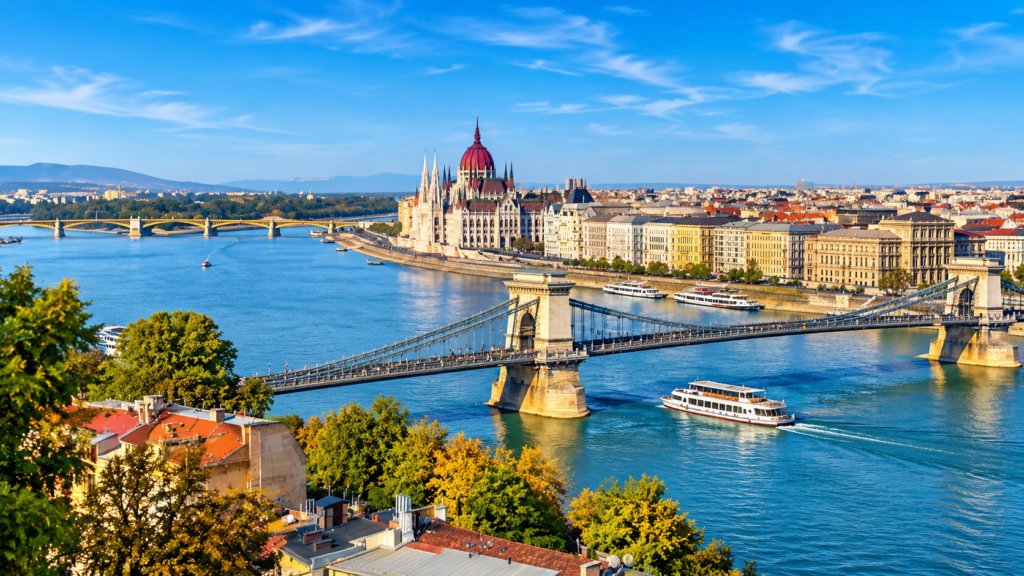
Budapest is one of those European cities that makes you want to keep walking. From its impressive architecture and lively streets to the beautiful bridges crossing the Danube River, there is something interesting around almost every corner.
During my Central Europe trip, I visited Budapest after exploring Prague and Bratislava. I stayed in the Hungarian capital for three nights and spent two full days discovering the city, visiting famous landmarks, trying traditional Hungarian food, and enjoying the local atmosphere.
What surprised me most was how different the two sides of Budapest felt. Pest was lively, with busy shopping streets, markets, restaurants, and grand buildings. Across the Danube, Buda had a more historic atmosphere, with castle grounds, cobbled streets, and incredible panoramic views.
And if there’s one thing I particularly recommend, it’s seeing Budapest after sunset. The illuminated bridges, Parliament Building, and reflections on the river make the city look completely different at night.
In this Budapest 2-day itinerary, I’ll share the places I visited, my personal experiences, and practical travel tips to help you make the most of your first visit.
Is 2 Days Enough in Budapest?
Yes, I think two full days are enough to experience many of Budapest’s main attractions, especially if you enjoy walking.
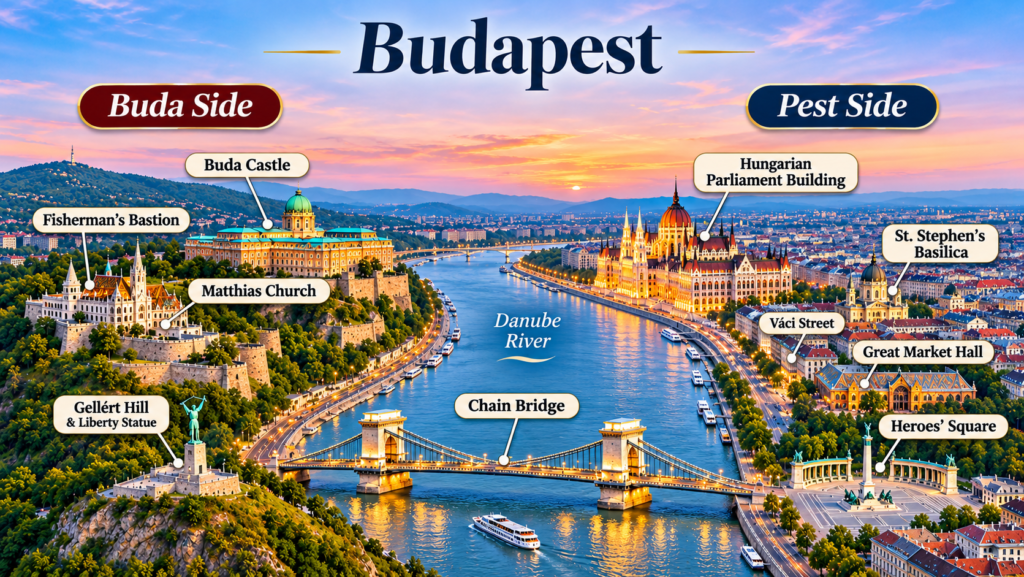
Budapest is divided by the Danube River into two main areas: Buda and Pest. Both have their own character, and I found that dedicating one day to each side worked particularly well.
On my first day, I explored Pest, including Váci Street, Central Market Hall, Liberty Bridge, and the Danube waterfront. I finished the day near the Hungarian Parliament Building, enjoying the beautiful evening views.
On my second day, I explored the historic Buda side, including Buda Castle, Matthias Church, and Fisherman’s Bastion.
Of course, Budapest has much more to offer. With three or four days, you could also visit its famous thermal baths, explore more neighbourhoods, or take a Danube river cruise.
But if you’re visiting for a weekend, two full days can still give you a wonderful introduction to the Hungarian capital.
Budapest 2-Day Itinerary at a Glance
Day 1: Exploring Pest
- Vörösmarty Square and Váci Street
- Central Market Hall and traditional Hungarian food
- Liberty Bridge and the Danube waterfront
- Széchenyi Chain Bridge
- Shoes on the Danube Bank memorial
- Hungarian Parliament Building
- Budapest by night
Day 2: Discovering Buda
- Cross the Chain Bridge
- Explore Buda Castle and its viewpoints
- Sándor Palace and the Turul Bird Statue
- Walk through the historic Castle District
- Matthias Church
- Fisherman’s Bastion
- Return towards the Danube waterfront
This itinerary follows my own sightseeing route, but you can adjust it depending on your interests and how much time you want to spend at each attraction.
Day 1: Exploring Pest — Markets, Food and the Danube
I started my first day in the Inner City on the Pest side. This is a great area for first-time visitors because so many restaurants, shops, and attractions are within walking distance.
Rather than rushing between famous landmarks, I wanted to experience the streets, observe everyday life, and discover what gives Budapest its character.
Start at Vörösmarty Square
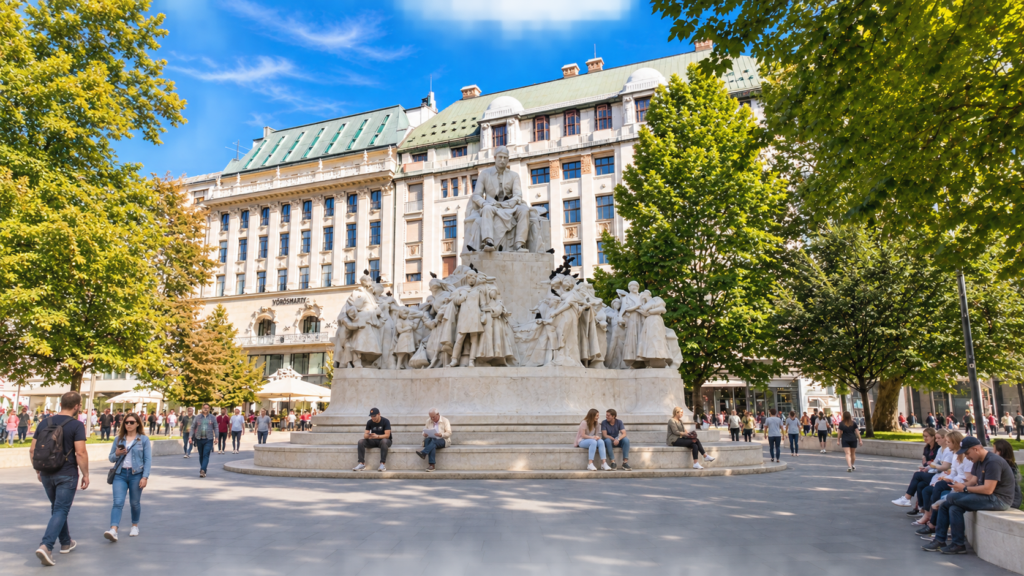
My first stop was Vörösmarty Square, one of the well-known squares in central Budapest.
The area was lively, with tourists taking photographs, people relaxing, and cafés and shops surrounding the square. In the centre stands a monument dedicated to the Hungarian poet Mihály Vörösmarty.
What caught my attention was the architecture. The surrounding buildings looked elegant, and the square had a welcoming atmosphere.
It’s a convenient starting point for exploring Pest, especially because it connects directly to Váci Street.
Travel tip: Spend a few minutes exploring the streets around the square before continuing. Some of the smaller streets are just as interesting as the main pedestrian areas.
Walk Along Váci Street
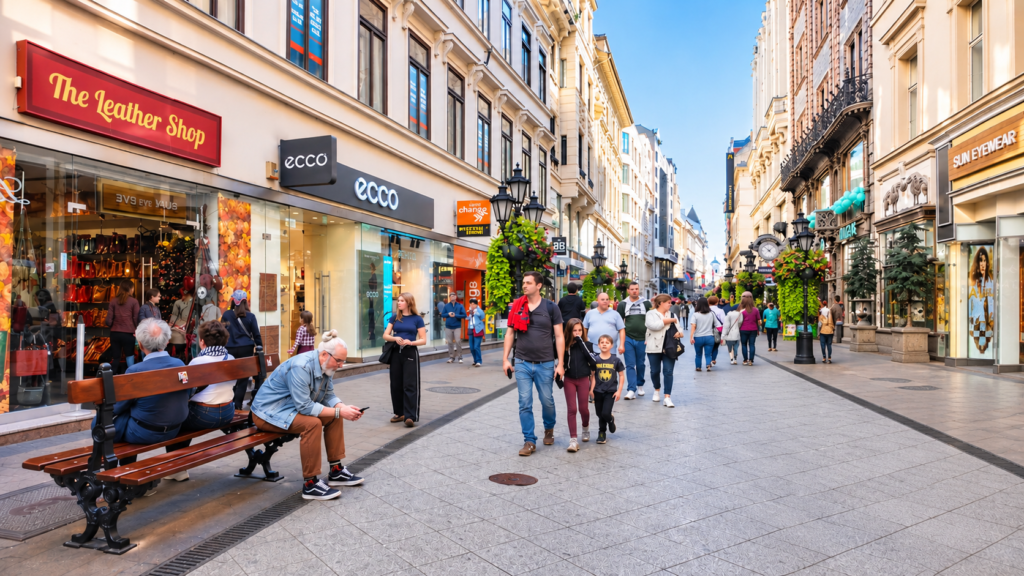
From Vörösmarty Square, I continued along Váci Street, one of Budapest’s most famous pedestrian shopping streets.
This was one of my favourite parts of the first day.
There were restaurants, outdoor cafés, souvenir shops, international brands, and visitors from different countries. Despite the busy atmosphere, I noticed how clean and well-maintained the area looked.
I particularly enjoyed the architecture. Some buildings had beautiful decorative façades, while others reflected a more modern side of the city.
During my walk, I also came across a giant moon installation that had become a popular photography spot.
One of the highlights was meeting other travellers. I chatted with visitors from Serbia and Italy, exchanging our impressions of Budapest. These unexpected conversations are something I always enjoy when travelling.
Váci Street is touristy, but I think it’s still worth exploring, particularly if it’s your first time in Budapest.
Explore Central Market Hall
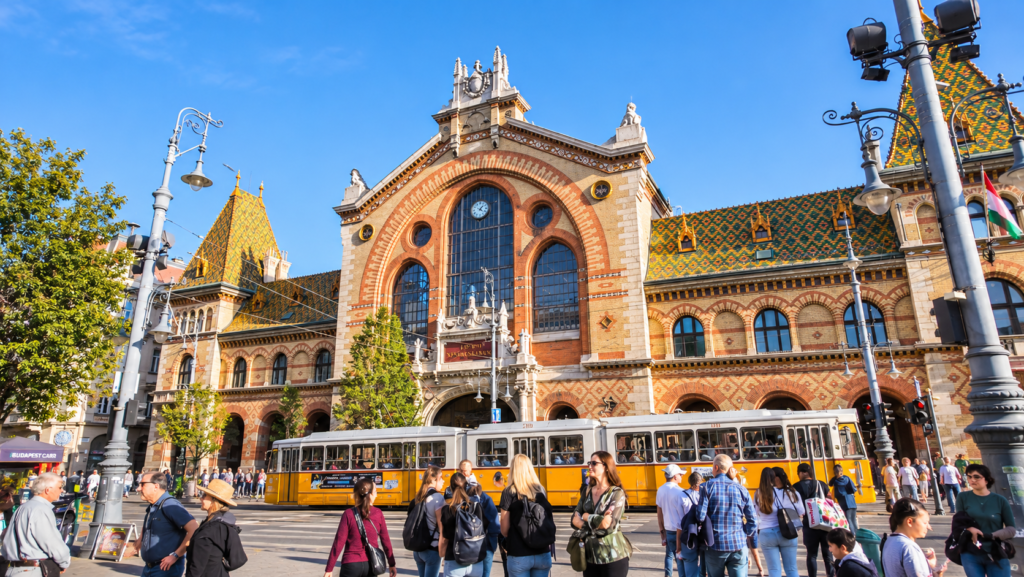
At the southern end of Váci Street, I reached Central Market Hall, also known as the Great Market Hall.
Even before entering, the building caught my attention. Its grand exterior and colourful roof make it one of the city’s most recognisable markets.
Inside, I found stalls selling fresh produce, meat, Hungarian sausages, paprika, sweets, souvenirs, and traditional crafts.
Paprika was everywhere. It’s an important ingredient in Hungarian cuisine, and you’ll find it sold in different varieties, from mild to spicy.
The upper level has souvenir stalls and food vendors serving traditional Hungarian dishes.
I enjoyed walking around and seeing the variety of products, but I also noticed that some items were quite expensive, particularly those aimed at tourists.
Travel tip: Central Market Hall is worth visiting for its atmosphere and architecture, even if you don’t plan to shop. Compare prices before buying souvenirs.
Try Traditional Hungarian Lángos

One of the Hungarian foods I wanted to try was lángos, a popular dish made from deep-fried dough.
It’s often served with sour cream, grated cheese, garlic, or other toppings.
I found a food stall inside Central Market Hall and decided to order one.
There were several varieties available, including options with plenty of toppings. The portion was quite substantial, and the combination of fried dough and toppings made it a filling meal.
It’s not exactly a light snack, so I recommend trying it when you’re hungry!
Hungary is also famous for goulash, a traditional paprika-based dish, which you’ll see advertised in restaurants throughout Budapest.
For me, trying local food is an important part of understanding a destination, even when the dishes are different from what I usually eat.
Visit Liberty Bridge
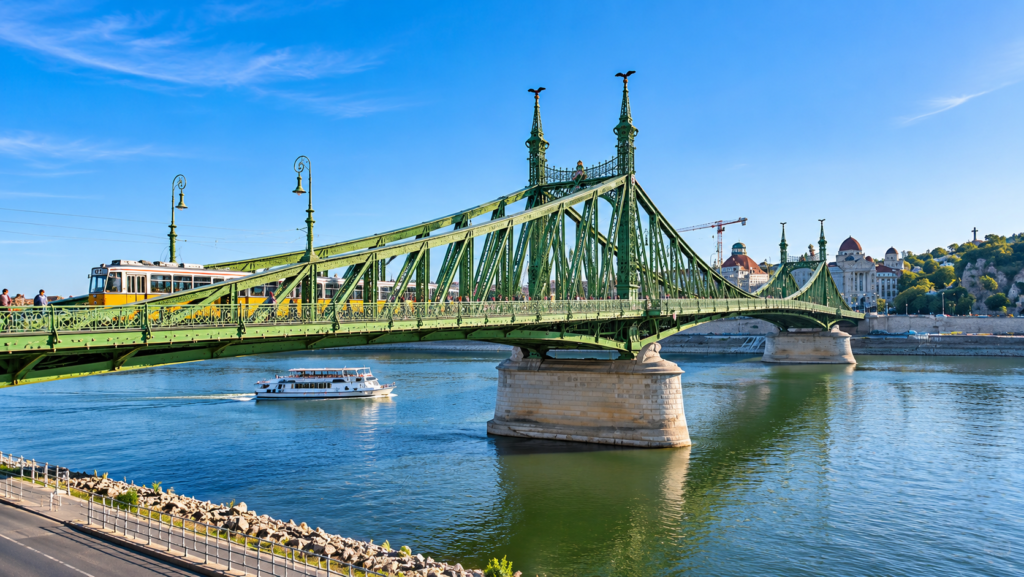
After exploring the market, I walked towards Liberty Bridge, just a short distance away.
This bridge immediately stands out because of its distinctive green colour and decorative iron structure.
Built in the late nineteenth century, it connects Pest with Buda across the Danube River.
I stopped nearby to admire the bridge and enjoy the surrounding views.
From here, you can see the river, the buildings along the waterfront, and the hills on the Buda side.
What I liked was how different Liberty Bridge looked compared with the Chain Bridge, which I visited later.
Both are beautiful, but they have completely different architectural styles.
Walk Along the Danube River
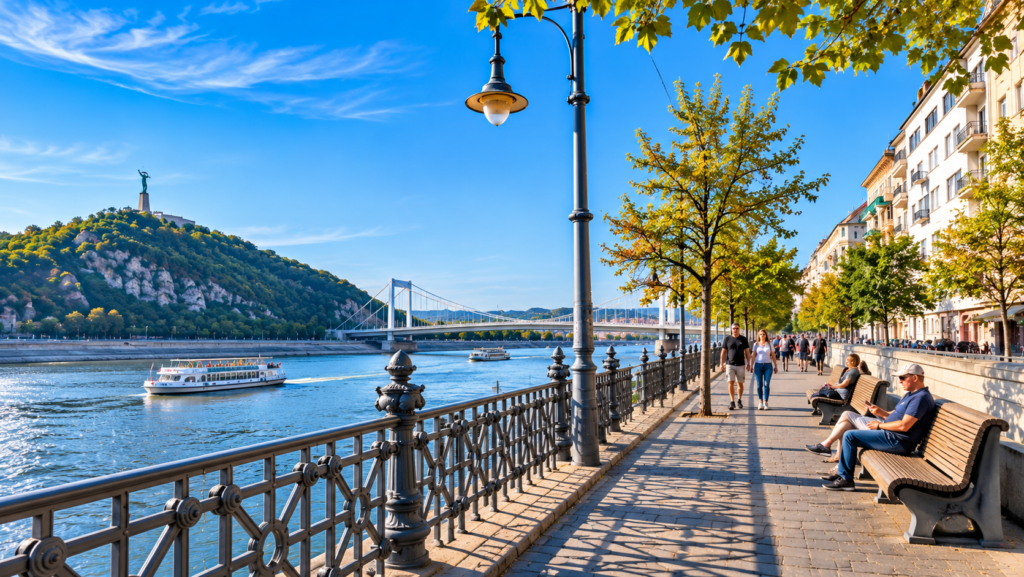
After visiting Liberty Bridge, I continued along the Danube waterfront.
This was one of the most enjoyable parts of my first day.
The river is at the heart of Budapest, separating Buda and Pest while connecting them through a series of beautiful bridges.
As I walked, I could see the historic buildings and hills of Buda across the water, while Pest offered grand architecture and lively streets.
There were people walking, sitting along the waterfront, taking photographs, and enjoying the scenery. Sightseeing boats also passed along the river.
I didn’t take a Danube cruise during this trip, but it’s a popular activity, especially in the evening.
For me, simply walking beside the river was already a memorable experience.
Travel tip: Allow enough time for the waterfront. It’s not just a route between attractions; it’s one of the best places to enjoy Budapest’s atmosphere.
Admire the Famous Chain Bridge
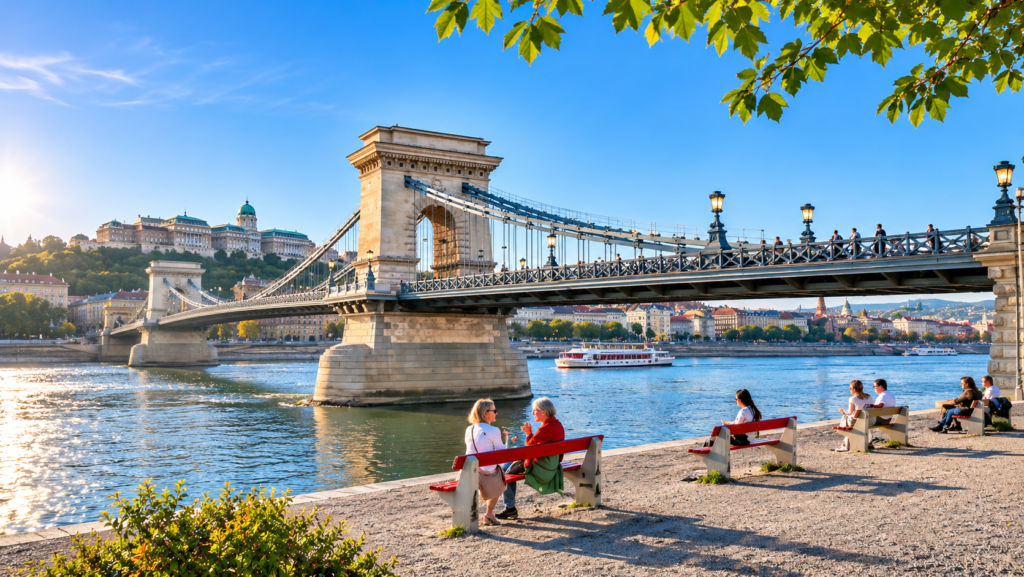
Continuing along the river, I reached Széchenyi Chain Bridge, usually known as the Chain Bridge.
Opened in 1849, it was the first permanent bridge connecting Buda and Pest.
Its stone towers, suspension chains, and lion sculptures make it one of Budapest’s most recognisable landmarks.
I particularly liked the view of the bridge with Buda Castle rising behind it.
It’s impressive during the day, but I think it looks even more beautiful when illuminated at night.
The Chain Bridge also became the starting point for my second day’s exploration of Buda.
Visit the Shoes on the Danube Bank Memorial
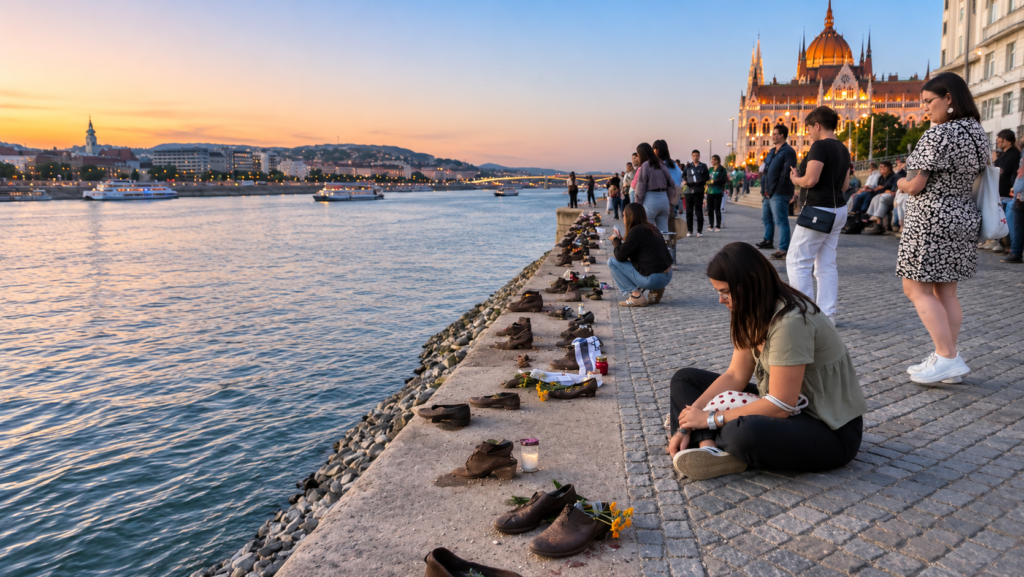
One of the most emotional places I visited in Budapest was the Shoes on the Danube Bank memorial.
Located along the Pest waterfront, it commemorates people, many of them Hungarian Jews, who were murdered by Arrow Cross militiamen during the Second World War.
Victims were forced to remove their shoes before being shot beside the river.
Today, sixty pairs of iron shoes stand along the riverbank, representing men, women, and children whose lives were taken.
When I arrived, I noticed flowers and candles placed beside some of the shoes.
Seeing the different sizes of footwear, especially the children’s shoes, made the history feel particularly personal.
It’s a powerful reminder of a tragic period in Budapest’s past.
I think it’s an important place to visit, not just as a tourist attraction but as somewhere to stop, reflect, and remember.
See the Hungarian Parliament Building
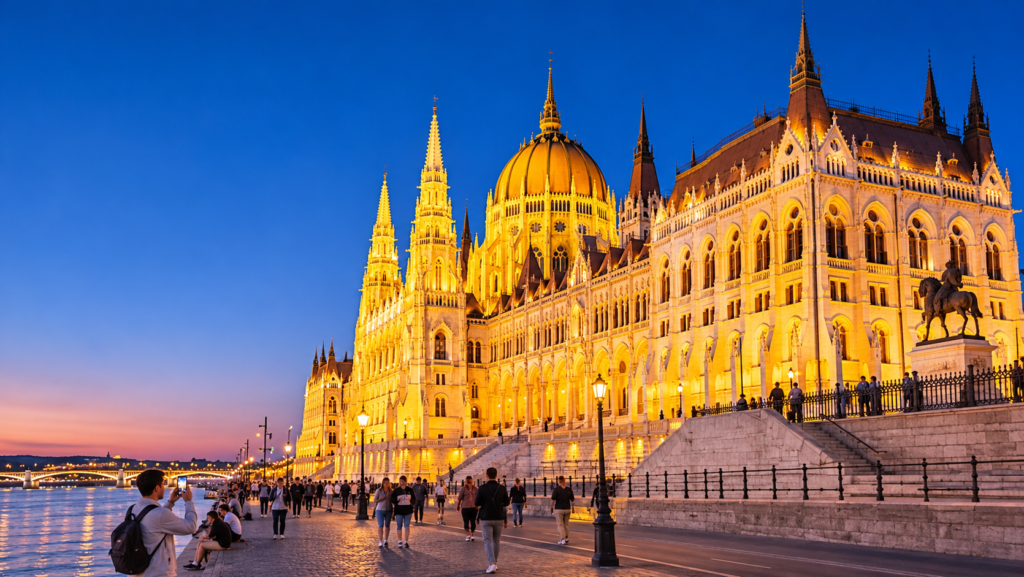
From the memorial, I continued towards the Hungarian Parliament Building.
This is probably Budapest’s most famous landmark, and seeing it in person was impressive.
Standing beside the Danube, the enormous Gothic Revival building has beautiful towers, intricate details, and a grand appearance.
I admired it from outside during my visit.
What made the experience particularly memorable was the changing atmosphere as evening approached. The waterfront became busier, and the buildings across the river began to light up.
If you’re interested in history or architecture, you can also book an official guided tour of the Parliament Building’s interior.
Travel tip: If you want to visit inside, check the official visitor website for current ticket availability and tour arrangements.
Experience Budapest at Night
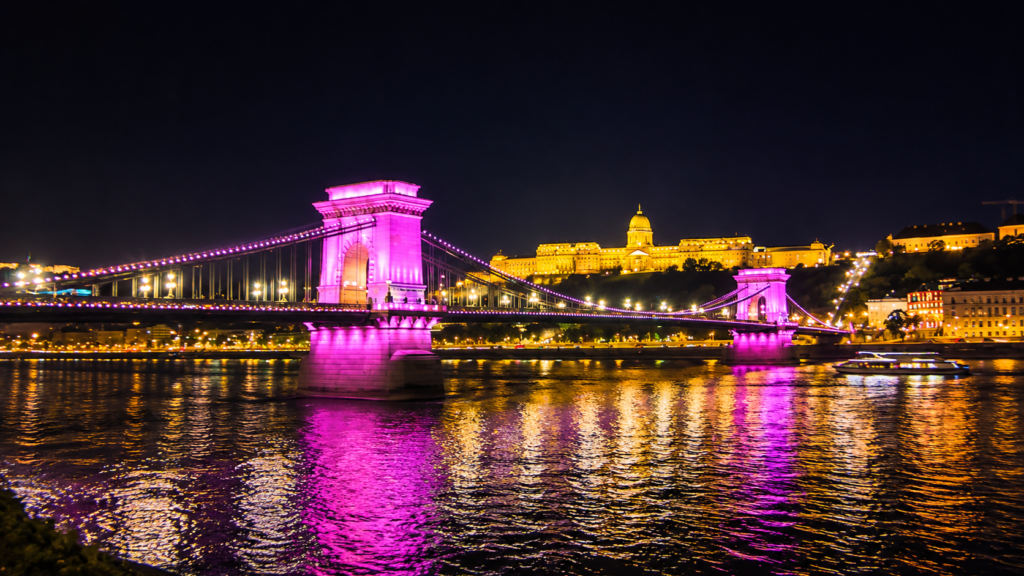
If there’s one experience I strongly recommend during your two days in Budapest, it’s spending an evening beside the Danube.
I enjoyed Budapest during the day, but after sunset, the city looked completely different.
The illuminated Buda Castle appeared golden across the river, the Chain Bridge glowed against the dark sky, and the lights reflected beautifully on the water.
Sightseeing boats passed along the Danube, while people sat along the waterfront enjoying the views.
I remember looking across the river and thinking how beautiful Budapest was at night.
For me, this was one of the highlights of the entire trip.
And the best part? You don’t need to spend money on an expensive activity to enjoy it.
A simple evening walk along the river can be unforgettable.
Day 2: Exploring Buda — Castle, History and Panoramic Views
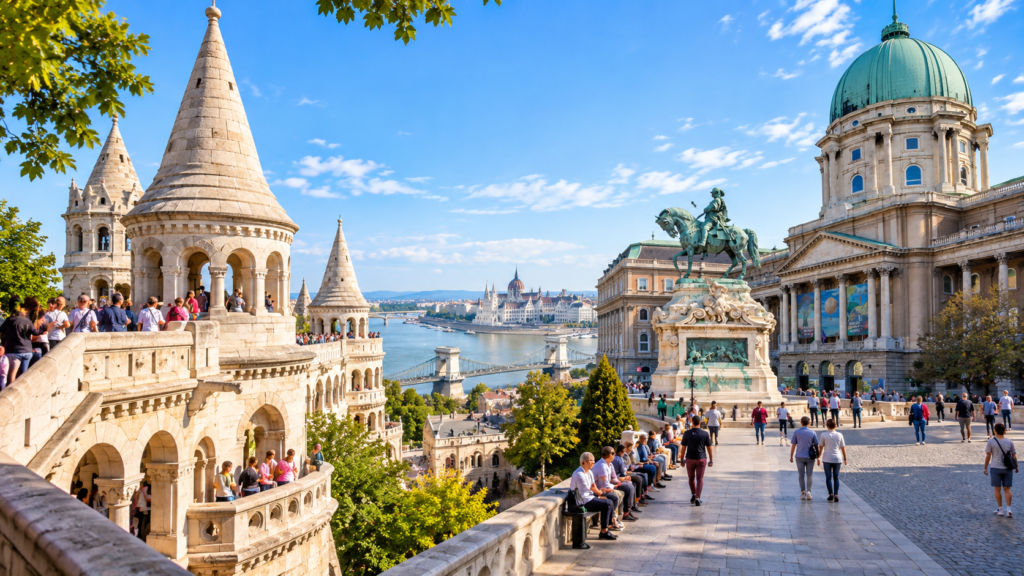
After spending my first day exploring the lively Pest side, I dedicated my second day to Buda.
This part of Budapest has a noticeably different character.
While Pest is full of shopping streets, restaurants, and grand urban buildings, Buda is known for its hills, historic streets, castle grounds, and impressive viewpoints.
I was particularly excited to explore Buda Castle and Fisherman’s Bastion.
Cross the Chain Bridge Towards Buda
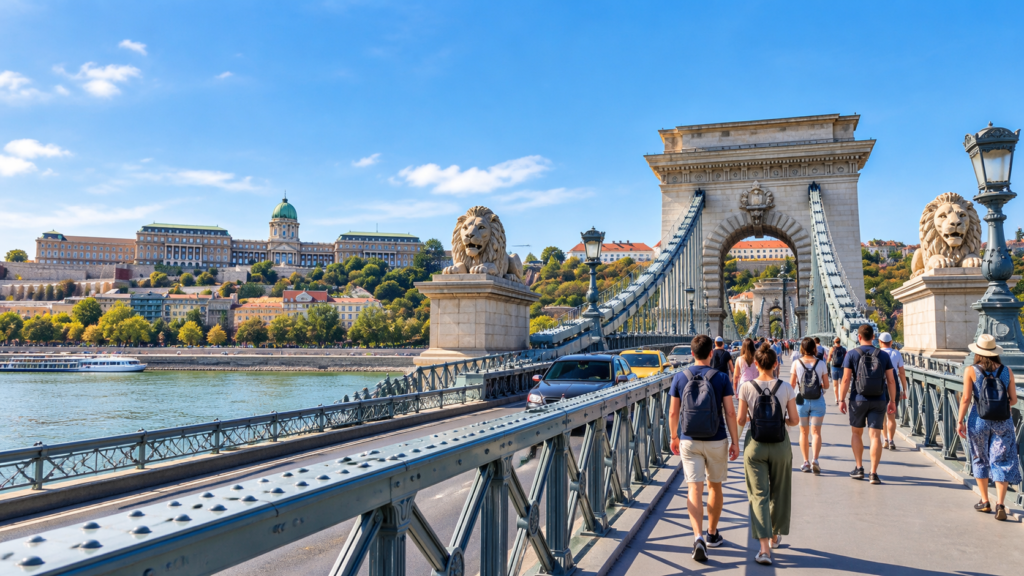
I began my second day near the Chain Bridge, heading towards the Buda side.
As you approach Buda, Castle Hill rises above the river, with the historic castle complex overlooking the city.
It’s a beautiful sight and a great introduction to this part of Budapest.
There are several ways to reach the castle area, including walking uphill, taking the historic funicular, or using other transport options.
I chose to explore on foot, which gave me more freedom to stop and enjoy the views.
If you’re comfortable walking uphill, I think it’s a rewarding way to experience the area.
However, if you prefer to save your energy, check the available transport options before visiting.
Explore Buda Castle
Buda Castle is one of Budapest’s most important historical landmarks.
Standing high above the Danube, the castle complex has been associated with Hungarian royalty and political power for centuries.
Over time, the buildings have been damaged, rebuilt, and restored, particularly following destruction during the Second World War.
Today, the complex includes important cultural institutions such as the Hungarian National Gallery and Budapest History Museum.
During my visit, I explored the outdoor areas rather than going inside the museums.
There were large courtyards, grand buildings, monuments, and terraces overlooking the city.
What impressed me most wasn’t necessarily one particular building, but the scale of the entire complex and the views across Budapest.
Looking down at the Danube and Pest, I could recognise several places I had explored the previous day.
Travel tip: You can enjoy many of the castle’s outdoor areas and viewpoints without buying a museum ticket. Allow time to explore the surroundings rather than rushing through.
Enjoy the Views from Castle Hill
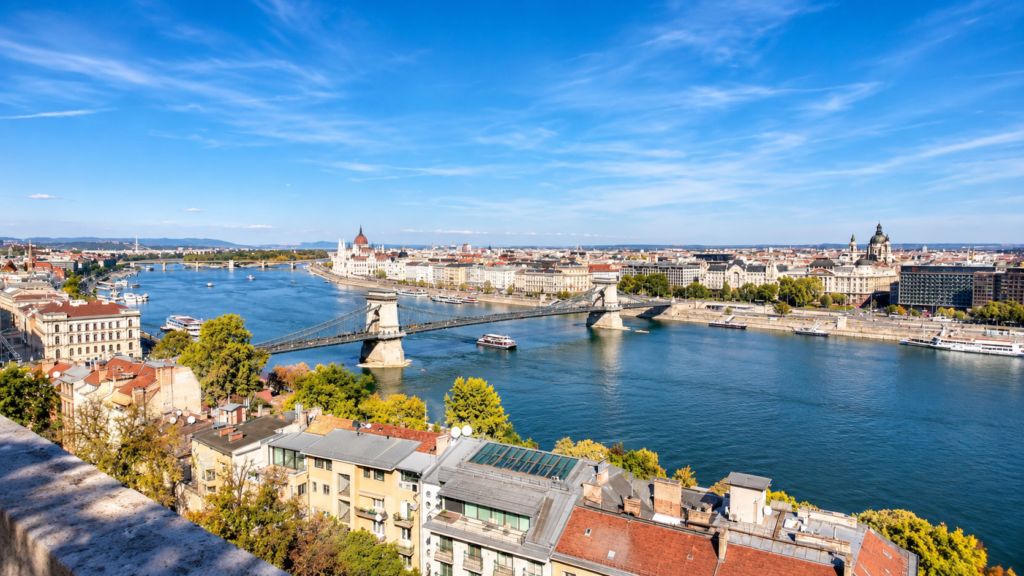
One of the best reasons to visit Buda Castle is the panoramic view.
From the terraces, you can look across the Danube towards Pest and see the bridges, the Hungarian Parliament Building, and the city’s beautiful architecture.
I spent quite a bit of time enjoying the scenery and taking photographs.
After walking through Pest on my first day, seeing the city from above gave me a completely different perspective.
In my opinion, Castle Hill is one of the best places in Budapest for photography.
See Sándor Palace and the Turul Bird Statue
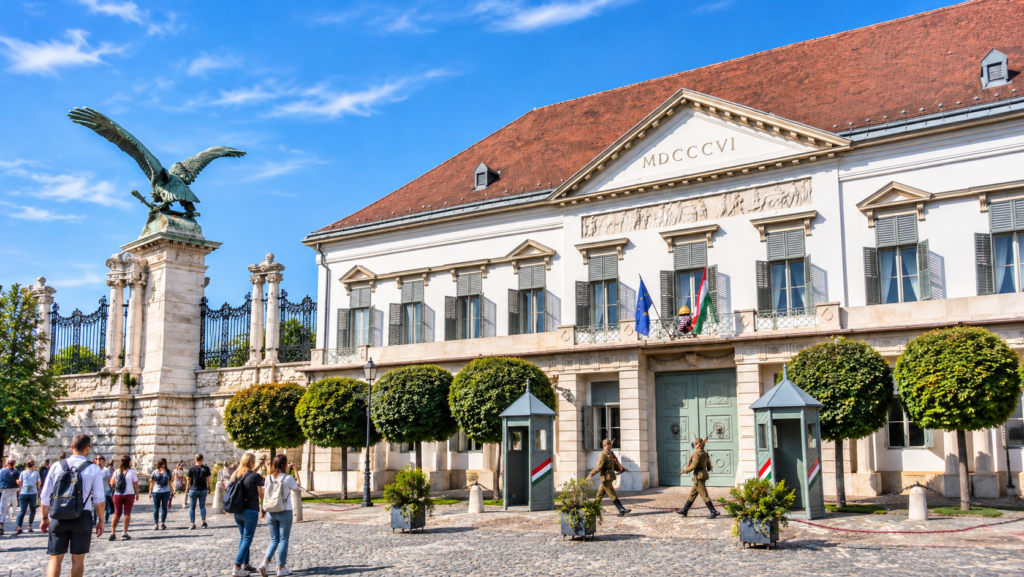
While exploring the castle area, I passed Sándor Palace, the official residence and workplace of Hungary’s president.
During my visit, I saw a changing-of-the-guard ceremony taking place outside, which was an interesting moment to experience.
Nearby, I also came across the impressive Turul Bird Statue.
The Turul is a legendary bird that plays an important role in Hungarian mythology and national identity.
With its wings spread wide, the large bronze statue stands prominently near the castle area.
These landmarks are easy to include while exploring Castle Hill, and they add another layer of history to the visit.
Wander Through the Historic Castle District
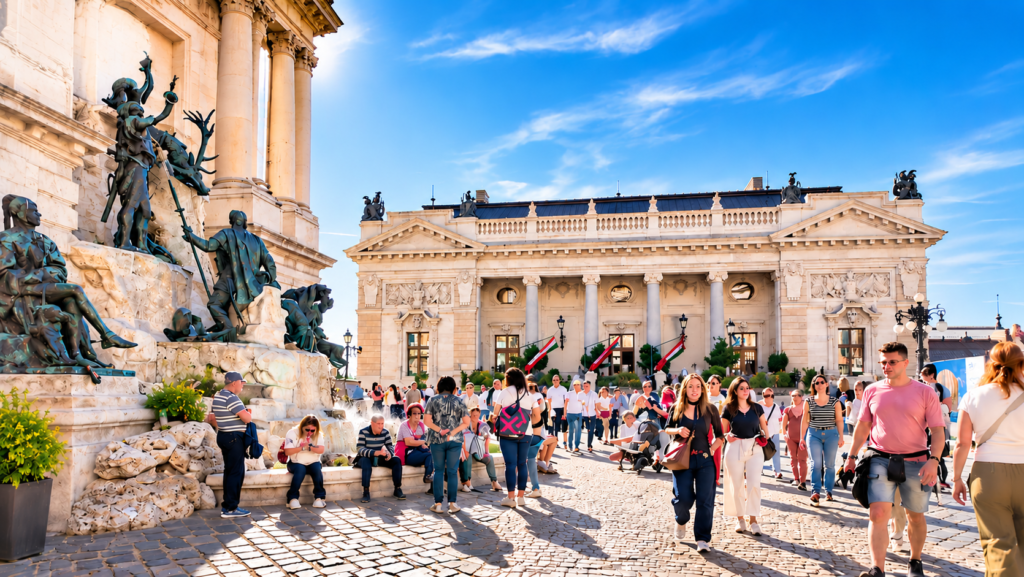
After exploring the castle complex, I continued through the surrounding historic streets.
This was one of my favourite parts of Buda.
The atmosphere felt noticeably different from the busy centre of Pest.
There were cobbled streets, colourful buildings, small cafés, restaurants, and quieter residential areas.
Although the Castle District attracts plenty of tourists, some streets still have a peaceful neighbourhood atmosphere.
I enjoyed simply wandering around, looking at the architecture, and discovering smaller corners of the district.
If you enjoy walking through historic European neighbourhoods, I think you’ll appreciate this part of Budapest.
Visit Matthias Church
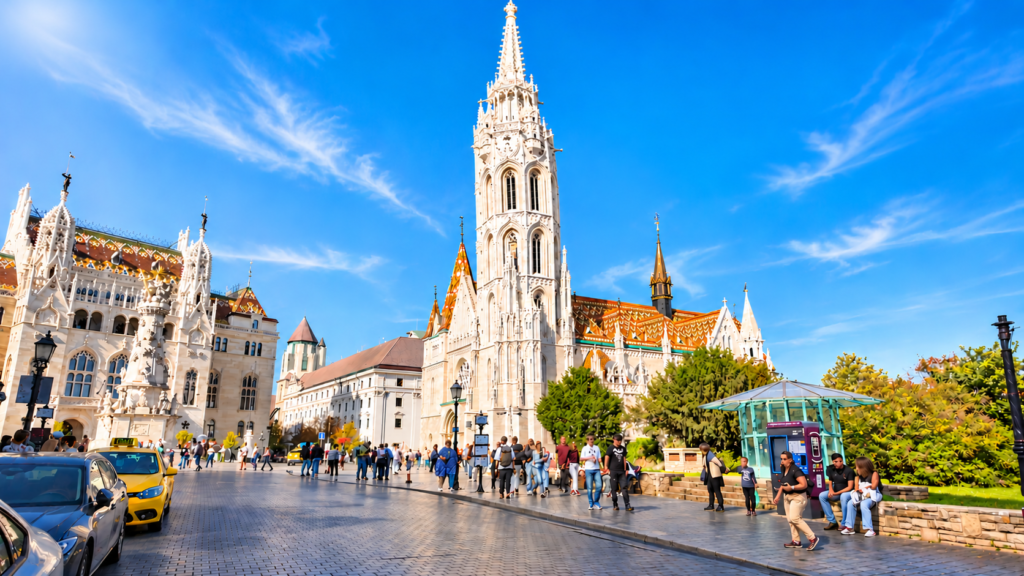
My next major stop was Matthias Church, located in the heart of the Castle District.
This is one of Budapest’s most beautiful churches, and its architecture immediately caught my attention.
The church has a long history, although its appearance has changed significantly over the centuries.
During the Ottoman period, it was used as a mosque, while much of its current appearance comes from extensive nineteenth-century restoration.
What makes it particularly distinctive is its colourful patterned roof.
The decorative tiles, detailed stonework, and impressive tower give the church a very different appearance from many other churches I’ve visited in Europe.
I admired the building from outside and spent some time taking photographs.
Travel tip: If you want to visit the interior, check the official opening hours and ticket information in advance.
Discover Fisherman’s Bastion
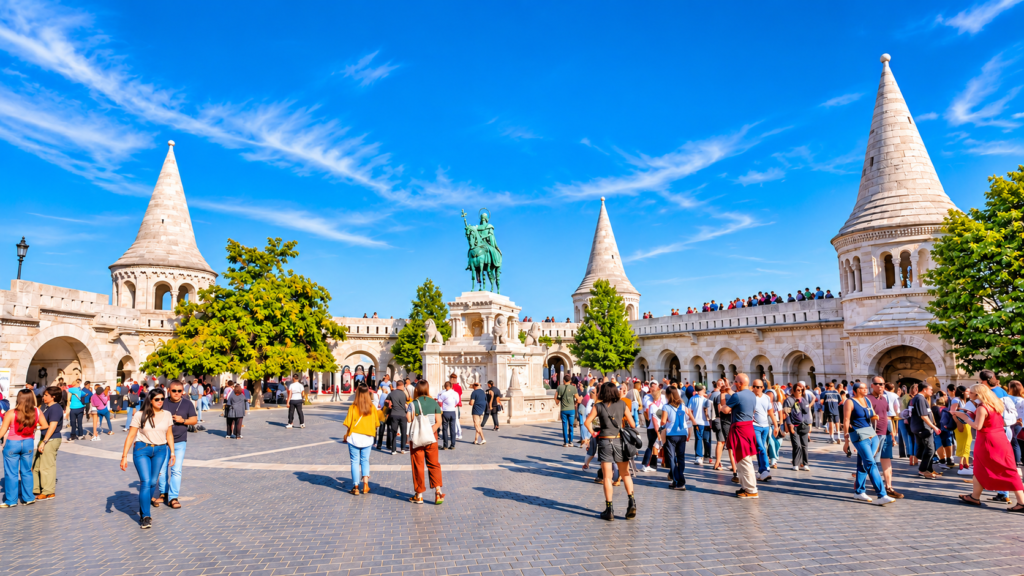
Just beside Matthias Church is Fisherman’s Bastion, one of Budapest’s most photographed attractions.
And after visiting it, I can understand why.
The white stone terraces, decorative towers, staircases, and panoramic views make the place feel almost like something from a fairytale.
Although it looks medieval, the present structure was built around the turn of the twentieth century.
Its seven towers represent the seven Magyar tribes traditionally associated with the founding of the Hungarian nation.
When I arrived, the area was very busy with tourists, photography groups, and visitors from around the world.
I even noticed couples taking wedding photographs.
Despite the crowds, I found the setting impressive.
From the terraces, you can enjoy a beautiful view of the Danube, the Parliament Building, and the Pest side of the city.
For me, this was one of the highlights of the second day.
I particularly liked how the architecture and the scenery complemented each other. It’s not just a viewpoint; the structure itself is part of the experience.
Travel tip: Some sections are freely accessible, while certain upper terraces may require a ticket during designated hours. Check current access arrangements before visiting.
Walk Back Towards the Danube
After exploring Fisherman’s Bastion and the Castle District, I made my way back down towards the river.
The Buda side felt quieter to me than the lively streets of central Pest.
I enjoyed seeing the neighbourhood from a different perspective, with its residential buildings, trams, and streets leading towards the waterfront.
One particularly good place for photographs is the Buda riverbank opposite the Hungarian Parliament Building.
From here, you can appreciate the Parliament’s full riverside façade.
It was a lovely way to finish exploring Buda before returning towards the Chain Bridge area.
Where to Stay in Budapest
Choosing the right area to stay can make a big difference, especially if you only have two days in Budapest.
During my trip, I stayed at a Mercure hotel in the Inner City area on the Pest side.
I found the location very convenient.
There were restaurants, cafés, shops, and pedestrian streets nearby, and I could reach many attractions on foot.
For first-time visitors, I would recommend considering accommodation in central Pest, particularly around the Inner City.
It’s a practical base for exploring Váci Street, the Danube waterfront, and many of Budapest’s famous landmarks.
Buda is also a beautiful place to stay, especially if you prefer quieter surroundings, but some areas involve hills and longer journeys to the main shopping and dining streets.
My recommendation: For a short first visit, central Pest offers an excellent combination of convenience and atmosphere.
Getting Around Budapest
Budapest has an extensive public transport network, including metro trains, trams, and buses.
However, during my two days exploring the city, I found that walking was one of the best ways to experience its main attractions.
Many places on the Pest side are relatively close together, particularly around the Inner City and Danube waterfront.
Walking also allows you to discover interesting streets and buildings you might otherwise miss.
For longer distances, public transport is a convenient option.
Budapest’s trams are particularly recognisable, and I enjoyed seeing them moving through the city and along the river.
For up-to-date public transport tickets, routes, and travel passes, visit the official Budapest Transport Centre (BKK) website.
Travel tip: Wear comfortable shoes. This itinerary involves plenty of walking, especially around Castle Hill. Check the official Budapest transport website for current ticket prices and travel passes.
Practical Budapest Travel Tips
Currency and Payments
Hungary’s official currency is the Hungarian forint (HUF), not the euro.
Many businesses accept cards, but having some local currency can be useful for smaller purchases.
During my visit, I noticed that exchange rates varied between currency exchange offices.
Always check the rate and any fees before exchanging money.
Food and Restaurant Prices
Budapest has plenty of restaurants, cafés, and traditional food options.
However, prices can vary considerably, particularly around popular tourist attractions.
I noticed this at Central Market Hall, where some food and souvenir prices were higher than I expected.
My advice is to compare prices and explore smaller streets away from the busiest tourist areas.
Best Time to Visit Budapest
Budapest is worth visiting throughout the year, but spring and early autumn are particularly attractive for walking and sightseeing.
Summer brings warm weather and a lively outdoor atmosphere, although popular attractions can become crowded.
Winter can be cold, but Christmas markets and festive decorations give the city a different charm.
I visited during autumn and enjoyed exploring the streets and riverfront on foot.
Free Things to Do in Budapest
One of the things I liked about Budapest was how much you could experience without paying for attractions.
Walking along the Danube, exploring Váci Street, admiring the bridges, visiting the Shoes on the Danube Bank memorial, and enjoying many Castle Hill viewpoints are all free experiences.
You can also explore much of the historic Castle District without purchasing a ticket.
Of course, museums, guided tours, thermal baths, and river cruises will add to your travel costs.
Don’t Miss Budapest at Night
I can’t recommend this enough.
If you have only two days, make sure you spend at least one evening beside the Danube.
Seeing the illuminated Chain Bridge, Buda Castle, and Parliament Building was one of my favourite experiences in Budapest.
Frequently Asked Questions About Budapest
Is Budapest Worth Visiting?
Absolutely. Based on my experience, Budapest is one of the most enjoyable European capitals I’ve explored.
It offers beautiful architecture, historic landmarks, lively streets, traditional food, and impressive views along the Danube.
The contrast between Buda and Pest makes the city particularly interesting.
Is 2 Days Enough in Budapest?
Yes, two full days are enough to see many of Budapest’s main attractions.
I recommend spending one day exploring Pest and another discovering Buda Castle and the historic Castle District.
However, an extra day would give you more time for thermal baths, museums, and a river cruise.
Is Budapest Better for 2 or 3 Days?
Three days would allow a more relaxed visit, particularly if you want to explore museums or enjoy the thermal baths.
However, I spent two full days sightseeing and found it enough for a rewarding first experience.
Is Budapest Expensive for Tourists?
Budapest can offer good value compared with some other major European capitals, although prices depend on accommodation, restaurants, and activities.
Popular tourist areas can be more expensive, so comparing prices is worthwhile.
Which Is Better to Stay In, Buda or Pest?
For first-time visitors, I generally recommend Pest, particularly the Inner City.
It’s lively, convenient, and close to many attractions.
Buda is a good choice if you prefer a quieter atmosphere and historic surroundings.
Can You Explore Budapest on Foot?
Yes, many central attractions are walkable, particularly on the Pest side.
However, Budapest is a large city, and the Buda Castle area includes hills.
Public transport is useful if you want to save time or reduce the amount of walking.
Final Thoughts: My 2 Days in Budapest
After spending three nights in Budapest and exploring the city for two full days, I left with a very positive impression.
What I enjoyed most wasn’t just the famous attractions. It was the atmosphere of the city itself.
I loved walking through the lively streets of Pest, discovering its beautiful buildings, exploring Central Market Hall, and trying Hungarian lángos.
The Danube waterfront was another highlight, especially in the evening when the bridges and historic buildings were illuminated.
On my second day, Buda offered a completely different experience, with its castle grounds, historic streets, churches, and panoramic views.
Fisherman’s Bastion was particularly memorable, and I can understand why it’s one of Budapest’s most photographed places.
If you’re planning your first visit, I genuinely think two days are enough to discover what makes this city special, even though there will still be plenty left to explore.
And if you enjoy walking, discovering local neighbourhoods, and experiencing the atmosphere of a destination, Budapest is definitely worth adding to your travel plans.
Watch My Budapest Travel Videos
If you’d like to experience Budapest beyond the photographs, you can watch my two Budapest travel vlogs on my Time For Travel YouTube channel.
In the first video, I explore Pest, including Váci Street, Central Market Hall, Hungarian food, and the beautiful Danube waterfront.
In the second video, I visit Buda Castle, Matthias Church, Fisherman’s Bastion, and some of the best viewpoints overlooking the city.
Both videos show the streets, atmosphere, and experiences from my actual visit.
If you’re planning a longer Central Europe trip, you can also explore my Prague and Bratislava travel guides for more inspiration.