
Explore Thailand
Discover vibrant cities, ancient temples, tropical islands, incredible food, and unforgettable experiences across Thailand.
DISCOVER THAILAND
Thailand is one of my favourite countries to explore, and I’ve travelled there several times. From the energy of Bangkok and the temples of Chiang Mai to the beaches of Phuket and Krabi and the lively atmosphere of Pattaya, every destination offers something different. Here you’ll find my experiences, practical travel tips, and everything you need to plan your own trip to Thailand.
PLACES I’VE VISITED IN THAILAND
Explore some of the places I’ve visited across Thailand, each offering a different side of the country.
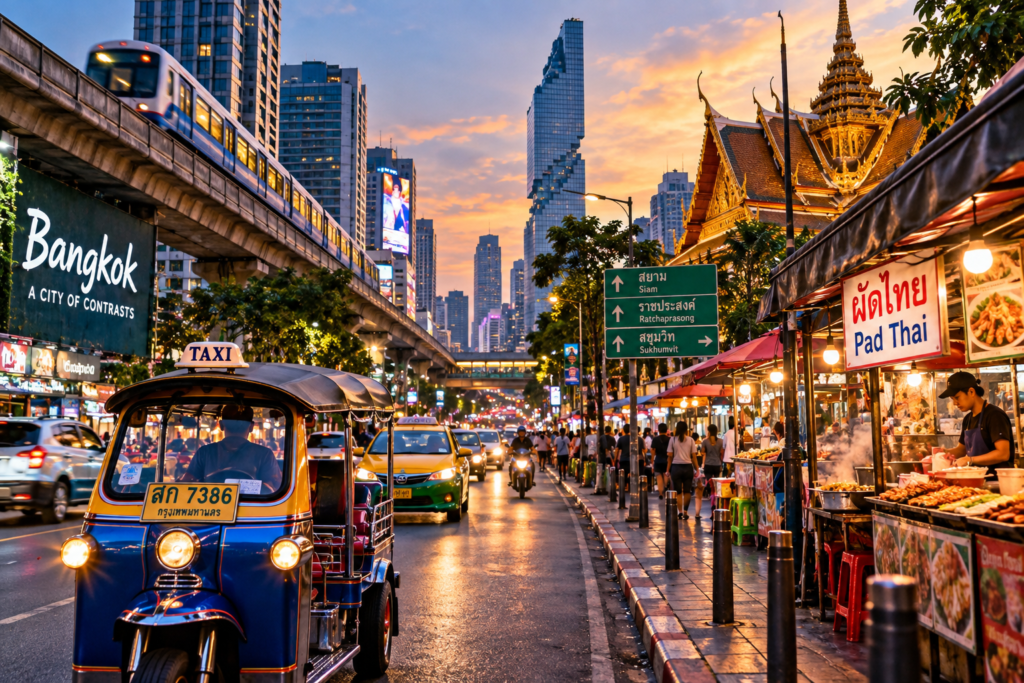
Bangkok
Temples, markets, street food and vibrant city life.
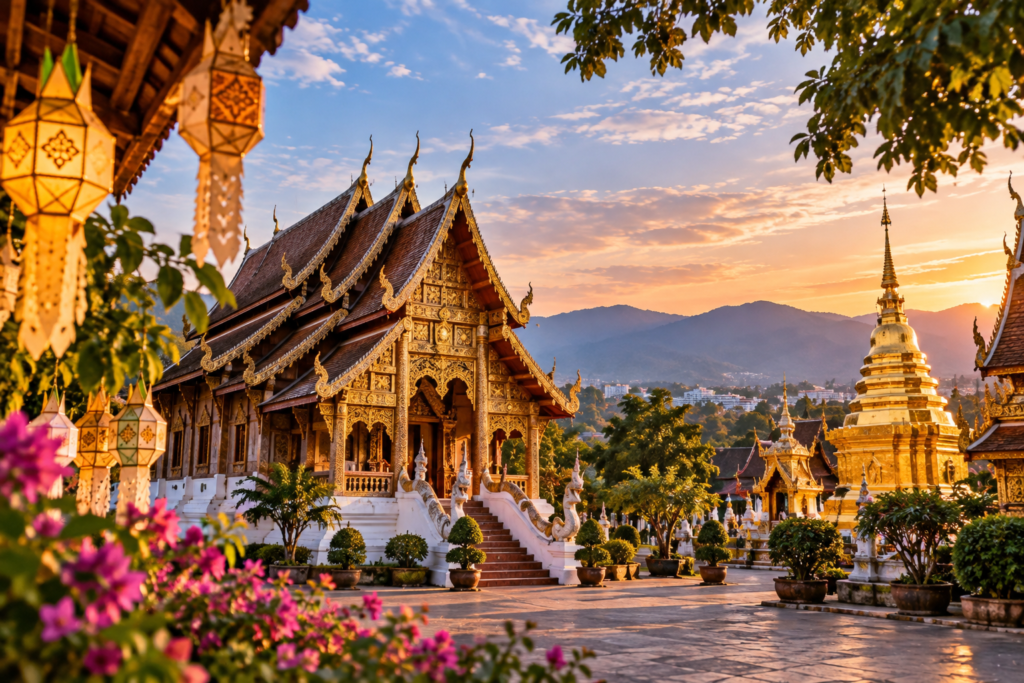
Chiang Mai
Ancient temples, northern culture and mountain scenery.
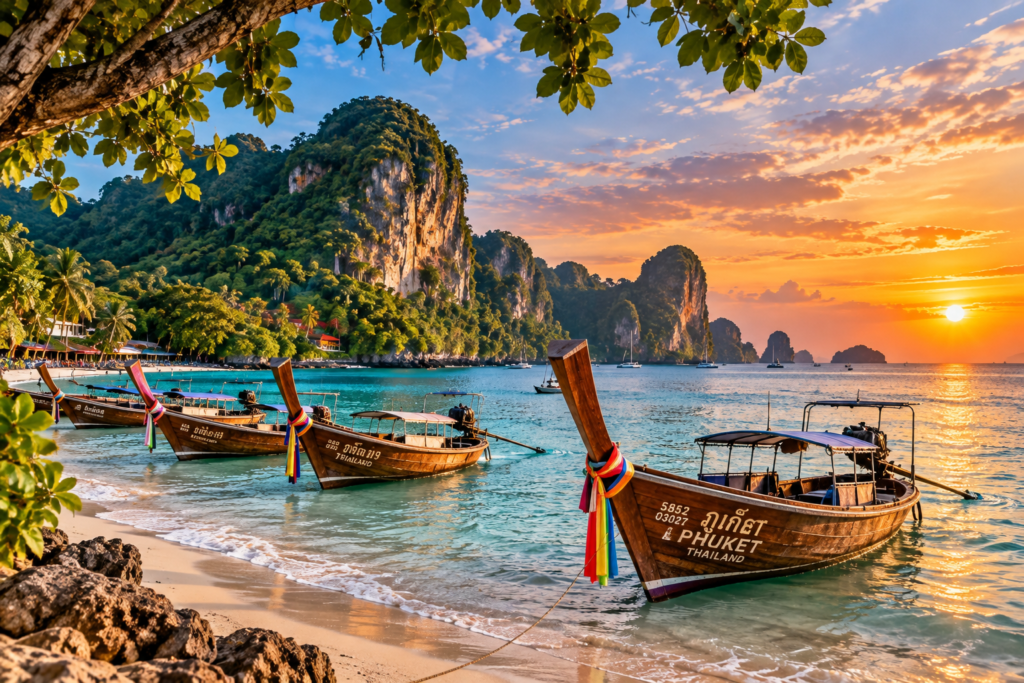
Phuket
Tropical beaches, island trips and lively nightlife.
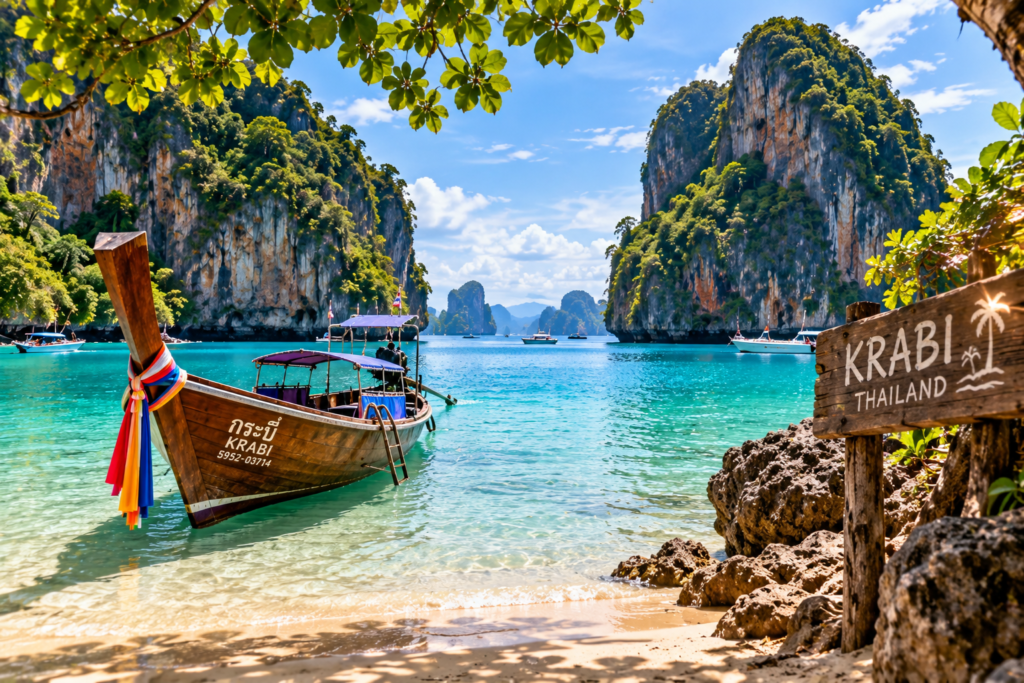
Krabi
Limestone cliffs, beautiful beaches and island adventures.
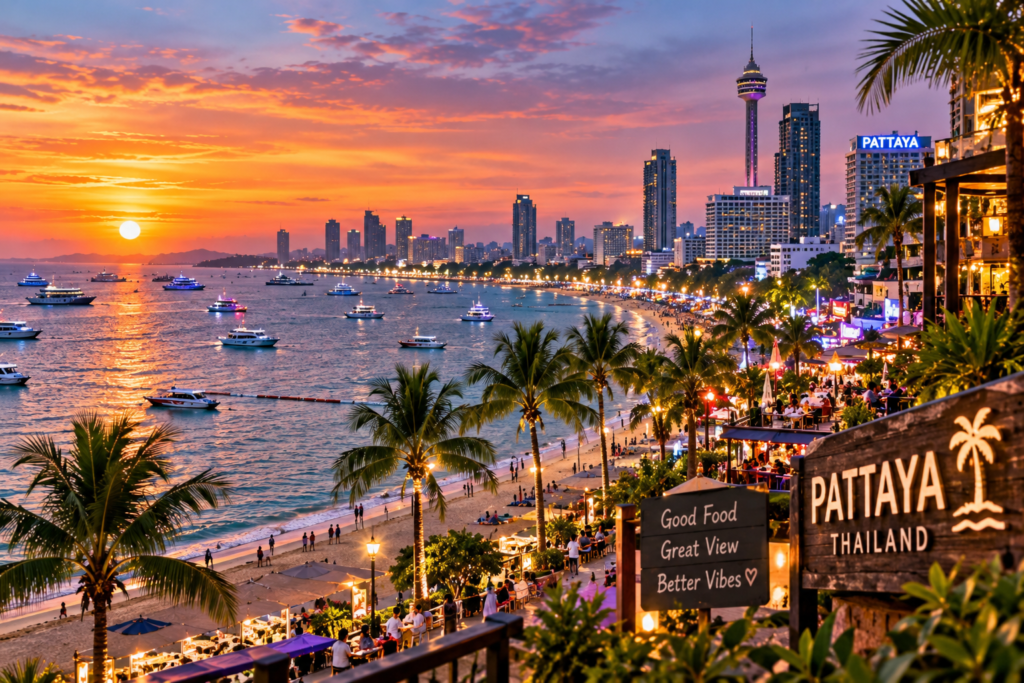
Pattaya
Beaches, nightlife, entertainment and coastal experiences.
THAILAND TRAVEL GUIDE
Everything you need to know to plan your trip to Thailand, from the best time to visit and travel costs to transport, accommodation, food, and practical tips.
Best Time to Visit Thailand
Thailand can be visited throughout the year, but the experience can vary significantly depending on the season and the part of the country you’re visiting. Generally, November to February is one of the most comfortable periods, with lower humidity, less rain, and slightly cooler temperatures. It’s also the busiest time of year, particularly in popular destinations such as Bangkok, Phuket, Krabi, and Chiang Mai.
March to May is usually the hottest period, with temperatures often becoming uncomfortable during the middle of the day. The rainy season generally runs from around May or June to October, although rainfall varies considerably between different parts of Thailand. Rainy season doesn’t necessarily mean rain all day — you can still have plenty of sunshine, with heavy showers arriving for a shorter period.
If beaches are an important part of your trip, remember that weather patterns also differ between Thailand’s Andaman coast and Gulf islands. It’s worth checking the weather for the specific destinations you plan to visit rather than looking only at Thailand as a whole.
How Much Does Thailand Cost?
Thailand is still one of the best destinations for travellers who want to experience a lot without spending a fortune. Your costs will depend on where you stay, how often you use taxis or private transport, where you eat, and how many tours and activities you book. Bangkok and Chiang Mai can be particularly good value, while Phuket, Krabi and some of the popular islands can be noticeably more expensive, especially for accommodation, taxis and organised tours.
If you travel on a tight budget, it’s possible to spend around ฿700–1,200 per person per day, especially if you choose inexpensive accommodation, eat local food and street food, and use public transport. This doesn’t include international flights or expensive tours.
For a comfortable budget trip, around ฿1,500–2,500 per person per day gives you much more flexibility. You can stay in decent private accommodation, eat very well, use services such as Grab when needed, visit attractions and still enjoy Thailand without constantly worrying about every baht you spend.
Accommodation can vary enormously. Hostels and simple guesthouses can be very inexpensive, while comfortable hotels are often available for much less than you would pay in many European destinations. Resorts and beachfront hotels in places such as Phuket and Krabi can cost considerably more, particularly during busy periods.
One of the easiest ways to keep your budget low is food. Local restaurants, markets and street-food stalls can offer excellent meals at very reasonable prices. Eating mainly local food can make a big difference to your overall spending, while Western restaurants, rooftop bars, beach clubs and tourist-focused restaurants will increase your daily costs.
Transport can also be inexpensive if you use local options. Bangkok has the BTS, MRT, buses and boats, while ride-hailing apps can be useful when public transport isn’t convenient. When travelling between cities, buses and trains can save money, while domestic flights are often worth comparing if you’re travelling a long distance.
Tours and activities are where your spending can increase quickly. Island-hopping trips, diving, organised excursions, nightlife and private tours should therefore be treated as additional expenses rather than included in a basic daily budget.
From my experience travelling around Thailand, you don’t need a huge daily budget to have a good trip. If you eat locally, choose accommodation carefully and use affordable transport, Thailand can still offer excellent value for budget and solo travellers.
Getting to Thailand
Thailand is one of the easiest countries in Southeast Asia to reach, with international flights arriving from cities across Europe, the Middle East, Asia and other parts of the world. Bangkok is the main international gateway, and most long-distance travellers will arrive at either Suvarnabhumi Airport (BKK) or Don Mueang International Airport (DMK).
Suvarnabhumi Airport handles many international and full-service airlines and has convenient transport connections into central Bangkok, including the Airport Rail Link. Don Mueang Airport is particularly important for low-cost airlines and is useful if you’re continuing your journey to another destination in Thailand or elsewhere in Southeast Asia.
You don’t necessarily have to fly into Bangkok. Phuket and Chiang Mai also have international airports, and depending on where you’re travelling from, flying directly to one of these destinations can save you time. Phuket is especially convenient if your trip is mainly focused on southern Thailand, the beaches and islands.
If you’re travelling around Southeast Asia, Thailand is also well connected to neighbouring countries. Low-cost flights can make it relatively easy to combine Thailand with destinations such as Vietnam, Cambodia, Malaysia and Singapore. Overland travel by bus or train is also possible on some routes, although flying can be much faster when distances are long.
When comparing flights, don’t look only at the ticket price. Check baggage allowance, airport location and arrival time, particularly with low-cost airlines. A cheaper flight may not always be the best value once checked baggage, airport transfers and other extras are added.
Getting Around Thailand
Getting around Thailand is generally easy, with plenty of transport options for both short journeys and longer trips between cities. Depending on your route, you can travel by domestic flight, train, bus, minivan, ferry, taxi, ride-hailing app or local transport.
Domestic flights are useful when travelling long distances. If you’re going from Bangkok to places such as Chiang Mai, Phuket or Krabi, flying can save a lot of time. Thailand has several domestic airlines, and fares can be affordable when booked in advance. Remember to check baggage allowances, especially with low-cost airlines, because checked luggage may cost extra.
Trains are a great option if you have more time and want to see more of the country along the way. Bangkok is connected by rail with destinations in northern and southern Thailand. Overnight sleeper trains can also save you a night of accommodation while taking you between destinations, although journeys are much slower than flying.
Buses and minivans connect cities, towns and tourist destinations throughout Thailand and are often among the cheapest ways to travel. They can be particularly useful for routes that don’t have convenient train connections. For longer journeys, I recommend comparing the travel time with flights and trains before deciding purely based on price.
In Bangkok, the BTS Skytrain and MRT metro are some of the easiest ways to move around the city. They are especially useful for avoiding Bangkok’s heavy road traffic. Boats are also useful in certain parts of the city, including services along the Chao Phraya River.
Taxis and ride-hailing apps are widely used, particularly when public transport doesn’t take you where you need to go. Apps such as Grab can be convenient because you can see the estimated fare and destination before travelling. Traditional taxis are also common in Bangkok, but make sure the driver uses the meter rather than agreeing to an unnecessarily high fixed price.
💡 My Thailand Tip
I prefer using public transport in Bangkok whenever possible, especially the BTS and MRT. They’re affordable, easy to use and can save a lot of time when Bangkok’s traffic is heavy. For places that aren’t convenient by public transport, I use a taxi or ride-hailing app.
Tuk-tuks are part of the Thailand experience, but I see them more as something to try than the cheapest way to get around. Always agree on the price before starting your journey, as fares are usually negotiated.
Transport is different in places such as Phuket, Krabi and Pattaya, where you may rely more on taxis, ride-hailing services, songthaews, local buses or rented vehicles. Transport costs can therefore be noticeably higher than in Bangkok, especially in popular tourist areas.
If you’re heading to the islands, ferries and speedboats are an important part of the journey. Many routes connect mainland ports and islands, and combination tickets may include a bus or minivan transfer followed by the ferry. During periods of rough weather, boat schedules can sometimes change, so avoid making extremely tight connections with flights.
Scooters and motorbikes are popular in many parts of Thailand, particularly on the islands. However, only rent one if you are properly licensed, insured and confident riding in local traffic. Wearing a helmet is essential, and you should check that your travel insurance actually covers motorbike use before riding.
Overall, I recommend choosing transport based on distance, time and location rather than always choosing the cheapest option. Public transport works particularly well in Bangkok, while flights can make sense for long distances and ferries are essential for many island trips. Mixing these different options is often the easiest way to travel around Thailand.
Where to Stay in Thailand
Thailand has accommodation for almost every type of traveller and budget, from inexpensive hostels and guesthouses to boutique hotels, apartments and luxury beach resorts. In many places, you can find comfortable private rooms for much less than you would expect to pay in major European cities.
Where you stay is just as important as the hotel itself. Before booking, check the neighbourhood and how easy it will be to reach the places you want to visit. A cheaper hotel far away from everything can sometimes cost you more in taxis and waste valuable time travelling back and forth.
In Bangkok, choosing the right area can make a big difference because the city is huge. Areas around Sukhumvit, Siam and Silom are convenient for public transport, restaurants, shopping and nightlife. Staying close to a BTS or MRT station can make exploring Bangkok much easier. If you want to be closer to the historic temples and old city, areas around the Old Town and riverside can be better choices, although transport connections are different.
In Chiang Mai, many first-time visitors choose the Old City because temples, restaurants, cafés and markets are nearby. Nimman has a more modern atmosphere with cafés, restaurants and nightlife, while staying outside the centre can offer a quieter experience.
For beach destinations such as Phuket and Krabi, choose your area carefully because different beaches can feel completely different. Some areas are lively and packed with restaurants, shops and nightlife, while others are much quieter and better for relaxing. In Phuket especially, distances between different parts of the island can be significant, and relying on taxis every day can quickly increase your budget.
Accommodation prices can change considerably depending on the season, location and how early you book. Popular beach destinations are generally more expensive during their busiest periods, while better deals can often be found outside peak season.
💡 My Thailand Tip
For a first trip to Thailand, I recommend choosing accommodation based on location rather than simply finding the cheapest room. Staying close to public transport, restaurants and the places you want to visit can save you a lot of time and money on taxis. In Bangkok, being within walking distance of a BTS or MRT station is especially useful.
Before booking accommodation, I recommend checking recent guest reviews, the exact location on the map, transport connections, air conditioning, Wi-Fi and whether the room has the facilities you need. Don’t rely only on the hotel’s star rating or promotional photos.
For solo travellers, location is particularly important. Staying somewhere reasonably central, with restaurants, shops and transport nearby, can make travelling alone much easier. Personally, I would rather pay a little more for a good location than save money on a hotel that requires a long taxi journey every time I want to go somewhere.
Food in Thailand
Food is one of the highlights of travelling in Thailand, and you don’t need to spend much money to eat well. From street-food stalls and local markets to food courts, small family-run restaurants and high-end dining, there are options for almost every budget.
Street food and local restaurants are often some of the best places to experience Thai food. Popular dishes to try include pad Thai, pad kra pao (stir-fried basil), green curry, massaman curry, tom yum, som tam (papaya salad), khao soi and mango sticky rice. Different regions of Thailand also have their own specialities, so the food you find in Chiang Mai can be quite different from what you eat in Bangkok or southern Thailand.
Bangkok is particularly good for food lovers. You’ll find street-food areas, night markets, shopping-mall food courts and restaurants throughout the city. Food courts can be especially useful for first-time visitors because you can see many different dishes in one place and prices are usually clearly displayed.
In Chiang Mai, make sure you try northern Thai dishes, particularly khao soi, a curry noodle dish that is strongly associated with northern Thailand. Markets and small local restaurants are also great places to explore regional food without spending much.
In southern destinations such as Phuket and Krabi, you’ll find plenty of seafood alongside Thai dishes. Tourist areas also have a huge selection of international restaurants, although eating in these areas can be noticeably more expensive than choosing local restaurants away from the busiest tourist streets.
If you like spicy food, Thailand is fantastic, but remember that Thai spicy can be extremely spicy. If you don’t eat very spicy food, you can ask for mai phet (not spicy) or phet nit noi (a little spicy). Even then, the interpretation of “a little spicy” can vary!
💡 My Thailand Tip
I love trying local food in Thailand, especially from busy markets and small local restaurants. If you’re not used to very spicy food, ask for mai phet (not spicy) — Thai spicy can be much hotter than you expect!
When eating street food, choose stalls that are busy and preparing food fresh, and pay attention to how ingredients are stored and handled. Bottled or properly treated drinking water is the safer choice rather than drinking untreated tap water.
Vegetarian and vegan food is available, particularly in tourist destinations and larger cities, but it’s worth remembering that a dish without visible meat may still contain fish sauce, oyster sauce, shrimp paste or meat-based stock. If you have a serious food allergy, carry a translated allergy card or message that clearly explains what you cannot eat.
One of the best things about Thailand is that eating locally can help you save money without feeling like you’re travelling on a restrictive budget. Some of the most memorable meals can come from simple restaurants, markets and street stalls rather than expensive tourist restaurants.
Internet, SIM Cards & Money
Staying connected in Thailand is easy and relatively inexpensive. Mobile coverage is generally very good in cities and popular tourist destinations, and you’ll find Wi-Fi in most hotels, cafés, restaurants and shopping centres.
Whenever I travel to Thailand, I usually buy a TrueMove H prepaid SIM card from a 7-Eleven store. The package I’ve used offers unlimited internet for 30 days at speeds of up to 10 Mbps, and I’ve found the connection very good and the price affordable. Packages and prices can change, so check the current options when you arrive rather than expecting exactly the same deal.
You can buy prepaid SIM cards from 7-Eleven stores, mobile network shops and airports. If you buy a Thai SIM card, carry your passport with you, as your identity needs to be registered when the SIM is activated. Airport SIM packages can be convenient when you first arrive, but it can be worth comparing them with packages available elsewhere.
💡 My Thailand Tip
I usually buy my SIM from a 7-Eleven after arriving in Thailand rather than at the airport. I’ve found it easy, affordable and reliable. Just remember to take your passport with you when you buy it.
An eSIM is another convenient option if your phone supports one. You can arrange it before travelling and have mobile data ready when you arrive, although I still find buying a local SIM in Thailand simple and good value.
Thailand still uses cash extensively, particularly at street-food stalls, markets, small local businesses and some transport services. Cards are widely accepted at hotels, shopping centres, larger restaurants and supermarkets, but it’s sensible to always carry some Thai baht with you.
ATMs are widely available, but foreign cards can be charged a local ATM fee in addition to any fees charged by your own bank. Because of this, making fewer, larger withdrawals may sometimes be more economical than repeatedly withdrawing small amounts. However, avoid carrying more cash than you’re comfortable with.
When paying by card or using an ATM, you may be offered the option to convert the transaction into your home currency. In many cases, choosing to pay in Thai baht (THB) and allowing your own bank or card provider to handle the conversion can give you a better exchange rate. Always check your own card’s foreign transaction fees as well.
For exchanging cash, compare the actual exchange rate and fees rather than automatically using the first exchange counter you see. Rates can vary, particularly at airports and heavily touristed locations.
Between affordable mobile data, widespread Wi-Fi, ATMs and easy access to cash, managing internet and money in Thailand is generally straightforward. I still recommend having more than one way to access your money — for example, a second bank card plus some emergency cash — in case one card is lost, blocked or doesn’t work.
Safety & Practical Tips
Thailand is generally an easy country to travel around, including for solo travellers, but it’s still important to use the same common sense you would anywhere else. Keep an eye on your belongings in crowded places, avoid carrying large amounts of cash, and keep your passport and other important documents somewhere secure.
Tourist scams can happen, particularly around busy attractions and tourist areas. Be cautious if someone tells you that a temple or attraction is closed and immediately offers to take you somewhere else. With tuk-tuks, taxis, tours and other services where the price isn’t clearly displayed, confirm the cost before agreeing.
When using taxis in Bangkok, ask for the meter to be used. Ride-hailing apps can also be useful because you can see the journey and estimated price through the app. For tuk-tuks, agree on the fare before getting in.
Road safety deserves particular attention. Motorbikes are extremely common in Thailand, but riding one carries considerably more risk than using public transport or a taxi. If you decide to rent a scooter or motorbike, make sure you have the appropriate licence, wear a helmet and check that your travel insurance covers you. Never leave your passport as security for a rental vehicle.
Thailand’s climate can be very hot and humid, so drink plenty of water, use sunscreen and avoid spending too long in direct midday sun. Mosquito repellent is also useful, particularly in the evening and in tropical or rural areas.
When visiting temples and religious sites, dress respectfully. Your shoulders and knees should generally be covered, and you may need to remove your shoes before entering certain buildings. Avoid touching religious objects or climbing onto structures unless it is clearly permitted.
Respect for the Thai monarchy is particularly important. Thailand has strict laws concerning insulting or defaming the King, Queen, heir or regent, so avoid disrespectful comments, gestures or social-media posts concerning the monarchy.
For food and water, bottled or properly treated drinking water is the safer option. When eating street food, I prefer busy stalls where food is being prepared fresh and there is a regular turnover of customers.
It’s also a good idea to have travel insurance covering medical treatment, your planned activities, cancellations and your belongings. Keep digital copies of your passport, insurance details and important bookings somewhere you can access them if your phone or documents are lost.
For the latest safety, entry and travel information, check the official UK Government Thailand travel advice.
What to Pack for Thailand
Packing for Thailand is relatively straightforward because the climate is generally warm and humid. Lightweight, breathable clothing will be useful for most of your trip, but what you bring should also depend on the season, destinations and activities you have planned.
For everyday sightseeing, pack light T-shirts, shorts and comfortable clothing that dries quickly. A comfortable pair of walking shoes is important, especially if you plan to spend long days exploring cities such as Bangkok or visiting temples and markets.
It’s also useful to carry some clothing that covers your shoulders and knees. Many temples and religious sites have dress requirements, so having lightweight trousers, a long skirt or something you can easily use to cover up will save you from having to buy or rent appropriate clothing at the entrance.
Thailand can experience sudden and heavy rain, particularly during the rainy season. A small umbrella or lightweight waterproof jacket can be useful, but because the weather is hot and humid, I wouldn’t pack a heavy raincoat.
For beach destinations such as Phuket and Krabi, bring swimwear, sunscreen, sunglasses and a hat. Sunscreen can be relatively expensive in tourist areas, so bringing your preferred product from home can be worthwhile.
Mosquito repellent is another useful item, especially for evenings, islands and areas with more vegetation. You can easily buy it in Thailand as well, so there’s no need to carry large quantities from home.
For electronics, a portable power bank is particularly useful when you’re spending the whole day exploring and using your phone for maps, photos, bookings and transport apps. Thailand commonly uses several plug types, so carrying a universal travel adapter is a simple way to avoid problems.
Keep your passport, travel insurance details, bank cards and important booking information somewhere secure. I also recommend keeping digital copies of important documents that you can access even if your phone or passport is lost.
Most everyday items are easy to buy once you arrive, particularly in places such as 7-Eleven, pharmacies and shopping centres, so there’s no need to overpack. For Thailand, travelling light is usually much more convenient, especially if you’re moving between several cities or islands.
How Long to Spend in Thailand
How long you need in Thailand depends on how many destinations you want to visit and how quickly you like to travel. Thailand is much bigger and more varied than it can appear on a map, so trying to fit Bangkok, northern Thailand and the southern beaches into a very short trip can mean spending too much of your holiday travelling between places.
For a first trip, I would recommend around 10 to 14 days if possible. This gives you enough time to experience Bangkok, visit another part of the country and spend a few days relaxing at the beach without constantly moving from one hotel to another.
If you only have one week, I would concentrate on two destinations. For example, you could spend three or four days exploring Bangkok and then fly south for a few days in Phuket or Krabi. Another option is to combine Bangkok with Chiang Mai if you’re more interested in temples, culture, markets and northern Thailand than beaches.
With 10 days, you can comfortably visit around three destinations. A trip could include Bangkok, Chiang Mai and one southern beach destination. Domestic flights can save a considerable amount of time when your holiday is short.
With two weeks, you have much more flexibility. You could spend several days in Bangkok, travel north to Chiang Mai, and then continue south to Phuket or Krabi. You would also have enough time for day trips or island excursions without having to change accommodation every day.
If you have three weeks or longer, you can travel at a much more relaxed pace and explore beyond the most popular destinations. You could combine Bangkok, northern Thailand and several destinations in the south, while allowing time for smaller towns, islands and spontaneous changes to your itinerary.
One mistake I would avoid is trying to visit too many places in a single trip. Every flight, ferry, train or bus journey takes away part of a day once you include packing, checking out, getting to the station or airport and checking into your next accommodation. Spending an extra day or two in fewer destinations often gives you a much better experience.
Thailand is also a country that you don’t have to see all at once. There is enough variety to return several times and experience something different on each trip. I’ve visited Thailand several times myself, and for me that’s a much better way to experience the country than trying to squeeze everything into one rushed itinerary.
Suggested Thailand Itinerary
There is no single perfect Thailand itinerary, but for a first trip I recommend combining Bangkok with either northern Thailand, the southern beaches, or both, depending on how much time you have. Try to avoid changing destinations every day — allowing two or three nights in each place makes the trip much more enjoyable.
7-Day Thailand Itinerary
With one week, keep things simple and choose two main destinations.
Days 1–3: Bangkok
Explore Bangkok’s temples, markets, neighbourhoods and street-food scene. Visit some of the city’s major sights, experience the Chao Phraya River and leave time to explore local areas rather than spending the entire trip rushing between attractions.
Days 4–7: Phuket or Krabi
Fly south and spend the rest of your trip enjoying the beaches. Both destinations can also be used as bases for boat trips and island-hopping. Choose Phuket if you want a larger destination with more nightlife and entertainment, or Krabi if dramatic scenery and a more relaxed atmosphere appeal to you.
10-Day Thailand Itinerary
Ten days gives you enough time to experience three very different sides of Thailand.
Days 1–3: Bangkok
Spend three days exploring the capital.
Days 4–6: Chiang Mai
Fly or take an overnight train north. Explore Chiang Mai’s temples, Old City, markets and northern Thai food, with time for a day trip if you want to see more of the surrounding region.
Days 7–10: Phuket or Krabi
Finish your trip in southern Thailand with beaches, island trips and some time to relax before travelling home.
14-Day Thailand Itinerary
Two weeks gives you much more freedom and is a great amount of time for a first visit.
Days 1–4: Bangkok
Give yourself four days to explore Bangkok without rushing.
Days 5–7: Chiang Mai
Spend three days experiencing northern Thailand, its temples, markets, food and surrounding scenery.
Days 8–10: Krabi
Fly south and use Krabi as a base for beaches, limestone scenery and island trips.
Days 11–14: Phuket
Continue to Phuket for your final few days. Explore different parts of the island, enjoy the beaches and nightlife if that interests you, or simply slow down before the end of your trip.
These routes are only a starting point. You can easily replace Phuket or Krabi with another island or add somewhere such as Pattaya if it better suits your interests. The important thing is to leave enough time to actually experience each destination rather than treating Thailand as a checklist.
If this is your first visit, I think Bangkok + Chiang Mai + one southern beach destination gives you one of the best introductions to Thailand because you experience the big city, northern culture and the tropical side of the country in the same trip.
My Thailand Travel Tips
After visiting Thailand several times, one thing I’ve learned is that the country is very easy to enjoy without overplanning everything. Having a basic itinerary is useful, especially for flights and accommodation, but leaving some flexibility gives you the freedom to stay longer somewhere you enjoy or change your plans along the way.
Don’t try to see too much in one trip. Bangkok, northern Thailand and the southern islands all offer completely different experiences. Give yourself enough time in each destination rather than spending half your holiday travelling between airports, bus stations and hotels.
Eat local whenever you can. Some of the best-value meals are found at local restaurants, markets, food courts and street-food stalls. You don’t need to eat at expensive restaurants to experience great Thai food.
Use public transport in Bangkok. The BTS and MRT can save you both money and time, particularly when the roads are busy. I use taxis or ride-hailing services when they make sense, but I wouldn’t rely on taxis for every journey.
Choose your hotel location carefully. A cheap hotel isn’t necessarily good value if you have to spend money and time on transport every day. In Bangkok, staying within easy walking distance of a BTS or MRT station can make a big difference.
Get a local SIM card. I normally buy a TrueMove H prepaid SIM from 7-Eleven. I’ve found the connection reliable and the price very reasonable. Remember to take your passport when buying a SIM because it needs to be registered.
Carry some cash. Cards are widely accepted in many places, but cash is still useful for markets, street food, smaller businesses and some local transport. I also recommend travelling with a second bank card and keeping it separately from your main card.
Don’t underestimate the heat. Exploring temples, markets and city streets for hours can become exhausting in Thailand’s heat and humidity. Drink plenty of water and give yourself time to rest, especially during the hottest part of the day.
Be respectful at temples and religious sites. Carry something lightweight that covers your shoulders and knees so you’re prepared when a dress code applies.
Most importantly, leave some time to simply experience Thailand. Markets, neighbourhoods, local restaurants and everyday street life can be just as memorable as the famous attractions. Some of my favourite parts of travelling in Thailand have simply come from exploring and seeing where the day takes me.
READY TO EXPLORE THAILAND?
From the vibrant streets and temples of Bangkok to the culture of Chiang Mai, the beaches of Phuket and Krabi, and the lively atmosphere of Pattaya, Thailand offers an incredible variety of experiences.
Explore the local markets, try the incredible Thai food, visit beautiful temples, discover tropical beaches, and take time to experience everyday life beyond the main tourist attractions.
Use this guide to plan your trip, travel with confidence, and discover more of what Thailand has to offer.
GET TRAVEL INSPIRATION IN YOUR INBOX
Get practical travel tips, destination inspiration, and new guides delivered straight to your inbox.