
Explore Malaysia
Discover modern cities, incredible food, tropical islands, diverse cultures, and beautiful landscapes across Malaysia.
DISCOVER MALAYSIA
Malaysia is one of Southeast Asia’s most diverse destinations, combining modern cities, tropical islands, historic towns, rainforests, beaches, and an incredible mix of cultures. Malay, Chinese, Indian, and Indigenous influences can be seen throughout the country, especially in its food, architecture, festivals, and everyday life.
From the skyscrapers and busy streets of Kuala Lumpur to the street food and heritage buildings of Penang, the beaches of Langkawi, and the rainforests of Malaysian Borneo, there is much more to Malaysia than you might expect.
Malaysia is also relatively easy to travel around, making it a great destination for first-time visitors to Southeast Asia and solo travellers. Here you’ll find my experiences, practical travel tips, and useful information to help you plan your own trip.
PLACES I’VE VISITED IN MALAYSIA
Explore my experience in Kuala Lumpur, Malaysia’s vibrant capital, filled with modern landmarks, diverse neighbourhoods, incredible food, and local culture.
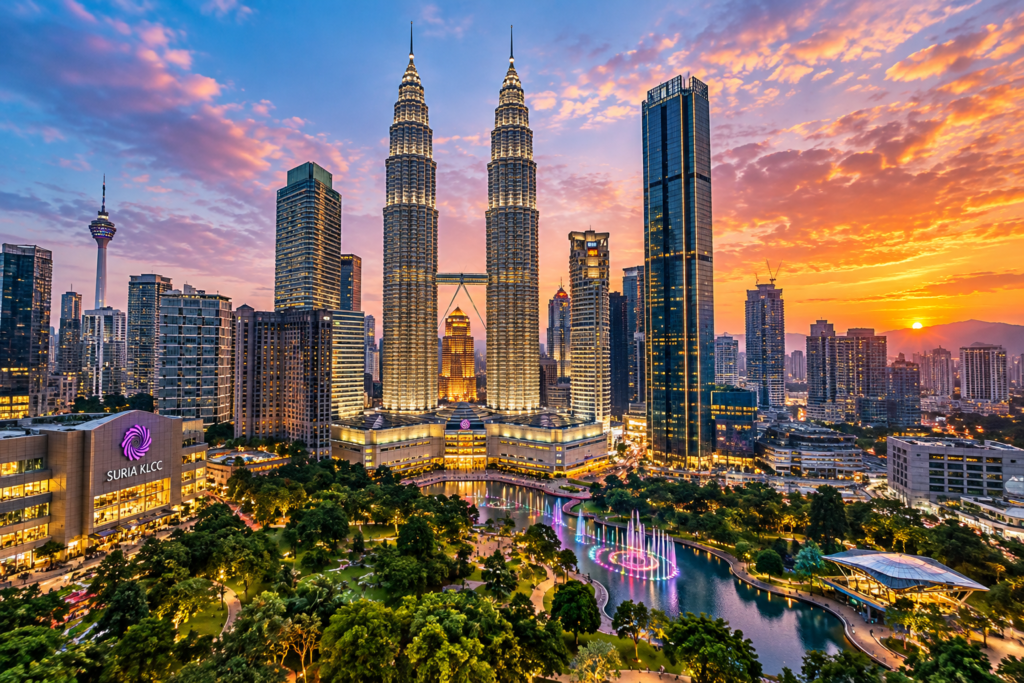
Kuala Lumpur
Malaysia’s vibrant capital, where modern skyscrapers, colourful neighbourhoods, street food, bustling markets, and different cultures come together.
MALAYSIA TRAVEL GUIDE
Everything you need to know to plan your trip to Malaysia, from the best time to visit and travel costs to transport, accommodation, food, and practical tips.
BEST TIME TO VISIT MALAYSIA
Malaysia has a tropical climate, so you can visit throughout the year. Temperatures are generally warm and humid, commonly around 23–32°C, but rainfall varies depending on which part of the country you’re visiting.
There isn’t one perfect month for the whole country because the east and west coasts experience different weather patterns. For destinations on the east coast of Peninsular Malaysia, including the Perhentian Islands, Redang and Tioman, March to October is generally the better period. From November to February, the northeast monsoon can bring heavy rain and rough seas, and some island resorts close temporarily.
The west coast, including destinations such as Kuala Lumpur, Penang and Langkawi, is less affected by the northeast monsoon, making it easier to include these places in a trip at different times of year.
Whatever month you visit, expect tropical weather and occasional heavy rain. A lightweight rain jacket or small umbrella is worth keeping with you.
HOW MUCH DOES MALAYSIA COST?
Malaysia offers very good value compared with many destinations, and it’s possible to travel comfortably without spending a huge amount.
For a budget traveller, I would plan roughly RM100–180 per day, excluding international flights. This can cover a hostel or inexpensive room, local food, public transportation and inexpensive attractions.
For a more comfortable trip with a private hotel room, restaurants, Grab rides and paid attractions, around RM200–400 per day is a more realistic starting point.
Your costs will depend heavily on your travel style. Local food courts and hawker centres can be inexpensive, while rooftop restaurants, luxury hotels and organised tours can quickly increase your spending.
Domestic flights and island trips should also be budgeted separately, especially if you’re planning to combine Peninsular Malaysia with Sabah or Sarawak in Malaysian Borneo.
GETTING TO MALAYSIA
Malaysia is one of the easiest countries in Southeast Asia to reach.
Most international travellers arrive through Kuala Lumpur International Airport (KLIA), approximately 50 kilometres from central Kuala Lumpur. KLIA is Malaysia’s main international gateway and is connected to the city by trains, buses, taxis and ride-hailing services.
Malaysia also has international airports in destinations such as Penang, Langkawi, Kota Kinabalu and Kuching, which can be useful if you’re travelling around Southeast Asia.
You don’t necessarily need to fly. Malaysia has land connections with Thailand, Singapore, Brunei and Indonesia, and international buses and trains can be useful when combining Malaysia with neighbouring countries.
If you’re already travelling around Southeast Asia, Malaysia is particularly easy to combine with Singapore and Thailand.
GETTING AROUND MALAYSIA
Getting around Malaysia is generally straightforward and affordable.
In Kuala Lumpur, the MRT, LRT, Monorail and commuter trains connect many parts of the city. Grab is also extremely useful for destinations that aren’t conveniently located near a station.
For travelling between cities, Malaysia has an extensive bus network and several railway services. The ETS train is particularly useful for travelling along parts of Peninsular Malaysia.
For longer journeys, domestic flights can save a lot of time. Flying is especially useful when travelling between Peninsular Malaysia and Sabah or Sarawak in Borneo.
Ferries and boats connect the mainland with many islands, including Langkawi, Perhentian, Redang and Tioman.
Malaysia’s transport infrastructure makes it relatively easy to travel independently without needing an organised tour.
WHERE TO STAY IN MALAYSIA
Malaysia has accommodation for almost every budget, from inexpensive hostels and guesthouses to international hotels and luxury beach resorts.
In Kuala Lumpur, areas around Bukit Bintang and KLCC are convenient for first-time visitors because you’ll be close to shopping, restaurants, nightlife and major attractions.
If you’re visiting Penang, George Town is a great base for exploring the city’s heritage areas and famous food scene.
In Langkawi, accommodation is spread across the island, with Pantai Cenang being one of the most convenient areas for restaurants, beaches and activities.
For solo travellers, I recommend staying somewhere central and close to public transport. Paying slightly more for a good location can save considerable time and transportation costs.
FOOD IN MALAYSIA
Food is one of the biggest reasons to visit Malaysia.
Malaysian cuisine reflects the country’s multicultural population, combining Malay, Chinese, Indian and other regional influences.
Some dishes worth trying include nasi lemak, char kway teow, laksa, roti canai, satay, nasi kandar, mee goreng and Hainanese chicken rice.
Street food, hawker centres and local restaurants are often inexpensive, making Malaysia a fantastic destination for travellers who want to experience local food without spending much.
Kuala Lumpur and Penang are particularly good destinations for food lovers. Don’t limit yourself to restaurants aimed at tourists — some of the most memorable meals can come from simple local food courts and busy street-food stalls.
MONEY AND PAYMENTS IN MALAYSIA
Malaysia’s currency is the Malaysian Ringgit (MYR), normally written as RM.
Credit and debit cards are widely accepted in hotels, shopping centres, supermarkets and many restaurants, particularly in Kuala Lumpur and other major cities.
However, carrying some cash is still important. Small restaurants, markets, street-food stalls and some local businesses may prefer or require cash.
ATMs are widely available in cities and tourist destinations. When withdrawing money, use ATMs operated by established banks whenever possible.
Don’t carry all of your cash in one place, and check whether your own bank charges foreign transaction or ATM fees before travelling.
STAYING CONNECTED IN MALAYSIA
Staying online in Malaysia is easy.
Wi-Fi is widely available in hotels, cafés, restaurants, shopping centres and transport terminals. Tourism Malaysia notes that complimentary Wi-Fi is available in many public places, although some networks require registration.
For travelling around the country, getting a local SIM card or eSIM is convenient and gives you access to maps, translation, Grab and other travel apps.
Mobile coverage is generally good in cities and populated areas, although it can become weaker in remote islands, rainforests and rural parts of Borneo.
Download offline maps before travelling somewhere remote so you aren’t completely dependent on mobile reception.
IS MALAYSIA SAFE FOR SOLO TRAVELLERS?
Malaysia is a popular destination for independent and solo travellers, but you should use the same precautions you would in any unfamiliar country.
Keep your phone, wallet and valuables secure in crowded areas, particularly around busy markets, stations and tourist attractions. Avoid displaying large amounts of cash and use reputable transportation services.
Grab is particularly useful when travelling alone because the journey and driver details are recorded in the app.
Road conditions and driving standards can differ from what you’re used to, so take extra care when crossing roads or renting a vehicle.
Malaysia also has laws and cultural norms that may be considerably stricter than those in the UK or other Western countries, so it’s important to understand local rules before travelling.
MALAYSIA VISA AND ENTRY REQUIREMENTS
Entry requirements depend on your nationality, so travellers should always check the latest rules before travelling.
For British citizens travelling on a full British citizen passport, Malaysia currently allows visits for tourism without obtaining a visa in advance, normally for up to 90 days. Your passport must have at least six months’ validity from the date you arrive.
Travellers are also required to submit an online Malaysia Digital Arrival Card (MDAC) before entering Malaysia. Airlines may ask for this at check-in.
If you’re travelling from Peninsular Malaysia to Sabah or Sarawak in Malaysian Borneo, carry your passport because you will pass through immigration control.
Visa and immigration requirements can change, so always check the official requirements for your passport before booking your trip.
WHAT TO WEAR IN MALAYSIA
Malaysia is hot and humid throughout the year, so lightweight and breathable clothing works best.
T-shirts, lightweight trousers, shorts and comfortable walking shoes are suitable for most sightseeing. Carrying a small umbrella or lightweight waterproof jacket is useful because tropical rain can arrive suddenly.
Malaysia is a multicultural country with a majority Muslim population, so more modest clothing is appropriate when visiting mosques and religious sites. You may need to cover your shoulders and legs, and some mosques provide robes for visitors.
Shopping centres, trains and indoor attractions can also have strong air conditioning, so carrying a thin extra layer can be surprisingly useful.
HOW LONG DO YOU NEED IN MALAYSIA?
For a first trip, I recommend approximately 7–14 days, depending on how much of the country you want to see.
With one week, you could comfortably combine Kuala Lumpur with one other destination, such as Penang or Langkawi.
With 10–14 days, you can travel more slowly and combine Kuala Lumpur with several destinations without spending every day moving between hotels.
If you want to include Malaysian Borneo, consider allowing two to three weeks. Malaysia is divided between Peninsular Malaysia and the states of Sabah and Sarawak on Borneo, so distances can be much greater than they initially appear on a map.
Don’t try to see the entire country in one short trip. Choosing fewer destinations and spending more time in each usually makes for a much better experience.
FINAL TIPS FOR VISITING MALAYSIA
Malaysia is an excellent country for travellers who want a combination of modern cities, culture, food, beaches and nature without making travel unnecessarily complicated.
Use public transport in Kuala Lumpur, download Grab before you arrive, keep some cash for small businesses and street food, and don’t underestimate travel times when moving between different parts of the country.
Try as much local food as possible and explore beyond the major tourist attractions. Malaysia’s mix of Malay, Chinese, Indian and Indigenous cultures is one of the things that makes travelling here so interesting.
If you’re visiting islands, always check the seasonal weather before booking, particularly on Malaysia’s east coast, where the northeast monsoon can significantly affect ferry services and resorts.
Give yourself enough time, travel at a comfortable pace, and Malaysia is one of the easiest and most rewarding countries to explore in Southeast Asia.
READY TO EXPLORE MALAYSIA?
From the energy of Kuala Lumpur to incredible food, tropical islands, and diverse cultures, Malaysia has so much to discover. Start planning your trip and experience it for yourself.
GET TRAVEL INSPIRATION IN YOUR INBOX
Get practical travel tips, destination inspiration, and new guides delivered straight to your inbox.