
Explore Singapore
Discover futuristic architecture, incredible food, colourful neighbourhoods, beautiful gardens, and diverse cultures in one of Asia’s most exciting cities.
DISCOVER SINGAPORE
Singapore may be one of the smallest countries in Southeast Asia, but it packs an incredible amount into a compact area. Modern skyscrapers sit alongside historic neighbourhoods, colourful temples, traditional shophouses, enormous shopping centres, tropical gardens, and some of the best food in the region.
The city’s multicultural identity is one of the things that makes Singapore so interesting. Chinese, Malay, Indian, and other influences can be seen throughout its neighbourhoods, architecture, festivals, and especially its food.
Singapore is also extremely easy to explore independently. An excellent public transport system connects almost every part of the city, English is widely spoken, and many of the main attractions are easy to reach without a car.
Here you’ll find my experiences, practical travel tips, and useful information to help you plan your own trip to Singapore.
PLACES I’VE VISITED IN SINGAPORE
Explore the places I’ve visited in Singapore, from famous landmarks and colourful neighbourhoods to local food, culture, and everyday city life.
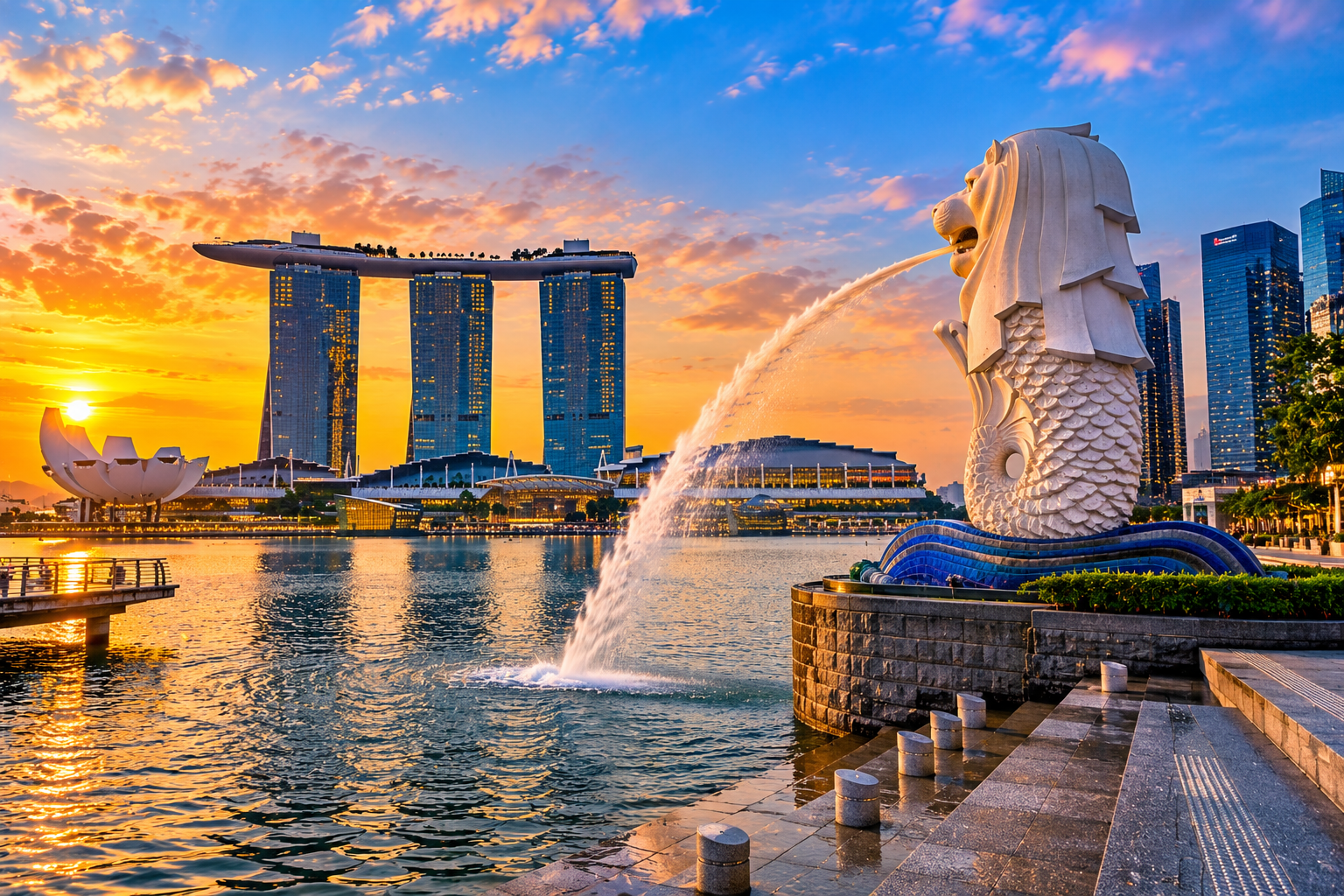
Singapore
A vibrant city where futuristic architecture, colourful neighbourhoods, incredible food, beautiful gardens, and diverse cultures come together.
SINGAPORE TRAVEL GUIDE
Everything you need to know to plan your trip to Singapore, from the best time to visit and travel costs to transport, accommodation, food, and practical tips.
BEST TIME TO VISIT SINGAPORE
Singapore is a year-round destination with a tropical climate. Expect warm temperatures, high humidity, and occasional rain throughout the year rather than clearly defined summer and winter seasons.
Temperatures generally remain around the high 20s to low 30s Celsius during the day. Tropical showers can happen at almost any time of year, and they can be heavy but relatively short.
There isn’t really a bad time to visit Singapore. Instead of choosing your trip purely around the weather, consider accommodation prices, public holidays, festivals, and major events.
Whatever month you visit, pack lightweight clothing and carry a small umbrella. Singapore has plenty of indoor attractions, shopping centres, museums, and covered areas, so rain rarely needs to ruin an entire day.
HOW MUCH DOES SINGAPORE COST?
Singapore is considerably more expensive than many other Southeast Asian destinations, but you can still control your costs with careful planning.
For a budget trip, I would allow around S$70–120 per person per day, excluding international flights. Staying in a hostel or inexpensive accommodation, eating at hawker centres, using public transport, and enjoying free attractions can keep your spending relatively low.
For a more comfortable trip with a private hotel room, restaurants, paid attractions, and occasional taxis or Grab rides, around S$180–300+ per day is more realistic.
Accommodation will usually be one of your biggest expenses. Food doesn’t necessarily have to be expensive because Singapore’s hawker centres offer excellent local meals at much lower prices than restaurants.
Many great Singapore experiences are also free, including exploring Marina Bay, Gardens by the Bay’s outdoor areas, Chinatown, Little India, Kampong Glam, and several parks and waterfront areas.
GETTING TO SINGAPORE
Singapore is one of Asia’s major international transport hubs and is extremely easy to reach.
Most international visitors arrive through Singapore Changi Airport, which has direct connections with destinations throughout Asia, Europe, the Middle East, Australia, and other parts of the world.
Changi Airport is connected to central Singapore by MRT, public buses, taxis, and private transport.
If you’re already travelling around Southeast Asia, Singapore can also be reached overland from Malaysia. Buses operate between Singapore and destinations including Johor Bahru and Kuala Lumpur.
Ferries also connect Singapore with several nearby Indonesian islands.
Because Singapore is so well connected, it’s an easy destination to combine with Malaysia, Indonesia, Thailand, or other parts of Southeast Asia.
GETTING AROUND SINGAPORE
Singapore has one of the easiest public transport systems in Southeast Asia.
The MRT is the transport you’ll probably use most. It connects the airport, city centre, residential neighbourhoods, shopping districts, and many major attractions.
Public buses cover areas that aren’t directly beside an MRT station, and Singapore’s official tourism information describes both the MRT and buses as convenient ways of exploring the city.
Contactless payment makes travelling particularly convenient. Walking is also a good way to explore areas such as Marina Bay, Chinatown, Little India, and Kampong Glam.
Taxis and ride-hailing services are available when public transport isn’t convenient, but they’re considerably more expensive than taking the MRT or bus.
You really don’t need to rent a car in Singapore.
WHERE TO STAY IN SINGAPORE
Where you stay can make a big difference because accommodation is relatively expensive.
Marina Bay is excellent if you want iconic Singapore views and easy access to major attractions, although hotels here tend to be expensive.
Orchard Road is convenient for shopping, restaurants, and transport.
Chinatown is a good choice for food, culture, and easy MRT connections, while Little India can offer a lively atmosphere and some more affordable accommodation.
Bugis is another convenient area because of its central location and good transport connections.
For a first visit, I would prioritise staying near an MRT station rather than choosing a hotel purely because it’s slightly cheaper. The time you’ll save getting around is often worth it.
FOOD IN SINGAPORE
Food is one of the highlights of visiting Singapore.
The country’s multicultural population has created an incredible food scene influenced by Chinese, Malay, Indian, Peranakan, and other Asian cuisines.
Some dishes worth trying include Hainanese chicken rice, laksa, chilli crab, satay, char kway teow, kaya toast, roti prata, nasi lemak, and bak kut teh.
One of the best ways to eat affordably is at Singapore’s famous hawker centres. Instead of one restaurant, you’ll find many independent food stalls serving different dishes in the same location.
Popular hawker centres include Maxwell Food Centre, Lau Pa Sat, and Chinatown Complex Food Centre.
Don’t assume you need expensive restaurants to experience good Singaporean food. Some of the city’s most interesting meals are found in simple hawker centres.
MONEY AND PAYMENTS IN SINGAPORE
Singapore’s official currency is the Singapore Dollar (SGD or S$).
Credit cards and contactless payments are widely accepted at restaurants, shops, hotels, and many other businesses.
However, carrying a small amount of cash is still useful, particularly when eating at smaller hawker stalls or shopping at local businesses.
ATMs are widely available throughout the city.
Singapore is increasingly cashless, so you generally won’t need to carry large amounts of money. A combination of a contactless card and a small amount of Singapore dollars works well for most visitors.
STAYING CONNECTED IN SINGAPORE
Staying connected in Singapore is very easy.
Mobile coverage is excellent across most of the country, and Wi-Fi is widely available in hotels, shopping centres, cafés, attractions, and other public areas.
Visitors can also access Wireless@SGx hotspots in many locations around Singapore.
For maximum convenience, consider buying a tourist SIM card or installing an eSIM before your trip.
Having mobile data is particularly useful for navigating the MRT, checking maps, finding restaurants, using ride-hailing services, and looking up attraction information while you’re exploring.
IS SINGAPORE SAFE FOR SOLO TRAVELLERS?
Singapore is well suited to solo travel. Violent crime and theft are rare, according to current UK government travel advice, although normal precautions with your passport, phone, wallet, and other belongings are still sensible.
The excellent public transport network also makes it easy to travel independently without relying on taxis or organised tours.
However, visitors should be aware that Singapore has strict laws and regulations, and some rules may be very different from those in your home country. Drug offences in particular carry extremely severe penalties.
Research local laws before travelling rather than assuming that something legal in your home country will also be legal in Singapore.
For emergencies, call 999 for police or 995 for ambulance and fire services.
SINGAPORE VISA AND ENTRY REQUIREMENTS
Entry requirements depend on your nationality, so always check the rules for your passport before travelling.
For travellers using a full British citizen passport, Singapore currently allows visits for tourism or business without obtaining a visa in advance. The exact period you’re permitted to stay is determined by Singapore’s Immigration and Checkpoints Authority and is normally between 30 and 90 days for British citizens.
Your passport must have an expiry date at least six months after the date you arrive in Singapore.
Travellers must also complete the electronic SG Arrival Card (SGAC) within the three days before arriving in Singapore. The SG Arrival Card is free and is not a visa.
Entry requirements can change, so check Singapore’s Immigration and Checkpoints Authority before travelling.
WHAT TO WEAR IN SINGAPORE
Singapore is hot and humid, so lightweight, breathable clothing is the most comfortable choice.
T-shirts, shorts, lightweight trousers, dresses, and comfortable walking shoes work well for everyday sightseeing.
Carry a small umbrella or lightweight rain jacket because tropical rain can arrive suddenly.
You may want to dress more modestly when visiting mosques, temples, and other religious sites. Covering your shoulders and knees is a sensible choice in these places.
It’s also worth carrying a thin extra layer because shopping centres, MRT trains, cinemas, and other indoor spaces can have strong air conditioning.
HOW LONG DO YOU NEED IN SINGAPORE?
For most first-time visitors, I think 3–5 days is a good amount of time.
With three days, you can see many of the major attractions, explore Marina Bay, visit Gardens by the Bay, experience several neighbourhoods, and try some of Singapore’s famous food.
With four or five days, you can travel at a more relaxed pace and add places such as Sentosa, additional museums, parks, or neighbourhoods without rushing.
Singapore is compact, and its excellent public transport system means you can see a surprising amount in a relatively short time.
If you’re travelling around Southeast Asia for several weeks, Singapore also works very well as a shorter stop between Malaysia and Indonesia.
FINAL TIPS FOR VISITING SINGAPORE
Singapore is one of the easiest destinations in Southeast Asia to explore independently, but don’t make the mistake of thinking it’s only about skyscrapers and luxury shopping centres.
Explore beyond Marina Bay. Walk through Chinatown, Little India, and Kampong Glam, eat at local hawker centres, use the MRT, and take some time to experience the different cultures that have shaped the city.
Use public transport instead of taxis when possible, stay near an MRT station, carry a little cash for smaller food stalls, and bring an umbrella for sudden tropical rain.
Most importantly, familiarise yourself with Singapore’s local laws before travelling. Some rules and penalties are much stricter than visitors may be accustomed to.
READY TO EXPLORE SINGAPORE?
From futuristic skylines and beautiful gardens to colourful neighbourhoods and incredible food, Singapore has much more to discover than its small size might suggest. Start planning your trip and experience it for yourself.
GET TRAVEL INSPIRATION IN YOUR INBOX
Get practical travel tips, destination inspiration, and new guides delivered straight to your inbox.