
Explore Taiwan
Discover vibrant cities, colourful night markets, incredible food, dramatic mountains, beautiful temples, and a unique mix of tradition and modern life.
DISCOVER TAIWAN
Taiwan is a fascinating destination where modern cities, traditional culture, spectacular landscapes, and some of Asia’s best street food come together. Despite its relatively small size, the island offers an impressive variety of experiences, from busy city streets and colourful temples to mountains, hot springs, coastlines, and peaceful countryside.
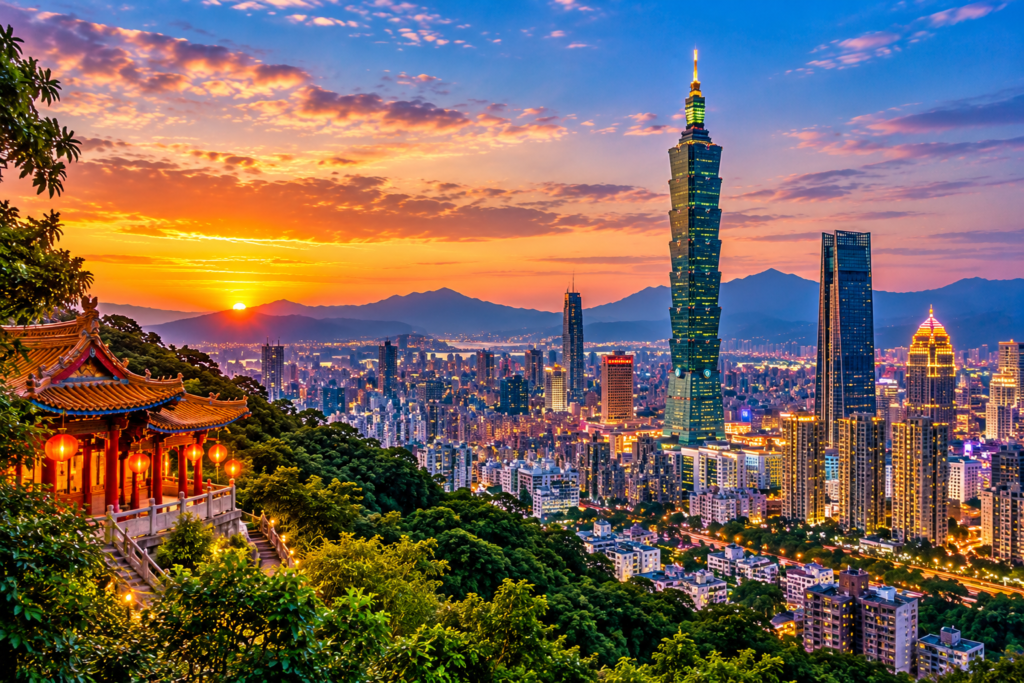
Taipei is usually the starting point for first-time visitors, with famous landmarks such as Taipei 101, lively shopping districts, historic temples, and countless night markets. Beyond the capital, Taiwan offers historic towns, national parks, mountain scenery, beaches, and cities with their own distinctive character.
Taiwan is also relatively easy to explore independently thanks to its excellent public transport and high-speed rail network. Here you’ll find my experiences, practical travel tips, and useful information to help you plan your own trip.
PLACES I’VE VISITED IN TAIWAN
Explore my experience in Taipei, from colourful streets and bustling night markets to modern landmarks, temples, food, and everyday city life.
Taipei
Taiwan’s vibrant capital, combining modern skyscrapers, traditional temples, lively night markets, incredible food, and colourful neighbourhoods.
TAIWAN TRAVEL GUIDE
Everything you need to know to plan your trip to Taiwan, from the best time to visit and travel costs to transport, accommodation, food, and practical tips.
BEST TIME TO VISIT TAIWAN
Taiwan can be visited throughout the year, but spring and autumn are particularly good times to travel because temperatures are generally more comfortable for sightseeing.
Spring, from around March to May, brings warmer weather and lush landscapes. Autumn, particularly October and November, can offer pleasant temperatures and lower humidity than the summer months.
Summer from June to September can be very hot and humid, with temperatures frequently reaching around 30°C or higher. Taiwan can also experience typhoons, particularly during the warmer months, so keep an eye on weather forecasts if you’re travelling during this period.
Winter is generally mild in Taipei compared with many European destinations, although northern Taiwan can feel cool, damp, and rainy. Mountain areas can be considerably colder.
HOW MUCH DOES TAIWAN COST?
Taiwan offers good value for travellers, although it’s generally more expensive than destinations such as Vietnam or Indonesia.
For a budget traveller, around NT$1,500–2,500 per day is a reasonable starting point, excluding international flights. This can cover inexpensive accommodation, local food, public transport, and relatively inexpensive attractions.
For a more comfortable trip with a private hotel room, restaurants, high-speed trains, and more paid attractions, consider around NT$3,000–5,000+ per day.
One area where Taiwan can be particularly affordable is food. Night markets and local restaurants offer plenty of inexpensive meals, snacks, and drinks.
Your budget will increase if you’re regularly using high-speed trains, taxis, staying in higher-end hotels, or taking organised tours.
GETTING TO TAIWAN
Most international travellers arrive through Taiwan Taoyuan International Airport, the country’s main international gateway and the most convenient airport for Taipei.
The airport is connected to Taipei by the Taoyuan Airport MRT, as well as buses, taxis, and other transportation.
Taiwan has excellent flight connections with destinations throughout East and Southeast Asia, making it easy to combine with countries such as Japan, South Korea, the Philippines, Singapore, Malaysia, and Thailand.
Taipei Songshan Airport is much closer to central Taipei and also handles selected international and domestic routes.
GETTING AROUND TAIWAN
Taiwan has an excellent public transport system, making it one of the easier destinations in Asia to explore independently.
In Taipei, the MRT is usually the easiest way to get around. It’s clean, efficient, and connects most areas that visitors are likely to explore.
For longer journeys, Taiwan High Speed Rail (THSR) connects major cities along the western side of the island, including Taipei, Taichung, Tainan, and Kaohsiung.
Regular trains connect many other cities and smaller destinations, while buses can take you to places that aren’t served directly by rail.
An EasyCard is extremely useful because it can be used on much of the public transport network and for purchases at some shops.
WHERE TO STAY IN TAIWAN
For first-time visitors, Taipei is the most convenient place to start.
Ximending is a particularly good area if you want to stay somewhere lively, with shopping, restaurants, street food, entertainment, and excellent public transport nearby.
Around Taipei Main Station is another convenient choice, particularly if you’re planning day trips or travelling to other parts of Taiwan by train.
If you prefer modern shopping and nightlife, the Xinyi District, near Taipei 101, is another option, although accommodation can be more expensive.
Outside Taipei, staying close to the main railway station in cities such as Taichung, Tainan, or Kaohsiung can make onward travel much easier.
FOOD IN TAIWAN
Food is one of the highlights of travelling in Taiwan, and night markets are an essential part of the experience.
Popular foods to try include beef noodle soup, xiao long bao, lu rou fan (braised pork rice), scallion pancakes, fried chicken, gua bao, and bubble tea.
You’ll find inexpensive restaurants and food stalls throughout Taipei, but night markets are particularly good for trying several different dishes in one evening.
Taiwan is also the birthplace of bubble tea, so it’s definitely worth trying while you’re there.
If you’re adventurous with food, Taiwan’s night markets offer an enormous range of snacks, from familiar dishes to things you may never have tried before.
MONEY AND PAYMENTS IN TAIWAN
Taiwan’s currency is the New Taiwan Dollar (TWD or NT$).
Cards are widely accepted at hotels, shopping centres, convenience stores, and larger businesses, but Taiwan still uses cash more than some travellers expect.
Night-market stalls, small restaurants, traditional shops, and some local businesses may accept only cash.
ATMs are widely available, particularly in cities and convenience stores.
I recommend carrying some New Taiwan dollars every day rather than relying completely on your bank card.
STAYING CONNECTED IN TAIWAN
Taiwan has excellent mobile and internet infrastructure, particularly in cities.
Wi-Fi is commonly available in hotels, cafés, shopping centres, transport stations, and other public places.
A local SIM card or eSIM is useful if you want reliable mobile data throughout your trip. Having internet access makes it much easier to use maps, translate menus, check public transport, and research places while you’re exploring.
Coverage is generally very good in populated areas, although reception can become weaker in remote mountain regions.
IS TAIWAN SAFE FOR SOLO TRAVELLERS?
Taiwan generally has low levels of crime, but travellers should still take normal precautions with passports, phones, wallets, and other valuables.
The public transport system and walkable neighbourhoods make Taipei particularly convenient for travelling independently.
One thing travellers should be aware of is the risk from earthquakes and typhoons. Taiwan is in an active earthquake region, and typhoons can affect the island, particularly during the warmer months.
If there is severe weather or an earthquake during your trip, follow instructions from local authorities and your accommodation.
Road traffic can also require extra attention, particularly when crossing streets or using scooters.
TAIWAN VISA AND ENTRY REQUIREMENTS
Visa requirements depend on your nationality, so always check the latest rules before travelling.
For British citizens, Taiwan currently allows visa-free visits for tourism for stays of up to 90 days, subject to entry requirements. Your passport should be valid for the duration of your stay.
Visitors may also need to complete Taiwan’s online Arrival Card before arrival. Immigration requirements can change, so check the latest information before travelling rather than relying solely on an older travel guide.
WHAT TO WEAR IN TAIWAN
What you should wear depends heavily on the season.
During summer, lightweight and breathable clothing is essential because conditions can be hot and humid. Comfortable walking shoes are also important because you’ll probably spend a lot of time exploring on foot.
During spring and autumn, bring light layers because temperatures can change throughout the day.
Winter in Taipei can be cool and damp, so a jacket and warmer layers are useful.
A compact umbrella is worth carrying throughout much of the year because rain can arrive unexpectedly.
If you’re heading into Taiwan’s mountains, bring warmer clothing even when temperatures are comfortable at lower elevations.
HOW LONG DO YOU NEED IN TAIWAN?
For Taipei alone, 3–5 days gives you enough time to explore the main attractions, neighbourhoods, temples, shopping areas, and night markets without rushing.
For a broader Taiwan trip, 7–10 days gives you enough time to combine Taipei with several other destinations.
With around two weeks, you can explore the island at a much more comfortable pace, visiting several cities and natural areas while allowing time for day trips.
Taiwan may look small on a map, but there’s a lot to experience, so don’t try to fit the entire island into just a few days.
FINAL TIPS FOR VISITING TAIWAN
Taiwan is a destination where it’s worth exploring beyond the major landmarks. Spend time walking through local neighbourhoods, visit night markets, try unfamiliar foods, explore traditional temples, and use the excellent public transport system to see more of the island.
Get an EasyCard when you arrive, carry some cash for night markets and smaller businesses, and consider getting a local SIM or eSIM for navigation.
If you’re travelling during summer or typhoon season, keep an eye on the weather forecast and leave some flexibility in your itinerary.
And don’t spend your entire trip in Taipei if you have enough time. Taiwan’s smaller cities, mountains, coastlines, hot springs, and countryside show a completely different side of the island.
READY TO EXPLORE TAIWAN?
From the energy of Taipei and colourful night markets to traditional temples, incredible food, mountains, and beautiful landscapes, Taiwan has so much to discover. Start planning your trip and experience it for yourself.
GET TRAVEL INSPIRATION IN YOUR INBOX
Get practical travel tips, destination inspiration, and new guides delivered straight to your inbox.