
Explore Georgia
Discover historic cities, dramatic mountain landscapes, ancient churches, incredible food, traditional wine, and warm Georgian culture at the crossroads of Europe and Asia.
DISCOVER GEORGIA
Georgia is a fascinating country combining dramatic mountain scenery, ancient history, distinctive architecture, traditional food, and a culture that feels different from almost anywhere else in the region.
The capital, Tbilisi, is a mixture of old and new, with colourful wooden balconies, historic churches, sulphur baths, narrow streets, modern cafés, and viewpoints overlooking the city. Beyond the capital, Georgia is known for the Caucasus Mountains, ancient monasteries, wine regions, Black Sea coastline, and small traditional villages.
Georgia is relatively compact, making it possible to experience very different landscapes without travelling enormous distances. Here you’ll find my experience in Tbilisi, practical travel tips, and useful information to help you plan your own trip to Georgia.
PLACES I’VE VISITED IN GEORGIA
Explore my experience in Tbilisi, Georgia’s fascinating capital, where historic streets, colourful architecture, traditional food, and modern city life come together.
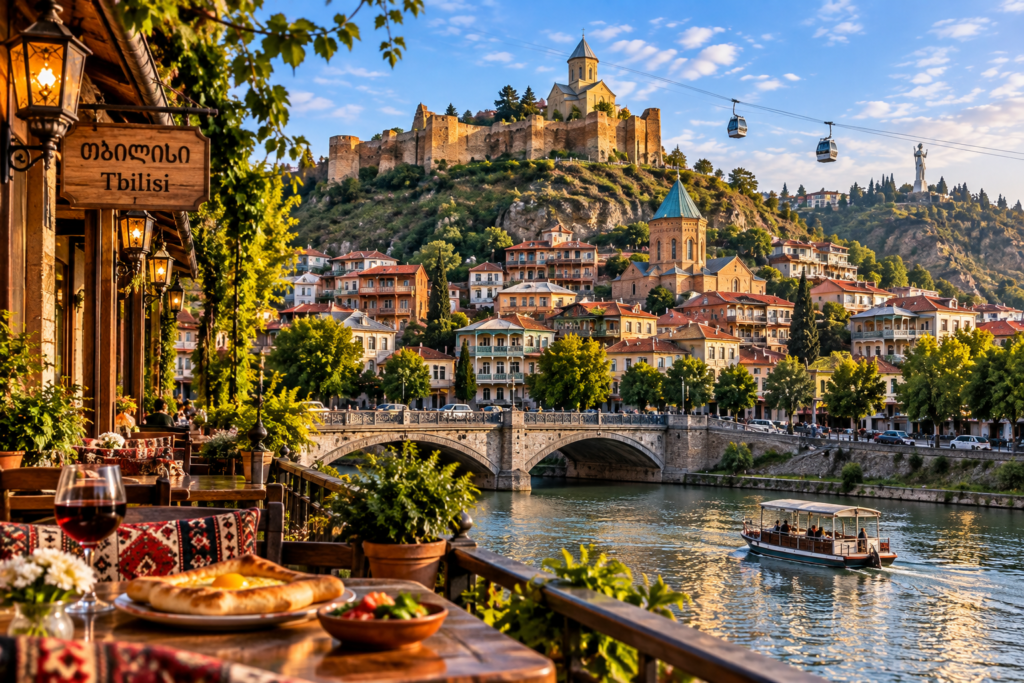
Tbilisi
Georgia’s vibrant capital, filled with colourful old streets, historic churches, traditional balconies, incredible food, sulphur baths, and beautiful views across the city.
GEORGIA TRAVEL GUIDE
Everything you need to know to plan your trip to Georgia, from the best time to visit and travel costs to transport, accommodation, food, and practical tips.
BEST TIME TO VISIT GEORGIA
The best time to visit Georgia depends on what you want to experience, as the country’s mountains, cities, and coastal regions can have very different weather.
For sightseeing in Tbilisi and travelling around the country, May to June and September to October are particularly pleasant. Temperatures are generally comfortable for walking and exploring, while the landscapes can be beautiful.
July and August can be hot in Tbilisi and other lower-altitude areas, although summer is a good time for exploring the Caucasus Mountains.
Winter can be cold, particularly in the mountains, but Georgia also has several ski destinations. Tbilisi is generally quieter during the colder months, although snow isn’t as consistent there as it is at higher elevations.
If you’re planning mountain hikes or remote road trips, always check local weather conditions before travelling.
HOW MUCH DOES GEORGIA COST?
Georgia can offer very good value compared with many European destinations, although prices vary depending on where you stay and how you travel.
For a budget traveller, roughly 80–150 GEL per day can be a reasonable starting point, excluding international flights. This can cover inexpensive accommodation, local food, public transport, and relatively low-cost sightseeing.
For a more comfortable trip with a private hotel room, restaurants, taxis, and paid attractions or day trips, around 180–350+ GEL per day is a more realistic range.
Tbilisi generally offers accommodation for many different budgets, while local restaurants and bakeries can be particularly affordable.
Organised mountain tours, private drivers, ski resorts, and higher-end hotels can significantly increase your spending.
These figures are only planning estimates, so check current accommodation and transport prices before travelling.
GETTING TO GEORGIA
Most international visitors travelling to Tbilisi arrive through Tbilisi International Airport, located outside the city centre.
Georgia also has international airports serving Kutaisi and Batumi, which can be useful depending on your itinerary and where you’re flying from.
Georgia has direct or connecting flights from many destinations across Europe, the Middle East, and surrounding countries.
Overland travel is also possible through several neighbouring countries, although border conditions and entry rules can change. Check the latest official information before planning an international land crossing.
From Tbilisi Airport, you can reach the city using public transport, taxis, or app-based transport services.
GETTING AROUND GEORGIA
Getting around Tbilisi is relatively straightforward.
The city has a metro system, buses, and other public transport. Taxis and ride-hailing apps are also widely used and can be inexpensive compared with many Western European cities.
For travelling between Georgian cities, you’ll find trains, buses, and marshrutkas, which are shared minibuses commonly used throughout Georgia and other parts of the region.
Trains are useful on selected routes, including connections between major cities.
For remote mountain areas, transportation can be more complicated. Some travellers use organised tours, private drivers, or rental cars.
If you’re driving yourself, remember that mountain roads and local driving conditions may be very different from what you’re used to.
WHERE TO STAY IN GEORGIA
For your first visit to Tbilisi, staying somewhere central will make exploring much easier.
Old Tbilisi is a popular choice if you want to be close to historic streets, traditional architecture, sulphur baths, restaurants, and many of the city’s major attractions.
Areas around Freedom Square and Rustaveli Avenue are also convenient because you’ll have good access to restaurants, shops, public transport, and sightseeing.
If you prefer a more residential atmosphere with cafés and local neighbourhood life, other central districts can also be worth considering.
For solo travellers, I recommend choosing accommodation close to public transport and within easy walking distance of restaurants and busy streets.
FOOD IN GEORGIA
Food is one of the best parts of travelling in Georgia.
One of the most famous Georgian dishes is khachapuri, bread filled with cheese. There are several regional versions, including Adjarian khachapuri, which is shaped like a boat and traditionally served with cheese, egg, and butter.
Another dish you should try is khinkali, Georgian dumplings usually filled with meat and broth, although vegetarian versions are also available.
Other foods worth trying include lobio, badrijani nigvzit, mtsvadi, shkmeruli, churchkhela, and traditional Georgian breads.
Georgia is also famous for its long history of winemaking, with traditional methods using large clay vessels known as qvevri.
Don’t limit yourself to tourist restaurants. Small local restaurants, bakeries, and markets can be some of the best places to experience Georgian food.
MONEY AND PAYMENTS IN GEORGIA
Georgia’s official currency is the Georgian Lari (GEL or ₾).
Credit and debit cards are widely accepted in Tbilisi, particularly at hotels, supermarkets, shopping centres, cafés, and established restaurants.
However, carrying some cash is still useful for markets, smaller businesses, transportation, and rural areas.
ATMs are widely available in Tbilisi and other major cities.
If an ATM or payment terminal offers to charge you in pounds, euros, or another home currency, check the exchange rate carefully before accepting the conversion.
STAYING CONNECTED IN GEORGIA
Staying connected in Georgia is relatively easy, particularly in Tbilisi.
Wi-Fi is commonly available in hotels, cafés, restaurants, and other businesses.
For travelling around the country, getting a local SIM card or eSIM can be useful. Mobile data makes it much easier to use maps, translation apps, public transport information, and ride-hailing services.
Mobile coverage is generally good in populated areas but can become weaker when travelling into remote mountain regions.
If you’re planning to visit rural or mountainous areas, download offline maps before leaving the city.
IS GEORGIA SAFE FOR SOLO TRAVELLERS?
Georgia is a popular destination for independent travellers, but normal travel precautions are still important.
Keep your passport, phone, wallet, and other valuables secure, particularly in crowded areas and on public transport. Be careful when using unofficial taxis and consider using established ride-hailing services where available.
Road safety deserves particular attention. Driving standards and road conditions can vary, especially outside major cities and in mountainous areas.
There are also specific areas of Georgia affected by unresolved territorial disputes. The UK government advises against all travel to South Ossetia and Abkhazia and against all but essential travel to areas immediately next to their administrative boundary lines.
Always check current travel advice before travelling outside the main tourist areas.
GEORGIA VISA AND ENTRY REQUIREMENTS
Visa requirements depend on your nationality, so always check the latest rules for your passport before travelling.
For travellers using a full British citizen passport, Georgia currently allows visa-free visits for up to one year.
Your passport should be valid for the proposed duration of your stay. Entry requirements can change, so check the latest official information before travelling.
One important change is that, from 1 January 2026, tourists entering Georgia are required to have valid health and accident insurance covering their stay.
Always verify the current requirements shortly before departure rather than relying entirely on information you read when first planning your trip.
WHAT TO WEAR IN GEORGIA
What to pack depends heavily on the season and where you’re travelling.
During summer, Tbilisi can become hot, so lightweight and breathable clothing is best for daytime sightseeing.
Spring and autumn can have changing temperatures, making layers particularly useful.
Winter requires warmer clothing, especially if you’re travelling into the mountains where temperatures can drop significantly below those in Tbilisi.
Comfortable walking shoes are important because parts of Old Tbilisi have steep streets, uneven surfaces, and cobblestones.
When visiting churches and monasteries, dress respectfully. More modest clothing that covers shoulders and knees is appropriate, and some religious sites may have additional requirements.
HOW LONG DO YOU NEED IN GEORGIA?
For Tbilisi alone, around 3–4 days gives you enough time to explore the Old Town, major landmarks, markets, restaurants, viewpoints, and different neighbourhoods without rushing.
If you want to combine Tbilisi with day trips, allow around 5–7 days.
For a broader trip around Georgia, 10–14 days gives you much more flexibility to combine Tbilisi with mountains, historic towns, wine regions, and other parts of the country.
With two weeks or longer, you can travel at a slower pace and spend more time outside the major cities.
Georgia isn’t enormous, but mountain roads and travel times can make distances feel much greater than they appear on a map.
FINAL TIPS FOR VISITING GEORGIA
Georgia is a destination where some of the best experiences come from exploring beyond the main attractions.
In Tbilisi, walk through the Old Town, explore the traditional balconies and narrow streets, visit the sulphur bath district, try Georgian food, and find viewpoints overlooking the city.
Try local dishes rather than sticking to international restaurants, carry some cash for smaller businesses, and use public transport or established ride-hailing services when possible.
If you’re travelling outside Tbilisi, allow more time than you think you’ll need. Mountain roads can make journeys slower, and some remote destinations are much easier to visit with a local driver or organised tour.
Most importantly, don’t judge Georgia only by its capital. If you have enough time, the mountains, wine regions, villages, monasteries, and countryside offer a very different side of the country.
READY TO EXPLORE GEORGIA?
From the colourful streets and traditional food of Tbilisi to ancient monasteries, dramatic mountains, and beautiful countryside, Georgia has so much to discover. Start planning your trip and experience it for yourself.
GET TRAVEL INSPIRATION IN YOUR INBOX
Get practical travel tips, destination inspiration, and new guides delivered straight to your inbox.