
Explore the United Arab Emirates
Discover futuristic cities, spectacular architecture, desert landscapes, beautiful beaches, traditional culture, and unforgettable experiences across the UAE.
DISCOVER THE UNITED ARAB EMIRATES
The United Arab Emirates is a destination where futuristic cities and ambitious architecture sit alongside deserts, traditional neighbourhoods, beaches, mountains, and a rich Emirati heritage.
The UAE is made up of seven emirates, with Dubai and Abu Dhabi being the best known internationally. Dubai is famous for its extraordinary skyline, enormous shopping centres, luxury hotels, beaches, traditional souks, and desert experiences, while other parts of the country offer everything from cultural attractions and historic areas to mountains and quieter coastal landscapes.
Despite its modern appearance, there is much more to the UAE than skyscrapers and luxury. Exploring older neighbourhoods, traditional markets, local food, mosques, and desert landscapes reveals a very different side of the country.
Here you’ll find my experience in Dubai, practical travel tips, and useful information to help you plan your own trip to the United Arab Emirates.
PLACES I’VE VISITED IN THE UAE
Explore my experience in Dubai, where futuristic architecture, traditional neighbourhoods, desert landscapes, beaches, and cultures from around the world come together.
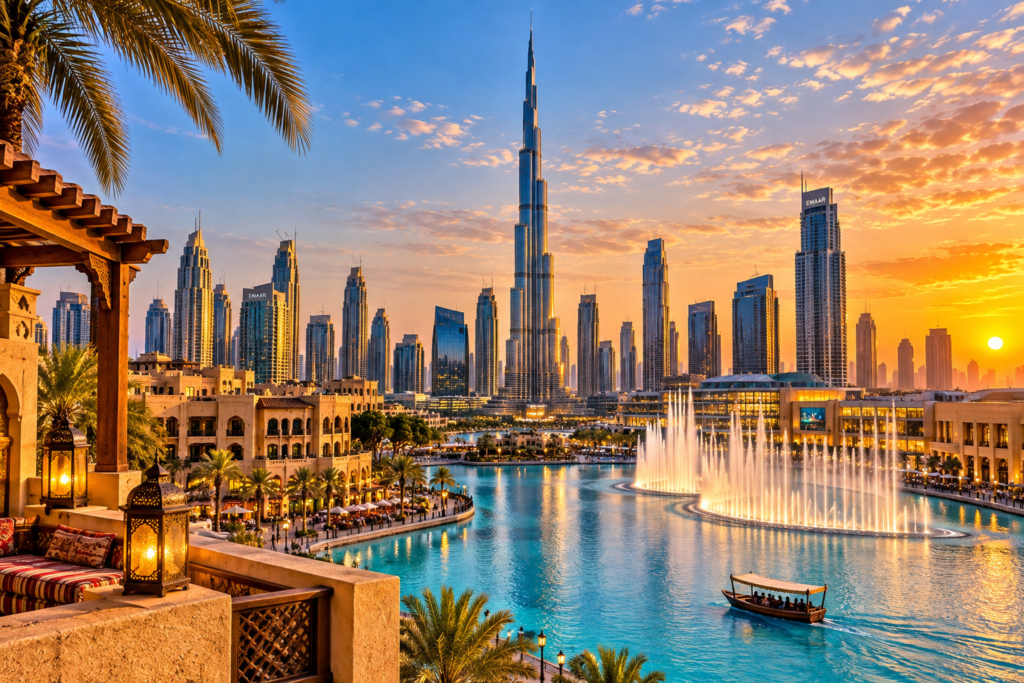
Dubai
A dynamic city known for its futuristic skyline, iconic landmarks, traditional souks, beautiful beaches, desert experiences, and incredible mix of cultures.
UNITED ARAB EMIRATES TRAVEL GUIDE
Everything you need to know to plan your trip to the UAE, from the best time to visit and travel costs to transport, accommodation, food, and practical tips.
BEST TIME TO VISIT THE UAE
The best time to visit the UAE is generally during the cooler months, particularly from November to March, when temperatures are much more comfortable for sightseeing and spending time outdoors.
During these months, Dubai and other parts of the UAE usually have warm days and cooler evenings, making it a great period for beaches, desert trips, outdoor restaurants, and walking around the city.
April and October can still be manageable, although temperatures are noticeably warmer.
Summer, particularly from June to September, can be extremely hot and humid. Daytime temperatures can exceed 40°C, making extended outdoor sightseeing uncomfortable.
The UAE is well adapted to the heat, with air conditioning almost everywhere, but if you want to explore outdoors comfortably, I would choose the cooler months.
HOW MUCH DOES THE UAE COST?
The UAE can be expensive, particularly in Dubai and Abu Dhabi, but your budget depends heavily on your accommodation, restaurants, and activities.
For a budget-conscious traveller, approximately AED 250–400 per day is a useful starting point, excluding international flights. Staying in inexpensive accommodation, using public transport, eating at local restaurants, and choosing free attractions can help keep costs lower.
For a more comfortable trip with a good hotel, restaurants, taxis, and paid attractions, approximately AED 500–1,000+ per day is more realistic.
Luxury hotels, beach clubs, fine dining, private desert experiences, and premium attractions can push costs considerably higher.
Dubai doesn’t have to be a luxury-only destination. Public beaches, traditional neighbourhoods, souks, inexpensive restaurants, and exploring areas around Dubai Creek can all provide great experiences without spending huge amounts.
GETTING TO THE UAE
The UAE is one of the world’s major international aviation hubs.
Most visitors to Dubai arrive through Dubai International Airport (DXB), which has extensive connections with Europe, Asia, Africa, the Middle East, and the Americas.
Abu Dhabi’s Zayed International Airport (AUH) is another major gateway to the country.
There are also airports in other emirates, including Sharjah.
From Dubai International Airport, the Dubai Metro provides an inexpensive connection to many parts of the city. Taxis and private transfers are also widely available.
Because of the UAE’s location and extensive flight network, it’s also an easy destination to use as a stopover when travelling between Europe and Asia.
GETTING AROUND THE UAE
Getting around Dubai is relatively straightforward.
The Dubai Metro connects many important areas of the city, including parts of the airport corridor, Downtown Dubai, Dubai Marina, and other major districts.
Dubai also has buses, trams, taxis, and marine transport.
Taxis are widely available and useful because Dubai is very spread out and not every attraction is conveniently located beside a metro station.
For travelling between Dubai and Abu Dhabi, buses and private transport are available. Driving can also provide more flexibility if you’re planning to explore several emirates.
Don’t underestimate distances in Dubai. Two attractions that look relatively close on a map can still require a significant journey.
WHERE TO STAY IN THE UAE
For your first visit to Dubai, the best area depends on what you want from your trip.
Downtown Dubai is convenient for attractions such as the Burj Khalifa and Dubai Mall, but accommodation can be expensive.
Dubai Marina and JBR are excellent if you want beaches, restaurants, modern architecture, and an active atmosphere, particularly in the evening.
Deira and Bur Dubai offer a completely different experience, with traditional markets, older neighbourhoods, Dubai Creek, local restaurants, and often more affordable accommodation.
Areas around Business Bay can also provide good access to Downtown Dubai while offering a wide range of hotels.
Whichever area you choose, check its distance from a Metro station if you plan to rely on public transport.
FOOD IN THE UAE
The UAE has an incredibly diverse food scene because people from around the world live and work there.
You’ll find Emirati and other Middle Eastern cuisines alongside Indian, Pakistani, Iranian, Lebanese, Filipino, Chinese, African, European, and many other international cuisines.
Traditional Emirati dishes worth looking for include machboos, harees, thareed, and luqaimat.
Dubai is also an excellent place for shawarma, grilled meats, Arabic breads, hummus, falafel, biryani, and countless other dishes from across the Middle East and South Asia.
You don’t need to eat in expensive restaurants every day. Areas such as Deira and Bur Dubai have many inexpensive local restaurants serving excellent food.
Trying food from Dubai’s different communities is one of the best ways to experience the city’s multicultural character.
MONEY AND PAYMENTS IN THE UAE
The official currency is the United Arab Emirates Dirham (AED).
Credit and debit cards are accepted almost everywhere in Dubai, including hotels, restaurants, shopping centres, supermarkets, attractions, and taxis.
Contactless payments are also widely used.
However, carrying a small amount of cash is still useful for traditional markets, small purchases, and situations where card payment isn’t convenient.
ATMs are widely available throughout the country.
When paying by card, if you’re offered the choice between paying in your home currency or AED, check the conversion carefully. Paying in the local currency can often avoid an unfavourable conversion offered by the merchant’s payment provider.
STAYING CONNECTED IN THE UAE
Staying connected in the UAE is easy.
Wi-Fi is widely available in hotels, cafés, restaurants, shopping centres, airports, and many tourist attractions.
Visitors can purchase tourist SIM cards or use compatible eSIMs for mobile data.
Having mobile data is particularly useful in Dubai because you’ll probably rely heavily on maps, public transport information, taxi or ride-hailing apps, restaurant searches, and attraction bookings.
Mobile coverage is generally excellent in populated areas, although reception can become weaker in remote desert or mountain locations.
IS THE UAE SAFE FOR SOLO TRAVELLERS?
The UAE has low levels of many types of street crime, but normal travel precautions still apply. Keep your passport, phone, wallet, and other valuables secure and use licensed transportation.
Road traffic deserves particular attention because speeds can be high and driving conditions may differ from what you’re used to.
Visitors also need to understand the UAE’s local laws and cultural expectations. Laws concerning alcohol, drugs, public behaviour, online activity, photography, relationships, and other matters can be significantly different from those in the UK and other countries.
Don’t assume that something legal or socially acceptable at home is automatically permitted in the UAE.
For that reason, I recommend checking current official travel advice before every visit.
UAE VISA AND ENTRY REQUIREMENTS
Visa requirements depend on your nationality and passport.
Travellers using a full British citizen passport can currently receive a visitor or tourist visa on arrival in the UAE, allowing stays of up to 90 days within a 180-day period. Your passport must normally be valid for at least six months from the date you enter the UAE.
Different rules apply to other nationalities and passport types, so visitors should check the requirements that apply specifically to them.
Entry rules can change, so always verify the latest information shortly before travelling.
WHAT TO WEAR IN THE UAE
The UAE is hot for much of the year, so lightweight and breathable clothing is usually the most comfortable option.
During the cooler winter months, evenings can feel noticeably cooler, particularly in desert areas, so a light extra layer can be useful.
The UAE is a Muslim country, and visitors should dress respectfully, particularly in traditional areas, government buildings, mosques, and religious sites.
Swimwear is generally appropriate at beaches and swimming pools but shouldn’t be worn in shopping centres or other public spaces away from beach areas.
If you’re visiting a mosque, more modest clothing is required, and women may be asked to cover their hair.
It’s also worth carrying a light layer because air conditioning inside shopping centres, hotels, restaurants, and the Metro can feel very cold compared with the temperature outside.
HOW LONG DO YOU NEED IN THE UAE?
For Dubai alone, I recommend around 4–5 days for a first visit.
This gives you enough time to experience Downtown Dubai, the Burj Khalifa area, Dubai Marina, beaches, traditional neighbourhoods around Dubai Creek, souks, and potentially a desert experience without rushing through everything.
With 7 days, you can explore Dubai more slowly and include a day trip to Abu Dhabi or another part of the UAE.
With 10 days or longer, you can combine several emirates and experience more than just the country’s famous modern cities.
Dubai can look like a compact city on a map, but attractions are spread across a large area, so allow enough time for transportation.
FINAL TIPS FOR VISITING THE UAE
Don’t experience Dubai only through its skyscrapers and shopping centres.
Visit the older areas around Dubai Creek, Deira, and Bur Dubai, explore traditional souks, try inexpensive local restaurants, take an abra across the creek, and experience the contrast between old and new Dubai.
Use the Metro when it’s convenient, but expect to use taxis occasionally because the city is extremely spread out.
If you’re travelling during the hotter months, plan outdoor activities for the morning or evening and use the middle of the day for indoor attractions.
Finally, learn about local laws and customs before arriving. The UAE is very international and accustomed to visitors, but its legal and cultural environment is different from many Western countries.
READY TO EXPLORE THE UAE?
From Dubai’s futuristic skyline and beautiful beaches to traditional souks, desert landscapes, incredible food, and Emirati culture, the UAE has much more to discover. Start planning your trip and experience it for yourself.
GET TRAVEL INSPIRATION IN YOUR INBOX
Get practical travel tips, destination inspiration, and new guides delivered straight to your inbox.