
Explore Italy
Discover ancient cities, incredible food, beautiful coastlines, historic architecture, world-famous art, and unforgettable landscapes across Italy.
DISCOVER ITALY
Italy is one of Europe’s most fascinating destinations, combining thousands of years of history with incredible food, beautiful cities, Mediterranean coastlines, mountains, countryside, and some of the world’s most famous landmarks.
Rome offers an extraordinary introduction to the country, where ancient ruins stand beside lively neighbourhoods, beautiful piazzas, churches, cafés, and everyday city life. But Italy extends far beyond its capital, from the art and architecture of Florence and the canals of Venice to the dramatic landscapes of the Dolomites, the Amalfi Coast, Tuscany, Sicily, and many other regions.
Food is also a huge part of travelling through Italy. Pasta, pizza, regional dishes, coffee, gelato, local markets, and family-run restaurants are all part of the experience, with traditions changing significantly from one region to another.
Here you’ll find my experience in Rome, practical travel tips, and useful information to help you plan your own trip to Italy.
PLACES I’VE VISITED IN ITALY
Explore my experience in Rome, Italy’s historic capital, where ancient ruins, magnificent architecture, lively streets, incredible food, and centuries of history come together.
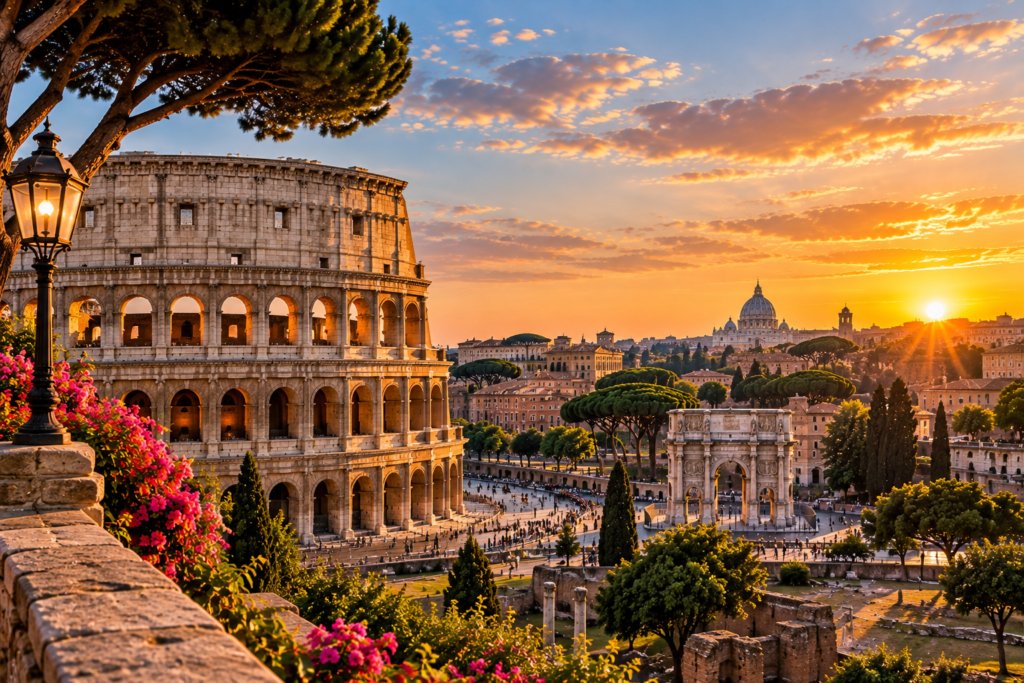
Rome
Italy’s historic capital, filled with ancient landmarks, beautiful piazzas, impressive churches, charming streets, incredible food, and some of the world’s most famous historical sites.
ITALY TRAVEL GUIDE
Everything you need to know to plan your trip to Italy, from the best time to visit and travel costs to transport, accommodation, food, and practical tips.
BEST TIME TO VISIT ITALY
Italy can be visited throughout the year, but April to June and September to October are excellent periods for many travellers.
Spring usually brings comfortable temperatures, longer days, and beautiful conditions for exploring cities. Early autumn can also provide warm weather while avoiding some of the intense heat and crowds of peak summer.
July and August are among the busiest months, particularly in Rome, Venice, Florence, coastal destinations, and other major tourist areas. Temperatures can also become very hot, especially in central and southern Italy.
Winter can be a good option for city trips if you prefer fewer crowds and don’t mind cooler weather. Northern Italy and the mountain regions also attract visitors for skiing and other winter activities.
Italy stretches a long way from north to south, so weather conditions can vary considerably between the Alps, Rome, southern Italy, and the islands.
HOW MUCH DOES ITALY COST?
Italy can work for different budgets, although popular destinations such as Rome, Venice, Florence, and the Amalfi Coast can become expensive during peak season.
A budget traveller might spend around €70–€120 per day, excluding international flights, by choosing hostels or inexpensive accommodation, using public transport, eating at casual restaurants, and mixing paid attractions with free sightseeing.
For a more comfortable trip with a private hotel room, restaurants, intercity trains, and paid attractions, approximately €150–€300+ per day is more realistic.
Accommodation will usually be one of your biggest expenses, particularly in central locations.
You can reduce costs by booking hotels and long-distance trains early, avoiding restaurants directly beside major tourist attractions, using public transport, and exploring on foot.
Remember that these are general estimates. Your actual costs will depend on your destination, season, accommodation, and travel style.
GETTING TO ITALY
Italy is extremely well connected with the rest of Europe and destinations around the world.
Rome has two main airports: Leonardo da Vinci–Fiumicino Airport (FCO), the country’s major international gateway, and Ciampino Airport (CIA), which is used by a number of European and low-cost services.
Other major airports serve cities including Milan, Venice, Naples, Bologna, Pisa, and Florence.
Italy also has excellent railway connections with neighbouring European countries, making it possible to include the country as part of a longer European train journey.
International buses and ferries provide additional options, particularly between Italy and nearby Mediterranean destinations.
If you’re flying into Rome, always check which airport you’re using and how you’ll reach your accommodation before arriving.
GETTING AROUND ITALY
Italy has an extensive transportation network, and travelling between the major cities is relatively straightforward.
High-speed trains connect destinations including Rome, Florence, Bologna, Milan, Venice, and Naples, making rail one of the most convenient ways to explore the country.
Regional trains serve smaller cities and towns, while buses provide connections where railway services are limited.
Booking high-speed trains in advance can often provide better fares.
In Rome, you can use the Metro, buses, trams, and local trains, although walking is one of the best ways to experience the historic centre.
A rental car is generally unnecessary for visiting major cities and can actually become inconvenient because of traffic, parking, and restricted driving zones.
A car becomes much more useful when exploring countryside, villages, or areas with limited public transport.
Vehicles drive on the right-hand side of the road in Italy.
WHERE TO STAY IN ITALY
Where you stay will depend on your itinerary, but location can make a huge difference in historic cities.
In Rome, staying reasonably close to the historic centre or a Metro station makes sightseeing much easier.
Areas around Centro Storico, Monti, Trastevere, Prati, and the surroundings of Roma Termini all offer different advantages depending on your budget and travel style.
The historic centre puts many famous attractions within walking distance but is usually more expensive.
Trastevere offers lively streets, restaurants, and evening atmosphere, while the area around Termini can provide convenient transport connections and sometimes more affordable accommodation.
If you’re travelling around Italy by train, staying within reasonable distance of the main railway station can be particularly useful for short visits.
Always check the exact location rather than choosing accommodation purely because the price looks attractive.
FOOD IN ITALY
Food is one of the highlights of travelling through Italy, but Italian cuisine varies enormously between regions.
In Rome, traditional dishes worth trying include carbonara, cacio e pepe, amatriciana, and gricia.
Pizza is another obvious favourite, while fresh pasta, local cheeses, cured meats, seafood, regional desserts, and countless other dishes change as you travel around the country.
Don’t forget gelato and Italian coffee culture. An espresso at the counter of a local café can be a simple and inexpensive part of everyday Italian life.
Look for restaurants slightly away from the busiest tourist attractions. Places displaying huge menus with photographs and staff aggressively trying to bring tourists inside aren’t necessarily where you’ll find your best meal.
Local bakeries, markets, small cafés, and neighbourhood restaurants can provide excellent food without the prices found directly beside famous landmarks.
MONEY AND PAYMENTS IN ITALY
Italy uses the Euro (€).
Credit and debit cards are widely accepted in hotels, restaurants, supermarkets, shops, and many tourist attractions.
Contactless payments are also increasingly common.
However, carrying a small amount of cash is still useful for smaller cafés, markets, public toilets, and occasional businesses that may prefer cash.
ATMs are widely available, but check whether your own bank charges foreign transaction or withdrawal fees.
Be cautious with independently operated ATMs in heavily touristed areas, as fees and exchange rates can vary considerably.
If an ATM or card terminal asks whether you want to pay in your home currency or euros, check the conversion carefully. Paying in euros will often allow your own bank or card provider to handle the exchange rate instead.
STAYING CONNECTED IN ITALY
Staying connected in Italy is straightforward.
Wi-Fi is widely available in hotels, cafés, restaurants, airports, railway stations, and other public places.
Visitors can purchase a local Italian SIM card or use an eSIM.
Mobile coverage is generally strong in cities and populated areas, although reception can become weaker in remote countryside and mountain regions.
Having mobile data is particularly useful for navigating cities, checking train schedules, buying tickets, finding restaurants, and using translation apps.
Download offline maps before travelling if you’re planning to explore rural or remote areas.
IS ITALY SAFE FOR SOLO TRAVELLERS?
Italy is a very popular destination for solo and independent travellers, and its public transportation network makes travelling between major cities relatively straightforward.
Normal precautions are still important, particularly in busy tourist destinations.
Pickpocketing and distraction theft can occur around crowded attractions, railway stations, buses, Metro services, and other heavily visited areas.
In Rome, keep an eye on your belongings around major attractions and on crowded public transport.
Keep phones, wallets, passports, cameras, and other valuables secure rather than leaving them in easily accessible pockets.
Be cautious around unofficial ticket sellers and anyone approaching you with unsolicited offers around tourist attractions.
For emergencies anywhere in the EU, including Italy, you can call 112.
VISA AND ENTRY REQUIREMENTS
Italy is part of the Schengen Area, so entry requirements depend on your nationality.
British citizens travelling with a full British citizen passport can generally visit Italy and other Schengen countries for up to 90 days in any 180-day period without a visa for tourism and certain other permitted activities.
Passport validity requirements also apply, so check your passport well before travelling.
European border procedures are changing, including the Entry/Exit System (EES) and the planned ETIAS travel authorisation system. Because implementation details can change, always check the latest official requirements before travelling.
Visitors of other nationalities should check whether they require a Schengen visa or other permission before their trip.
WHAT TO WEAR IN ITALY
What you should pack depends heavily on the season and region.
During summer, lightweight and breathable clothing is useful, particularly in Rome and southern Italy where temperatures can become very hot.
Spring and autumn are generally comfortable, but bring layers and a light jacket for cooler mornings and evenings.
Northern Italy and mountain regions can be considerably colder, especially during winter.
Comfortable walking shoes are essential. Historic centres often have cobbled streets, and you may spend many hours exploring on foot.
If you’re visiting churches or religious sites, dress respectfully. Some sites may require shoulders and knees to be covered.
This is particularly important if you’re planning to visit major religious attractions during your trip.
HOW LONG DO YOU NEED IN ITALY?
For Rome alone, I recommend approximately 4 days for a first visit.
That gives you enough time to experience major attractions such as the Colosseum, Roman Forum, Trevi Fountain, Pantheon, Spanish Steps, and different neighbourhoods without trying to squeeze everything into one or two days.
You can also easily visit Vatican City while staying in Rome. Although geographically surrounded by Rome, remember that Vatican City is an independent country rather than part of Italy.
With 7 days in Italy, you could combine Rome with another major destination.
With 10–14 days, you can comfortably experience several cities and regions.
If you want to explore Italy from north to south, including smaller towns and countryside, two to three weeks will provide a much more relaxed trip.
Don’t try to visit every famous Italian city in a single week. Spending slightly longer in fewer places usually creates a much better travel experience.
FINAL TIPS FOR VISITING ITALY
Rome is one of those cities where simply walking can become part of the experience.
Ancient ruins, churches, fountains, piazzas, cafés, and beautiful streets appear throughout the historic centre, so don’t spend your entire trip rushing from one attraction to another.
Book major attractions such as the Colosseum and Vatican Museums in advance, particularly during busy periods.
Wear comfortable shoes, carry water during hot weather, and allow more time than you expect for exploring Rome on foot.
When eating, walk a few streets away from the busiest tourist landmarks and look for restaurants where the focus is on the food rather than attracting passing tourists.
And if you’re visiting Rome, make time for Vatican City. Walking there through Rome and along the River Tiber can be part of the experience rather than simply treating it as another attraction to tick off your list.
Italy rewards slower travel. Give yourself enough time to enjoy the food, streets, neighbourhoods, cafés, and everyday atmosphere between the famous landmarks.
READY TO EXPLORE ITALY?
From the ancient streets and landmarks of Rome to beautiful coastlines, historic cities, incredible food, mountain landscapes, and centuries of culture, Italy has so much to discover. Start planning your trip and experience it for yourself.
GET TRAVEL INSPIRATION IN YOUR INBOX
Get practical travel tips, destination inspiration, and new guides delivered straight to your inbox.