
Explore Switzerland
Discover spectacular mountains, crystal-clear lakes, beautiful cities, scenic train journeys, charming towns, and breathtaking landscapes across Switzerland.
DISCOVER SWITZERLAND
Switzerland is famous for its spectacular Alpine scenery, crystal-clear lakes, picturesque towns, efficient transport, and some of the most beautiful train journeys in Europe.
Zurich combines historic streets and elegant architecture with a beautiful lakeside setting, while the rest of the country offers everything from dramatic mountain peaks and peaceful villages to famous destinations such as Lucerne, Interlaken, Zermatt, Geneva, and the Swiss Alps.
One of Switzerland’s biggest attractions is the scenery itself. Travelling between destinations can be just as memorable as the places you visit, with trains passing mountains, lakes, valleys, and traditional villages along the way.
Here you’ll find my experience in Zurich, along with practical travel tips and useful information to help you plan your own trip to Switzerland.
PLACES I’VE VISITED IN SWITZERLAND
Explore my experience in Zurich, Switzerland’s largest city, where a beautiful lake, historic streets, riverside views, elegant architecture, and modern city life come together.
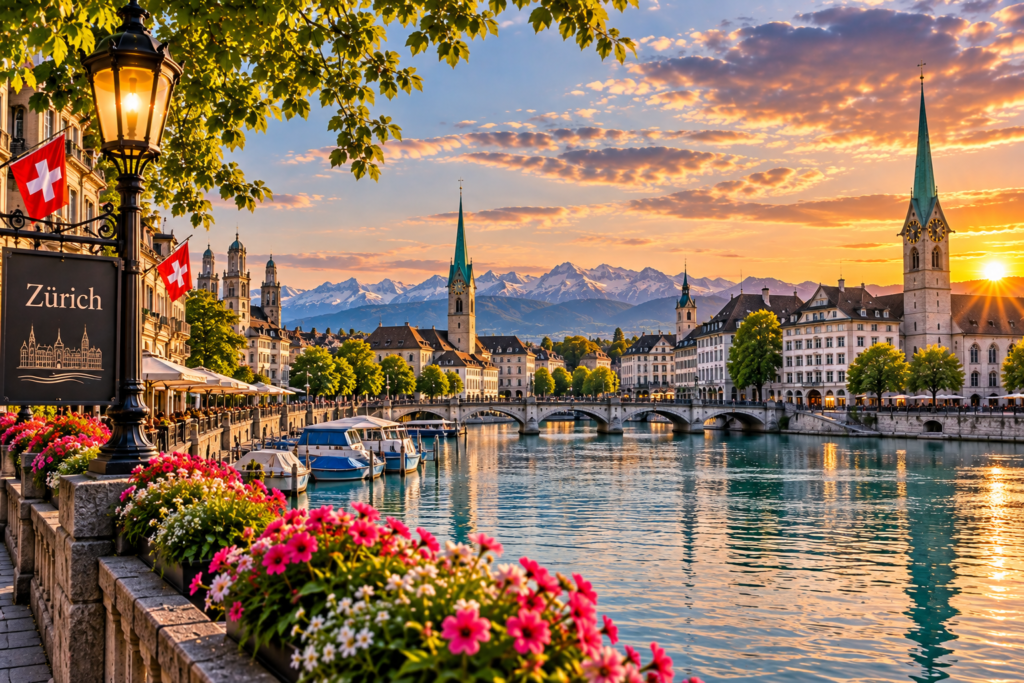
Zurich
Switzerland’s largest city, known for its picturesque Old Town, beautiful Lake Zurich, the River Limmat, elegant streets, historic architecture, and impressive Alpine surroundings.
SWITZERLAND TRAVEL GUIDE
Everything you need to know to plan your trip to Switzerland, from the best time to visit and travel costs to transport, accommodation, food, and practical tips.
BEST TIME TO VISIT SWITZERLAND
Switzerland is a year-round destination, and the best time to visit depends on what you want to experience.
June to September is ideal for city sightseeing, hiking, lakes, mountain excursions, and outdoor activities. Days are longer, mountain routes are more accessible, and temperatures are generally comfortable at lower elevations.
Spring and autumn can be excellent for visiting cities such as Zurich, with fewer peak-season visitors and generally cooler temperatures.
For skiing and other winter activities, December to March is the main season in many mountain resorts, although snow conditions vary by location and altitude.
December is also popular for Christmas markets and festive city breaks.
Weather in the mountains can change quickly at any time of year, so always check local conditions before heading into higher-altitude areas.
HOW MUCH DOES SWITZERLAND COST?
Switzerland is one of the more expensive destinations in Europe, so budgeting carefully can make a significant difference.
A budget traveller might spend approximately CHF 100–160 per day, excluding international travel, by staying in hostels or inexpensive accommodation, buying some food from supermarkets, limiting expensive attractions, and choosing transport carefully.
For a more comfortable trip with a private hotel room, restaurants, intercity transport, and mountain excursions, approximately CHF 200–400+ per day is more realistic.
Accommodation, restaurants, and mountain transport can be particularly expensive.
You can reduce food costs by using supermarkets, bakeries, and takeaway options rather than eating every meal in a restaurant.
If you’re planning several long train journeys or mountain excursions, compare individual fares with available travel passes before buying your tickets.
GETTING TO SWITZERLAND
Switzerland is extremely well connected with the rest of Europe and destinations around the world.
Major international airports include Zurich Airport (ZRH), Geneva Airport (GVA), and EuroAirport Basel Mulhouse Freiburg (BSL/MLH/EAP).
Zurich Airport has excellent rail connections, allowing you to travel directly from the airport to Zurich and many other destinations.
Switzerland is also easy to reach by train from neighbouring countries.
International rail services connect Swiss cities with destinations in France, Germany, Italy, Austria, and other parts of Europe.
Switzerland’s central location makes it easy to include as part of a longer European journey.
GETTING AROUND SWITZERLAND
Switzerland has one of Europe’s most extensive public transportation networks.
Trains connect major cities, towns, mountain destinations, and many smaller communities, while buses, trams, boats, cable cars, and mountain railways extend the network even further.
In Zurich, trams, buses, trains, and boats make getting around straightforward, while much of the historic centre can also be explored on foot.
For longer journeys, Swiss trains are particularly useful for travelling between cities and mountain regions.
Some railway routes are attractions in themselves, offering spectacular views of mountains, lakes, and valleys.
A rental car can provide flexibility in certain rural areas, but it isn’t necessary for most first-time itineraries because public transportation reaches a large part of the country.
WHERE TO STAY IN SWITZERLAND
Where you stay depends heavily on your itinerary and budget.
In Zurich, staying around the Old Town gives you easy access to historic streets, restaurants, shopping, the River Limmat, and Lake Zurich.
Accommodation near Zurich Hauptbahnhof, the main railway station, is particularly convenient if you’re planning day trips or travelling to other parts of Switzerland.
Hotels slightly outside the centre can offer better value while remaining easily accessible by tram or train.
In mountain regions, staying close to a railway station or cable-car connection can save considerable time.
Accommodation in famous resorts can be expensive, particularly during peak summer and ski seasons, so booking early is advisable.
FOOD IN SWITZERLAND
Swiss cuisine reflects the country’s different regions and neighbouring influences.
Some of the most famous dishes include cheese fondue, raclette, rösti, and various regional meat and potato dishes.
Switzerland is also internationally famous for its chocolate and cheese, both of which are easy to find throughout the country.
Zurich has its own local specialities, including Zürcher Geschnetzeltes, traditionally made with sliced veal in a creamy sauce and commonly served with rösti.
Restaurants can be expensive, so supermarkets and bakeries are useful options for travellers trying to control their budget.
Don’t forget to try regional foods as you travel, because Swiss cuisine varies considerably between the German-, French-, and Italian-speaking parts of the country.
MONEY AND PAYMENTS IN SWITZERLAND
Switzerland uses the Swiss franc (CHF) rather than the euro.
Credit cards, debit cards, and contactless payments are widely accepted in hotels, restaurants, supermarkets, shops, and tourist attractions.
Cash is still useful for some smaller businesses and situations, so carrying a small amount of Swiss francs can be helpful.
Some businesses in tourist areas may accept euros, but change may be given in Swiss francs and the exchange rate may not be favourable.
ATMs are widely available.
If you’re using a foreign card, check your bank’s foreign transaction and withdrawal fees before travelling.
STAYING CONNECTED IN SWITZERLAND
Wi-Fi is widely available in hotels, cafés, restaurants, airports, railway stations, and many public locations.
Visitors can purchase a local Swiss SIM card or use an eSIM for mobile data.
Mobile coverage is generally excellent in cities and populated areas, although reception can vary in remote mountain regions.
Having mobile data is particularly useful for checking train schedules, maps, weather conditions, accommodation details, and mountain transport.
If you’re hiking or travelling into remote areas, download offline maps and important travel information beforehand.
IS SWITZERLAND SAFE FOR SOLO TRAVELLERS?
Switzerland is straightforward to explore independently thanks to its extensive public transport network and well-connected destinations.
Normal travel precautions still apply.
Keep your passport, phone, wallet, camera, and other belongings secure in busy railway stations, crowded public transport, and major tourist areas.
Travelling in the mountains requires additional preparation. Weather can change rapidly, and hiking routes vary considerably in difficulty.
Check weather forecasts and trail conditions before setting out, wear appropriate footwear and clothing, and choose routes suitable for your experience.
The European emergency number 112 can be used in Switzerland.
VISA AND ENTRY REQUIREMENTS
Switzerland is part of the Schengen Area, although it is not a member of the European Union.
British citizens travelling with a full British citizen passport can generally visit Switzerland and other Schengen countries for up to 90 days in any 180-day period without a visa for tourism and certain other permitted activities.
Passport validity requirements also apply, so check your passport before travelling.
European border procedures are changing, including the Entry/Exit System (EES) and the planned ETIAS travel authorisation system. Requirements and implementation arrangements can change, so always check the latest official information before your trip.
Visitors with other passports may require a Schengen visa depending on their nationality and circumstances. Always confirm the latest entry requirements before travelling.
WHAT TO WEAR IN SWITZERLAND
What to pack depends on the season, altitude, and activities you’re planning.
During summer, lightweight clothing is suitable for warmer days in cities such as Zurich, but bring layers because temperatures can be considerably cooler in mountain areas.
Spring and autumn can bring changing weather, so a waterproof jacket and layers are useful.
Winter requires warm clothing, particularly if you’re visiting mountain destinations or ski resorts.
Comfortable walking shoes are essential for city sightseeing, while proper hiking footwear is important for mountain trails.
Even during summer, carrying an additional layer when travelling into the Alps is a good idea because conditions at higher elevations can be very different from those in the cities.
HOW LONG DO YOU NEED IN SWITZERLAND?
For Zurich alone, around 2–3 days gives you enough time to explore the Old Town, Lake Zurich, the River Limmat, museums, shopping areas, and different neighbourhoods.
With 5–7 days in Switzerland, you can combine Zurich with another region and experience some of the country’s lakes and mountain scenery.
With 10–14 days, you can explore several destinations at a more comfortable pace and include cities, mountain towns, scenic railway journeys, and Alpine experiences.
Switzerland may look small on the map, but mountain geography and the number of worthwhile destinations mean it’s easy to fill a longer trip.
Avoid trying to see the entire country in just a few days. Choosing fewer bases and exploring the surrounding areas can make the trip much more enjoyable.
FINAL TIPS FOR VISITING SWITZERLAND
Prepare for higher prices than in many other European destinations, particularly for accommodation, restaurants, and mountain transport.
Take advantage of Switzerland’s excellent public transport system rather than assuming you need a rental car.
If you’re planning several train journeys, compare transport passes and individual tickets before deciding which offers better value for your itinerary.
Check mountain weather shortly before travelling, even if conditions in Zurich or another city look perfect.
Carry a refillable water bottle, comfortable walking shoes, and layers if you’re combining cities with mountain excursions.
And don’t spend your entire trip rushing between famous destinations. Switzerland’s lakes, train journeys, mountain views, small towns, and slower moments between the major attractions are a huge part of the experience.
READY TO EXPLORE SWITZERLAND?
From Zurich’s historic streets and beautiful lake to spectacular Alpine landscapes, scenic railways, charming towns, and mountain villages, Switzerland offers unforgettable scenery at every turn. Start planning your trip and experience it for yourself.
GET TRAVEL INSPIRATION IN YOUR INBOX
Get practical travel tips, destination inspiration, and new guides delivered straight to your inbox.