
Explore the Czech Republic
Discover medieval cities, magnificent castles, historic architecture, beautiful countryside, traditional food, and centuries of fascinating history across the Czech Republic.
DISCOVER THE CZECH REPUBLIC
The Czech Republic is a fascinating Central European destination filled with medieval towns, impressive castles, historic squares, beautiful countryside, and centuries of history.
Prague is the country’s most famous destination, with its spectacular Old Town, Charles Bridge, Prague Castle, colourful architecture, cobbled streets, and beautiful setting along the Vltava River. Its remarkably preserved historic centre makes it one of Europe’s most distinctive capitals.
Beyond Prague, the Czech Republic offers picturesque towns, castles, forests, spa destinations, and quieter countryside. Cities such as Brno and Český Krumlov offer very different experiences from the capital and provide plenty of reasons to explore further.
Here you’ll find my experience in Prague, along with practical travel tips and useful information to help you plan your own trip to the Czech Republic.
PLACES I’VE VISITED IN THE CZECH REPUBLIC
Explore my experience in Prague, the Czech Republic’s beautiful capital, where medieval streets, historic bridges, impressive architecture, lively squares, and centuries of history come together.
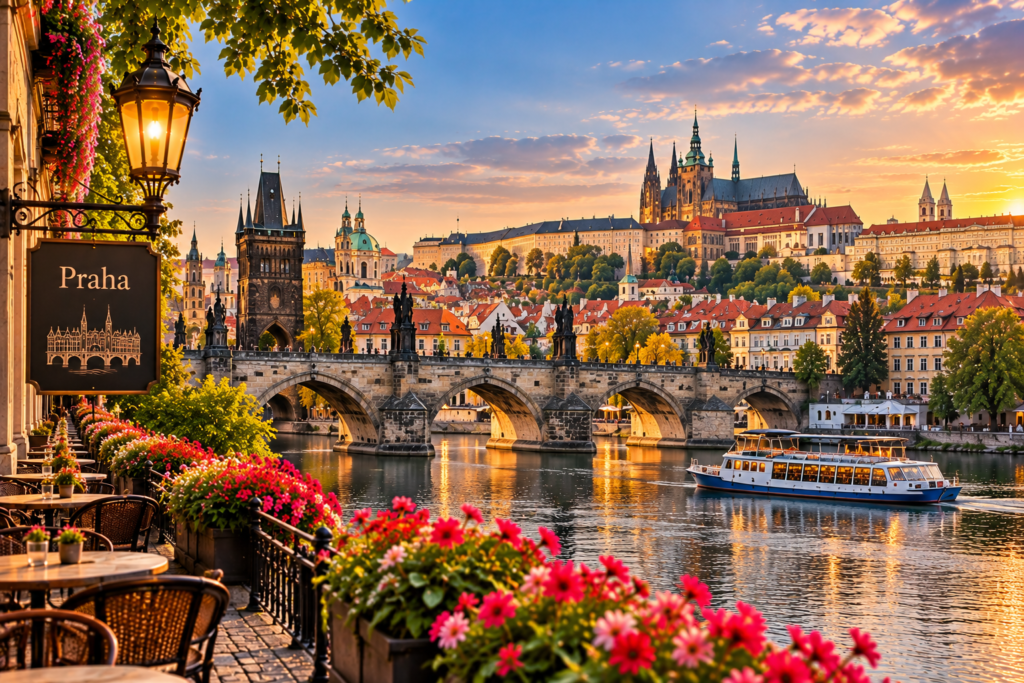
Prague
A captivating historic capital known for its beautiful Old Town, Charles Bridge, Prague Castle, colourful architecture, cobbled streets, and unforgettable skyline along the Vltava River.
CZECH REPUBLIC TRAVEL GUIDE
Everything you need to know to plan your trip to the Czech Republic, from the best time to visit and travel costs to transport, accommodation, food, and practical tips.
BEST TIME TO VISIT THE CZECH REPUBLIC
The Czech Republic can be visited throughout the year, but April to June and September to October are particularly good periods for sightseeing.
Spring brings milder temperatures, longer days, and colourful parks, while early autumn can provide comfortable weather with fewer peak-season crowds.
July and August are generally warmer and ideal for spending long days exploring outdoors, but Prague can become extremely busy around its most famous attractions.
Winter is cold, but Prague and other historic cities can be particularly atmospheric during the Christmas season, when festive markets and decorations transform many central squares.
Weather can change quickly during spring and autumn, so bringing layers and a lightweight waterproof jacket is sensible.
HOW MUCH DOES THE CZECH REPUBLIC COST?
The Czech Republic can offer better value than many Western European destinations, although Prague has become considerably more expensive in popular tourist areas.
A budget traveller might spend approximately 1,500–2,500 CZK per day, excluding international travel, by staying in hostels or inexpensive accommodation, using public transport, and choosing affordable local restaurants.
For a more comfortable trip with a private hotel room, restaurants, transport, and paid attractions, around 3,000–6,000+ CZK per day is more realistic.
Accommodation prices in central Prague can rise considerably during weekends, summer, Christmas, and other busy periods.
Eating slightly away from the busiest tourist streets can often provide better value, while supermarkets and bakeries are useful for inexpensive breakfasts and snacks.
Public transport in Prague is also an affordable way to move around the city.
GETTING TO THE CZECH REPUBLIC
The Czech Republic is well connected with the rest of Europe by air, rail, bus, and road.
Václav Havel Airport Prague (PRG) is the country’s main international airport and provides connections with destinations across Europe and beyond.
Prague is also well connected by train with neighbouring countries.
Direct and connecting rail services link the Czech Republic with cities in Germany, Austria, Slovakia, Poland, and Hungary.
International coaches are another popular option and can sometimes provide cheaper fares than trains.
Because of its central location, the Czech Republic is easy to combine with destinations such as Vienna, Berlin, Bratislava, Budapest, and Kraków.
GETTING AROUND THE CZECH REPUBLIC
Public transportation makes travelling around the Czech Republic relatively straightforward.
Trains and buses connect Prague with cities, towns, and smaller destinations throughout the country.
Within Prague, the combination of Metro, trams, and buses provides excellent coverage, and many of the major historic attractions can also be reached on foot.
Trams are particularly useful for travelling around central Prague and can also provide a great way to see more of the city.
A rental car isn’t necessary for a Prague-focused trip, but it can provide more flexibility if you’re planning to explore countryside, castles, or smaller towns.
Vehicles drive on the right-hand side of the road.
WHERE TO STAY IN THE CZECH REPUBLIC
In Prague, the best area to stay depends on your budget and the atmosphere you want.
Staré Město (Old Town) places you close to many of Prague’s most famous attractions, restaurants, historic streets, and squares, but accommodation can be expensive.
Malá Strana offers beautiful historic surroundings below Prague Castle and provides easy access to Charles Bridge.
Nové Město (New Town) offers a central location with plenty of restaurants, shopping, transport connections, and accommodation options.
Neighbourhoods slightly farther from the historic centre can provide better value while remaining easily accessible by tram or Metro.
When choosing accommodation, staying close to a tram or Metro station can make exploring Prague much easier.
FOOD IN THE CZECH REPUBLIC
Czech cuisine is traditionally hearty, with meat, sauces, dumplings, soups, and potatoes appearing in many dishes.
Popular foods include svíčková, roast meats with dumplings, guláš, schnitzel-style dishes, and different varieties of soups and sausages.
One well-known street snack in central Prague is trdelník, a sweet pastry commonly sold around tourist areas, although its modern popularity in Prague is more connected with tourism than traditional Czech everyday cuisine.
The Czech Republic also has a strong beer culture, with brewing traditions stretching back centuries.
Prague has an increasingly international restaurant scene, so you’ll find everything from traditional Czech restaurants to Asian, Middle Eastern, Italian, and other cuisines.
For better value, explore restaurants away from the busiest tourist squares.
MONEY AND PAYMENTS IN THE CZECH REPUBLIC
The Czech Republic uses the Czech koruna (CZK), not the euro.
Credit cards, debit cards, and contactless payments are widely accepted in Prague and other major cities.
However, carrying a small amount of Czech koruna can still be useful for smaller businesses and occasional cash-only situations.
Be careful when exchanging money in heavily tourist-oriented areas. Always check the exchange rate and any commission before completing a transaction.
ATMs are widely available, but check any fees before withdrawing money.
If an ATM or card terminal offers to charge you in pounds, euros, or another home currency instead of Czech koruna, check the conversion carefully before accepting.
STAYING CONNECTED IN THE CZECH REPUBLIC
Getting online in the Czech Republic is straightforward.
Wi-Fi is widely available in hotels, cafés, restaurants, airports, railway stations, and many public places.
Visitors can purchase a Czech or European SIM card or use an eSIM for mobile data.
Mobile coverage is generally strong in Prague and other populated areas, although reception can vary in more remote countryside.
Having mobile data is particularly useful for public transport, maps, restaurant searches, attraction information, and navigation around Prague.
Downloading offline maps can also be useful if you’re planning to explore smaller towns or rural areas.
IS THE CZECH REPUBLIC SAFE FOR SOLO TRAVELLERS?
The Czech Republic is straightforward to explore independently, with good public transportation and walkable historic centres.
Normal travel precautions still apply, particularly in Prague’s busiest tourist areas.
Keep your phone, wallet, passport, camera, and other belongings secure around crowded attractions, railway stations, nightlife areas, and public transport.
Busy locations around the Old Town, Charles Bridge, and major transport hubs can attract large numbers of visitors, so pay particular attention to your belongings.
When walking around Prague, be careful around tram tracks and always check for approaching trams before crossing.
The European emergency number 112 can be used for emergency services in the Czech Republic.
VISA AND ENTRY REQUIREMENTS
The Czech Republic is part of the Schengen Area, so entry requirements depend on your nationality.
British citizens travelling with a full British citizen passport can generally visit the Czech Republic and other Schengen countries for up to 90 days in any 180-day period without a visa for tourism and certain other permitted activities.
Passport validity requirements also apply, so check your passport before travelling.
European border procedures are changing, including the Entry/Exit System (EES) and the planned ETIAS travel authorisation system. Requirements and implementation arrangements can change, so always check the latest official information before your trip.
Visitors with other passports may require a Schengen visa depending on their nationality and circumstances. Always confirm the latest entry requirements before travelling.
WHAT TO WEAR IN THE CZECH REPUBLIC
What to wear depends on the season.
During summer, lightweight clothing is suitable for warmer days, although a light jacket can still be useful in the evenings.
Spring and autumn can bring changing temperatures and rain, so layers and a waterproof jacket are recommended.
Winter can be cold, particularly from December through February, so bring a warm coat, layers, gloves, and suitable footwear.
Comfortable walking shoes are especially important in Prague. The historic centre has many cobbled streets, and you’ll probably spend several hours each day exploring on foot.
If you’re visiting during winter, footwear with good grip can also be useful in wet, icy, or snowy conditions.
HOW LONG DO YOU NEED IN THE CZECH REPUBLIC?
For Prague alone, around 3–4 days is a good amount of time for a first visit.
This gives you time to explore the Old Town, Charles Bridge, Prague Castle, Malá Strana, the riverfront, and different neighbourhoods without rushing through everything.
With 5–7 days in the Czech Republic, you can combine Prague with another city or one or two day trips.
With 7–10 days, you’ll have more time to explore smaller towns, castles, countryside, and other parts of the country.
The Czech Republic is relatively compact, so you can experience several different destinations without spending huge amounts of time travelling between them.
FINAL TIPS FOR VISITING THE CZECH REPUBLIC
Prague is extremely popular, so visit famous attractions early in the morning if you want to experience them with fewer crowds.
Don’t spend your entire visit around Old Town Square and Charles Bridge. Explore neighbourhoods beyond the main tourist centre to see a different side of Prague.
Use the city’s excellent tram and Metro network when you don’t want to walk long distances.
Remember that the Czech Republic uses Czech koruna rather than the euro, and be careful with exchange offices and ATM conversion rates in tourist areas.
Wear comfortable shoes because Prague’s cobbled streets can become tiring after several hours of walking.
And if you have enough time, consider exploring beyond Prague. Historic towns, castles, countryside, and smaller cities can provide a very different experience from the capital.
READY TO EXPLORE THE CZECH REPUBLIC?
From Prague’s medieval streets, magnificent castle, and iconic Charles Bridge to historic towns, beautiful countryside, and centuries of culture, the Czech Republic has plenty to discover. Start planning your trip and experience it for yourself.
GET TRAVEL INSPIRATION IN YOUR INBOX
Get practical travel tips, destination inspiration, and new guides delivered straight to your inbox.