
Explore Luxembourg
Discover historic fortifications, dramatic valleys, charming towns, beautiful countryside, castles, and European culture in one of the continent’s smallest countries.
DISCOVER LUXEMBOURG
Luxembourg may be one of Europe’s smallest countries, but it combines historic cities, dramatic landscapes, medieval castles, forests, picturesque villages, and modern European life within a remarkably compact area.
Luxembourg City is the country’s capital and main destination, known for its impressive fortifications, historic Old Town, dramatic cliffs and valleys, beautiful viewpoints, and modern European institutions.
Beyond the capital, Luxembourg offers castles, hiking trails, vineyards, forests, and charming towns such as Vianden and Echternach. The country’s small size and excellent transport network make exploring beyond the capital relatively easy.
Here you’ll find my experience in Luxembourg City, along with practical travel tips and useful information to help you plan your own trip to Luxembourg.
PLACES I’VE VISITED IN LUXEMBOURG
Explore my experience in Luxembourg City, the country’s historic capital, where dramatic valleys, fortified old streets, impressive architecture, and modern European city life come together.
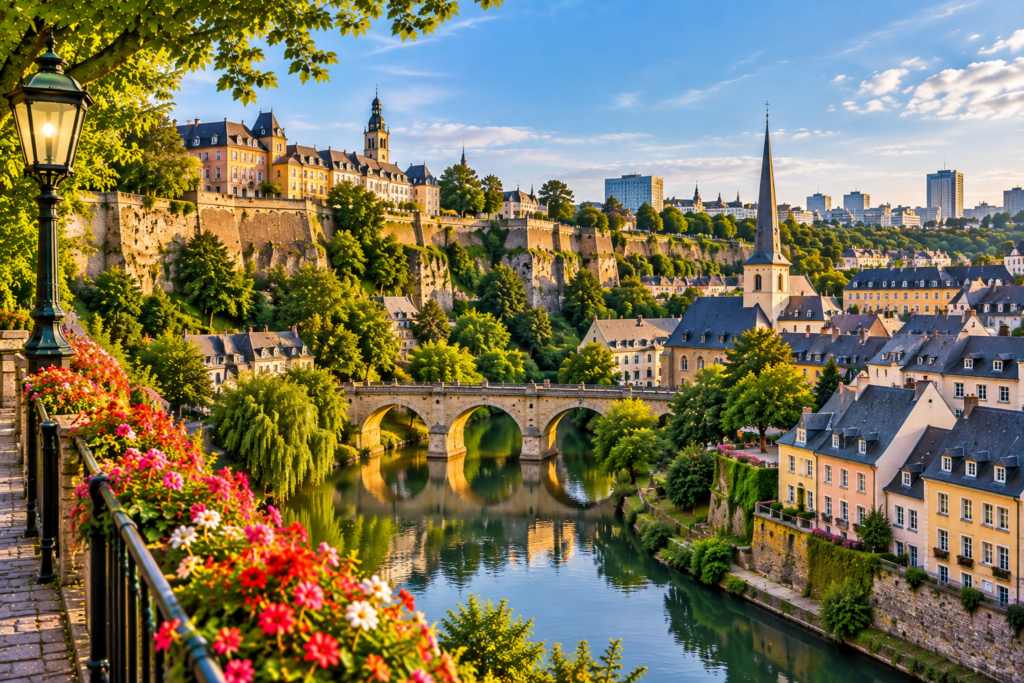
Luxembourg City
A compact and picturesque capital known for its dramatic cliffs and valleys, historic fortifications, charming Old Town, beautiful viewpoints, and blend of historic and modern architecture.
LUXEMBOURG TRAVEL GUIDE
Everything you need to know to plan your trip to Luxembourg, from the best time to visit and travel costs to transport, accommodation, food, and practical tips.
BEST TIME TO VISIT LUXEMBOURG
Luxembourg can be visited throughout the year, but April to June and September to October are particularly good periods for sightseeing and exploring the countryside.
Spring brings milder temperatures, longer days, and greener landscapes, while early autumn can offer comfortable weather and colourful scenery.
July and August generally bring the warmest weather and longer daylight hours, making them popular for walking, hiking, and outdoor sightseeing.
Winter is colder and days are shorter, but Luxembourg City becomes particularly atmospheric during the Christmas season with festive lights and markets.
Rain is possible throughout the year, so carrying a lightweight waterproof jacket or umbrella is useful.
HOW MUCH DOES LUXEMBOURG COST?
Luxembourg can be an expensive destination, particularly when it comes to accommodation and restaurants.
A budget traveller might spend approximately €70–€120 per day, excluding international travel, by choosing inexpensive accommodation, supermarkets, bakeries, and affordable restaurants.
For a more comfortable trip with a private hotel room, restaurants, attractions, and other expenses, approximately €150–€300+ per day is more realistic.
One major advantage is that public transport is free throughout Luxembourg on most domestic buses, trams, and trains in standard class, which can significantly reduce your daily travel costs.
Accommodation in Luxembourg City can be expensive, particularly during busy periods, so booking early can help.
GETTING TO LUXEMBOURG
Luxembourg is well connected with neighbouring European countries.
Luxembourg Airport (LUX) is the country’s main international airport and is located close to Luxembourg City.
The country is also easily accessible by train from neighbouring France, Belgium, and Germany, making it convenient to include Luxembourg as part of a longer European trip.
International buses provide another option and can sometimes be cheaper than trains.
Because Luxembourg sits between Belgium, France, and Germany, it works particularly well as a stop on a multi-country Central or Western European itinerary.
GETTING AROUND LUXEMBOURG
Getting around Luxembourg is particularly convenient because most public transport within the country is free.
Trains, trams, and buses connect Luxembourg City with towns and destinations across the country.
Within Luxembourg City, the modern tram network and buses make moving between different areas straightforward, although much of the historic centre is best explored on foot.
The city’s dramatic geography means you’ll encounter bridges, hills, valleys, and different levels while walking, so some journeys can involve more climbing than the map suggests.
A rental car isn’t necessary for most visitors, particularly if you’re visiting Luxembourg City and destinations served by public transport.
A car can still provide additional flexibility for exploring more remote countryside and villages.
WHERE TO STAY IN LUXEMBOURG
For a first visit, Luxembourg City is the most convenient base.
Staying around the Ville Haute, or Upper City, puts you close to the historic centre, shops, restaurants, viewpoints, and many major attractions.
The Gare area around the main railway station provides convenient transport connections and often has a wider range of accommodation.
Grund, located below the historic centre in the Alzette valley, offers a picturesque setting with historic buildings and riverside scenery.
Accommodation can be expensive, so compare prices across different neighbourhoods rather than limiting your search to the heart of the Old Town.
Because public transport is free, staying slightly outside the centre can also be a practical way to reduce accommodation costs.
FOOD IN LUXEMBOURG
Luxembourg’s cuisine reflects influences from its neighbours, particularly France, Germany, and Belgium, while maintaining its own traditional dishes.
One of the best-known Luxembourgish dishes is Judd mat Gaardebounen, consisting of smoked pork with broad beans.
Other traditional foods include Gromperekichelcher, crispy potato cakes often found at markets and events, along with various meat, sausage, fish, and potato dishes.
The country also has a strong café, bakery, and restaurant culture.
Because Luxembourg has a highly international population, Luxembourg City offers an impressive variety of international cuisines.
If you’re travelling on a budget, bakeries, supermarkets, and casual restaurants can help keep food costs under control.
MONEY AND PAYMENTS IN LUXEMBOURG
Luxembourg uses the Euro (€).
Credit cards, debit cards, and contactless payments are widely accepted in hotels, restaurants, supermarkets, shops, and tourist attractions.
Mobile payments are also common.
Carrying a small amount of cash can still be useful for smaller purchases or occasional situations where cards aren’t accepted.
ATMs are widely available in Luxembourg City and other populated areas.
If you’re using a foreign bank card, check whether your provider charges foreign transaction or cash withdrawal fees.
STAYING CONNECTED IN LUXEMBOURG
Getting online in Luxembourg is straightforward.
Wi-Fi is widely available in hotels, cafés, restaurants, airports, and many public locations.
Visitors can purchase a Luxembourg or European SIM card or use an eSIM for mobile data.
Mobile coverage is generally strong across populated areas, although reception can vary in more rural locations.
Having mobile data is useful for maps, public transport information, restaurant searches, attraction information, and navigation.
Because Luxembourg is small, you may also find your phone connecting to networks from neighbouring countries when travelling near the borders.
IS LUXEMBOURG SAFE FOR SOLO TRAVELLERS?
Luxembourg is straightforward to explore independently, with extensive public transportation and a compact capital.
Normal travel precautions still apply.
Keep your passport, phone, wallet, camera, and other valuables secure around railway stations, crowded public transport, nightlife areas, and busy tourist locations.
Luxembourg City is generally easy to navigate, but its steep valleys, bridges, stairways, and different elevations can make some walking routes more demanding than expected.
The European emergency number 112 can be used for emergency services in Luxembourg.
VISA AND ENTRY REQUIREMENTS
Luxembourg is part of the Schengen Area, so entry requirements depend on your nationality.
British citizens travelling with a full British citizen passport can generally visit Luxembourg and other Schengen countries for up to 90 days in any 180-day period without a visa for tourism and certain other permitted activities.
Passport validity requirements also apply, so check your passport before travelling.
European border procedures are changing, including the Entry/Exit System (EES) and the planned ETIAS travel authorisation system. Requirements and implementation arrangements can change, so always check the latest official information before your trip.
Visitors with other passports may require a Schengen visa depending on their nationality and circumstances. Always confirm the latest entry requirements before travelling.
WHAT TO WEAR IN LUXEMBOURG
What to wear depends on the season.
During summer, lightweight clothing is suitable for warmer days, although a light jacket can be useful for cooler evenings.
Spring and autumn can bring changing temperatures and rain, so layers and a waterproof jacket are useful.
Winter can be cold, requiring a warm coat, layers, and suitable footwear.
Comfortable walking shoes are especially important in Luxembourg City because exploring the historic centre often involves cobbled streets, slopes, stairways, and walking between the upper city and lower valleys.
A compact umbrella can also be useful throughout much of the year.
HOW LONG DO YOU NEED IN LUXEMBOURG?
For Luxembourg City alone, around 1–2 days is enough to see many of the main attractions, walk through the historic centre, explore the valleys, and enjoy the city’s viewpoints.
With 3–4 days in Luxembourg, you can explore the capital at a more relaxed pace while adding day trips to other parts of the country.
With 5–7 days, you’ll have time to explore more castles, towns, hiking areas, vineyards, and countryside.
Luxembourg’s small size and free public transport make day trips particularly convenient, so you don’t necessarily need to change accommodation frequently.
FINAL TIPS FOR VISITING LUXEMBOURG
Take advantage of Luxembourg’s free public transport. It makes exploring both the capital and other parts of the country easier and more affordable.
Don’t judge distances in Luxembourg City only by what you see on a map. The city’s valleys and different elevations mean a short distance can sometimes involve stairs, hills, or bridges.
Spend time exploring both the upper historic centre and lower areas such as Grund. They offer very different perspectives of the city.
Luxembourg can be expensive, particularly for accommodation and restaurants, so booking ahead and using supermarkets or bakeries occasionally can help control your budget.
If you have more than a couple of days, explore beyond Luxembourg City. The country may be small, but its castles, forests, villages, vineyards, and countryside offer a very different experience from the capital.
READY TO EXPLORE LUXEMBOURG?
From Luxembourg City’s dramatic valleys and historic fortifications to beautiful castles, charming towns, forests, and countryside, this small European country has much more to discover than its size suggests. Start planning your trip and experience it for yourself.
GET TRAVEL INSPIRATION IN YOUR INBOX
Get practical travel tips, destination inspiration, and new guides delivered straight to your inbox.