
Explore Malta
Discover historic cities, beautiful Mediterranean coastline, crystal-clear water, colourful fishing villages, ancient landmarks, and island culture across Malta.
DISCOVER MALTA
Malta is a small Mediterranean island country packed with history, beautiful coastal scenery, distinctive architecture, clear blue water, and lively towns.
Located between Sicily and North Africa, Malta has been influenced by many different cultures throughout its history. You can see this in its honey-coloured limestone buildings, impressive fortifications, churches, traditional balconies, food, and historic streets.
Despite its small size, Malta offers plenty of variety. You can explore the historic streets of Valletta, walk along the waterfront between Sliema and St. Julian’s, discover ancient towns and fortifications, swim in clear Mediterranean water, and take boat trips around the islands.
Here you’ll find my experiences in Sliema, St. Julian’s, and Valletta, along with practical travel tips and useful information to help you plan your own trip to Malta.
PLACES I’VE VISITED IN MALTA
Explore the places I’ve visited in Malta, from the lively waterfronts of Sliema and St. Julian’s to the historic streets, impressive architecture, and spectacular harbour views of Valletta.
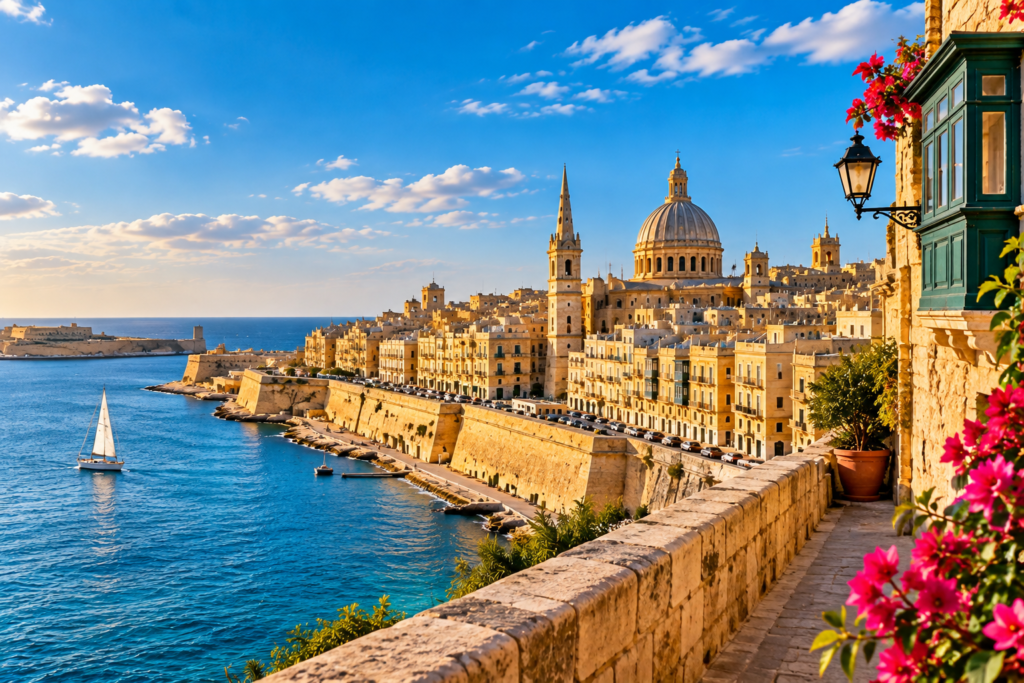
Valletta
Malta’s historic capital, filled with honey-coloured architecture, narrow streets, impressive churches, beautiful balconies, harbour views, and centuries of fascinating history.
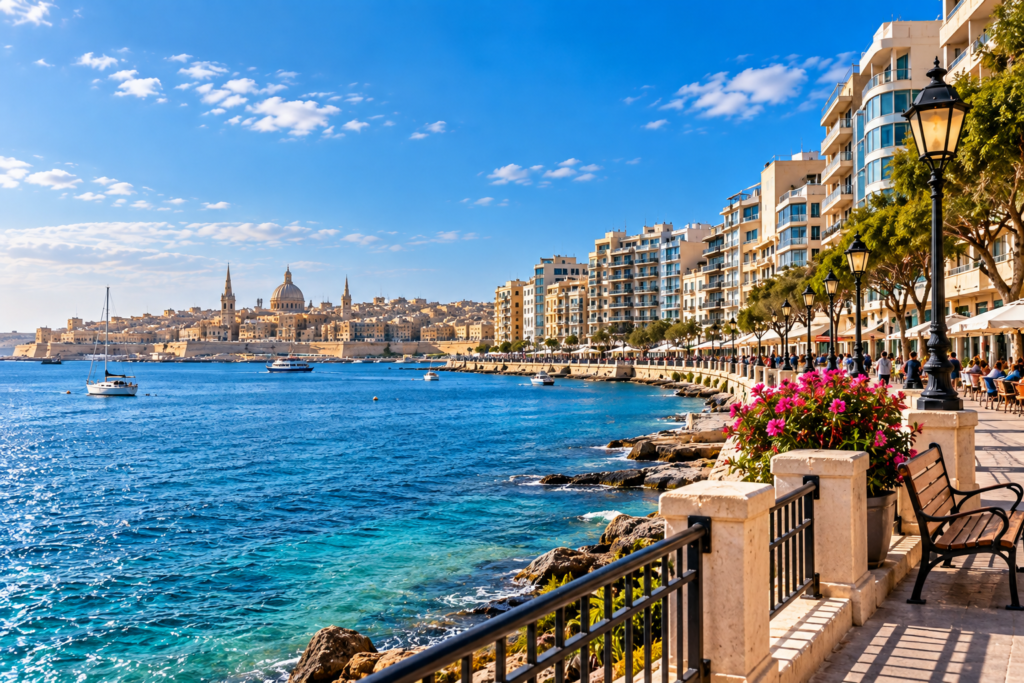
Sliema
A lively waterfront destination known for its beautiful promenade, harbour views, cafés, restaurants, shopping, swimming spots, and fantastic views across the water towards Valletta.
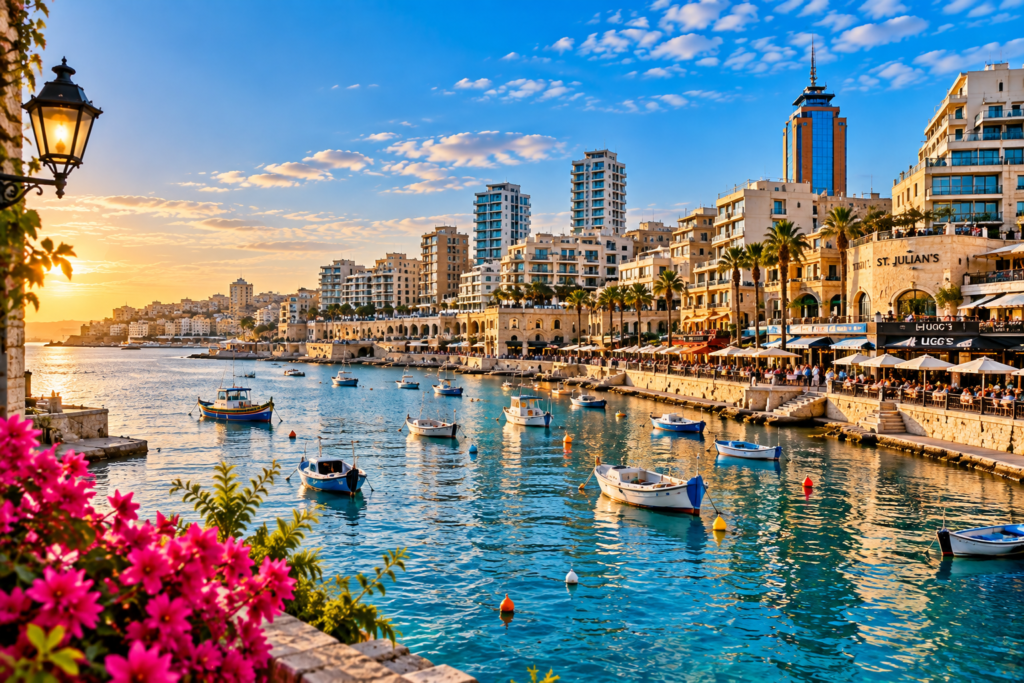
St. Julian’s
A vibrant coastal town known for picturesque Spinola Bay, waterfront restaurants, modern hotels, nightlife, beaches, and a lively atmosphere along Malta’s northeastern coast.
MALTA TRAVEL GUIDE
Everything you need to know to plan your trip to Malta, from the best time to visit and travel costs to transport, accommodation, food, and practical tips.
BEST TIME TO VISIT MALTA
Malta has a Mediterranean climate with hot, dry summers and mild winters, making it possible to visit throughout the year.
April to June and September to October are particularly good times to visit. The weather is generally warm enough for sightseeing and outdoor activities without the intense heat of the middle of summer.
July and August are the hottest and busiest months. Temperatures can become very high during the day, while beaches, attractions, and popular coastal areas are usually busier.
Spring is excellent for walking and sightseeing, while September and October can still provide warm weather and good conditions for swimming.
Winter is cooler and can be wetter and windier, but it can be a good option if your priority is sightseeing rather than beaches.
HOW MUCH DOES MALTA COST?
Malta can work for different budgets, although accommodation prices increase considerably during the summer.
A budget traveller might spend approximately €60–€100 per day, excluding international flights, by staying in affordable accommodation, using public transport, and choosing bakeries, local cafés, and inexpensive restaurants.
For a more comfortable trip with a private hotel room, restaurants, attractions, boat trips, and other activities, approximately €120–€220+ per day is more realistic.
Public buses are relatively affordable, while ferries can also be a convenient way to travel between some popular areas.
Food costs vary significantly depending on location. Restaurants around tourist waterfronts can be more expensive, while bakeries and local takeaway shops offer cheaper alternatives.
GETTING TO MALTA
Most international visitors arrive through Malta International Airport (MLA), the country’s main airport.
The airport is located close to many of Malta’s major towns and tourist areas, including Valletta, Sliema, and St. Julian’s.
Direct flights connect Malta with many cities across the United Kingdom and Europe, with additional international connections available through major European airports.
Public buses, taxis, airport transfers, and ride-hailing services are available from the airport.
Malta can also be reached by ferry from Sicily, making it possible to combine Malta with a trip to southern Italy.
GETTING AROUND MALTA
Malta is small, but journeys can sometimes take longer than expected because of traffic and the island’s road network.
Public buses connect most major towns, beaches, attractions, and tourist areas and are one of the most affordable ways to travel around the island.
Ferries are particularly useful in some areas. You can travel by ferry between Sliema and Valletta, which also provides beautiful harbour and city views.
Taxis and ride-hailing services are widely available and can be convenient when public transport takes too long.
Renting a car gives you more flexibility for exploring remote beaches, villages, and countryside, but parking and traffic can be challenging in busy areas.
Remember that in Malta, traffic drives on the left, similar to the United Kingdom.
WHERE TO STAY IN MALTA
The best place to stay depends on the type of trip you want.
Sliema is a convenient option for restaurants, shopping, waterfront walks, ferry connections, and easy access to Valletta.
St. Julian’s is a good choice if you want restaurants, nightlife, hotels, and a lively coastal atmosphere. Areas around Spinola Bay are particularly attractive.
Valletta is ideal if history, architecture, museums, and sightseeing are your priorities. Staying inside the historic capital also gives you the opportunity to experience its streets when many day visitors have left.
For a quieter trip, other parts of Malta can offer a more relaxed atmosphere away from the busiest tourist areas.
Book accommodation early if you’re travelling during the peak summer months.
FOOD IN MALTA
Maltese food combines Mediterranean flavours with influences from Italy, North Africa, and Britain.
One of the easiest local foods to try is pastizzi, a popular flaky pastry traditionally filled with ricotta cheese or peas.
Ftira is another Maltese favourite, often served as a sandwich with ingredients such as tuna, tomatoes, olives, capers, and olive oil.
Traditional Maltese cuisine also includes rabbit dishes, seafood, soups, pasta, and slow-cooked meat.
Because Malta is surrounded by the Mediterranean, fresh fish and seafood are widely available, particularly in coastal areas.
Italian food is also extremely popular, and you’ll find plenty of pizza and pasta alongside Maltese and international restaurants.
MONEY AND PAYMENTS IN MALTA
Malta uses the Euro (€).
Credit cards, debit cards, and contactless payments are widely accepted in hotels, restaurants, supermarkets, shops, and tourist attractions.
ATMs are widely available in major towns and tourist areas.
It’s still useful to carry a small amount of cash for smaller purchases, markets, local shops, or places where card payments may not be available.
If you’re using a foreign bank card, check your bank’s exchange rate and foreign transaction fees before travelling.
When given a choice between paying in euros or your home currency, check the conversion carefully before accepting the transaction.
STAYING CONNECTED IN MALTA
Staying connected in Malta is straightforward.
Wi-Fi is widely available in hotels, cafés, restaurants, and many public places.
Visitors can purchase a local SIM card or use an eSIM for mobile data.
Mobile coverage is generally good across Malta and the main populated areas.
Having mobile data is particularly useful for navigation, checking bus schedules, booking taxis, finding restaurants, and planning attractions while exploring the island.
Downloading offline maps before your trip can also be useful.
IS MALTA SAFE FOR SOLO TRAVELLERS?
Malta is generally straightforward to explore independently, with busy tourist areas, public transportation, and plenty of accommodation and restaurants.
Normal travel precautions still apply.
Keep your phone, wallet, passport, camera, and other valuables secure in crowded areas, on public transport, around nightlife districts, and at busy tourist attractions.
Take additional care around nightlife areas late at night, particularly around Paceville in St. Julian’s.
When swimming, pay attention to local sea conditions, warning flags, currents, and weather, especially around rocky coastal areas.
The European emergency number 112 can be used for emergency services in Malta.
VISA AND ENTRY REQUIREMENTS
Malta is part of the Schengen Area, so entry requirements depend on your nationality.
British citizens travelling with a full British citizen passport can generally visit Malta and other Schengen countries for up to 90 days in any 180-day period without a visa for tourism and certain other permitted activities.
Passport validity requirements also apply, so check that your passport meets the current rules before travelling.
European border procedures are changing, including the Entry/Exit System (EES) and the planned ETIAS travel authorisation system. Requirements and implementation arrangements can change, so always check the latest official information before travelling.
Visitors with other passports may require a Schengen visa depending on their nationality and circumstances. Always confirm the latest entry requirements before your trip.
WHAT TO WEAR IN MALTA
During summer, lightweight and breathable clothing is essential because Malta can become very hot and sunny.
Bring sunglasses, a hat, and suitable sun protection if you’ll spend long periods outdoors.
Comfortable walking shoes are important for exploring places such as Valletta, where you’ll encounter hills, steps, and historic streets.
If you’re visiting beaches or swimming spots, bring swimwear and suitable footwear for rocky coastlines.
During spring and autumn, lightweight clothing combined with an extra layer for cooler evenings usually works well.
Winter visitors should bring layers and a waterproof or wind-resistant jacket because conditions can be cooler, wetter, and windy.
When visiting churches and religious sites, dress respectfully and follow any clothing requirements displayed at the entrance.
HOW LONG DO YOU NEED IN MALTA?
Around 3–4 days gives you enough time for a shorter Malta trip covering places such as Valletta, Sliema, St. Julian’s, and some nearby attractions.
With 5–7 days, you can travel at a more relaxed pace and add more beaches, historic towns, coastal areas, boat trips, and other parts of the islands.
A full week also gives you more flexibility to visit Gozo or take a day trip to Comino.
Because Malta is compact, you can stay in one main area and make several day trips rather than constantly changing accommodation.
FINAL TIPS FOR VISITING MALTA
Don’t underestimate the Maltese sun, particularly during summer. Carry water, use sun protection, and consider doing longer walks earlier in the morning or later in the afternoon.
Use the ferries where practical. The journey between Sliema and Valletta is convenient and gives you excellent views from the water.
Give yourself time to explore Valletta on foot. Some of the most interesting streets, balconies, viewpoints, cafés, and architectural details are best discovered while walking.
Try local foods such as pastizzi and ftira rather than eating only in international restaurants.
Traffic can make relatively short journeys take longer than expected, so allow extra time when travelling by road.
If you have enough time, explore beyond the main tourist areas. Malta’s smaller towns, historic sites, coastline, neighbouring islands, and countryside show a different side of the country.
READY TO EXPLORE MALTA?
From the historic streets and harbour views of Valletta to the lively waterfronts of Sliema and St. Julian’s, beautiful Mediterranean coastline, local food, and centuries of history, Malta packs an incredible amount into a small island country. Start planning your trip and experience it for yourself.
GET TRAVEL INSPIRATION IN YOUR INBOX
Get practical travel tips, destination inspiration, and new guides delivered straight to your inbox.