
Explore Bangkok
Discover magnificent temples, vibrant street life, incredible food, colourful markets, and unforgettable experiences in Thailand’s capital.
DISCOVER BANGKOK
Bangkok is Thailand’s energetic capital, where magnificent temples, modern skyscrapers, colourful markets, street food, shopping malls, and lively neighbourhoods come together. From exploring historic landmarks along the Chao Phraya River to discovering local markets and experiencing the city’s famous food scene, Bangkok offers something different around every corner. It can feel busy and chaotic at first, but that energy is part of what makes the city so memorable. Here you’ll find the best things to do, practical travel tips, costs, transport advice, and everything you need to start planning your own trip to Bangkok.
TOP THINGS TO DO IN BANGKOK
Discover some of Bangkok’s must-see temples, landmarks, markets, neighbourhoods, and local experiences.
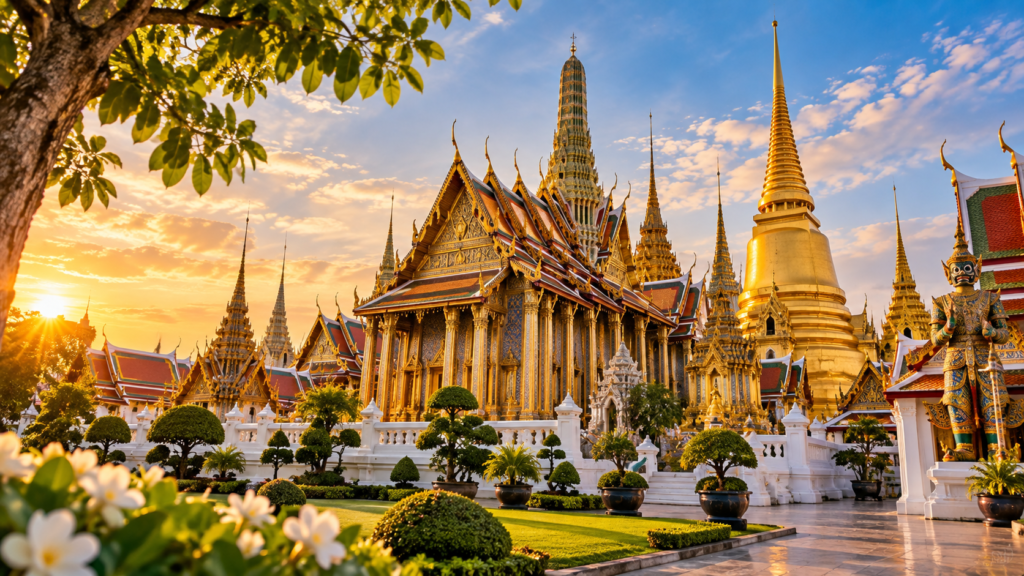
The Grand Palace
Bangkok’s spectacular royal complex, famous for its ornate architecture, sacred temples, and the Emerald Buddha.
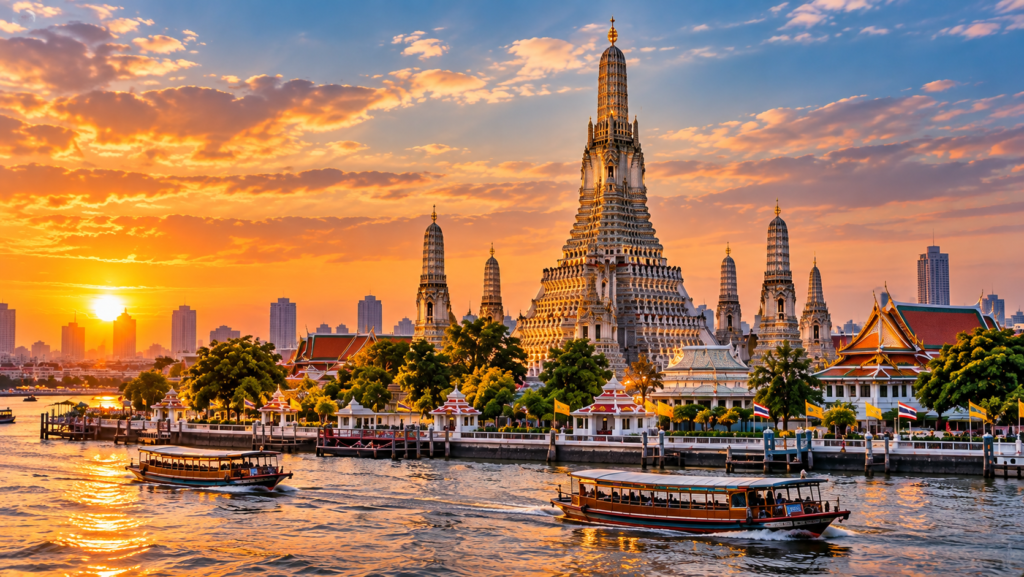
Wat Arun
An iconic riverside temple known for its distinctive central tower, intricate details, and beautiful views along the Chao Phraya.
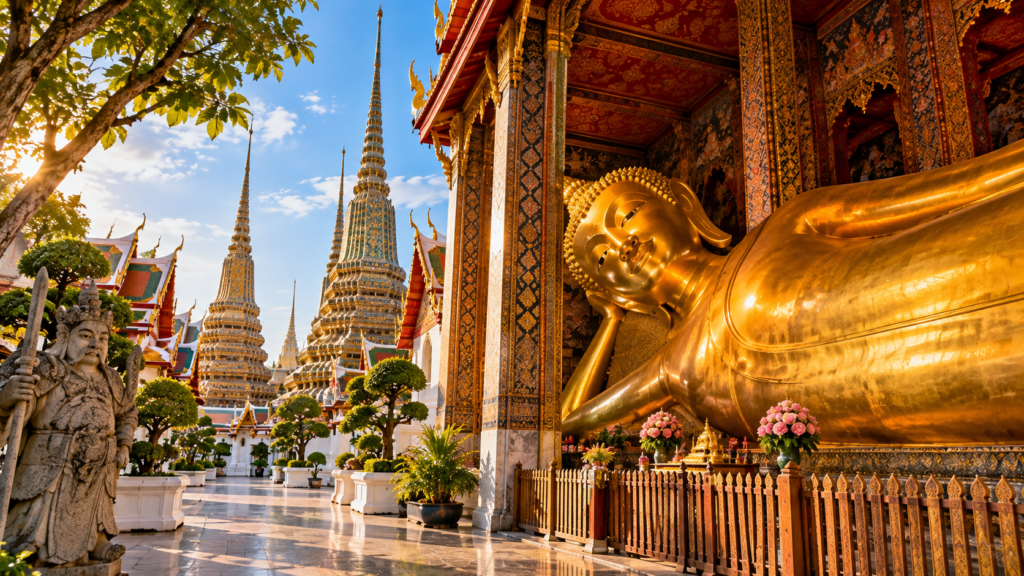
Wat Pho
One of Bangkok’s oldest temples, famous for its enormous Reclining Buddha and beautiful temple grounds.
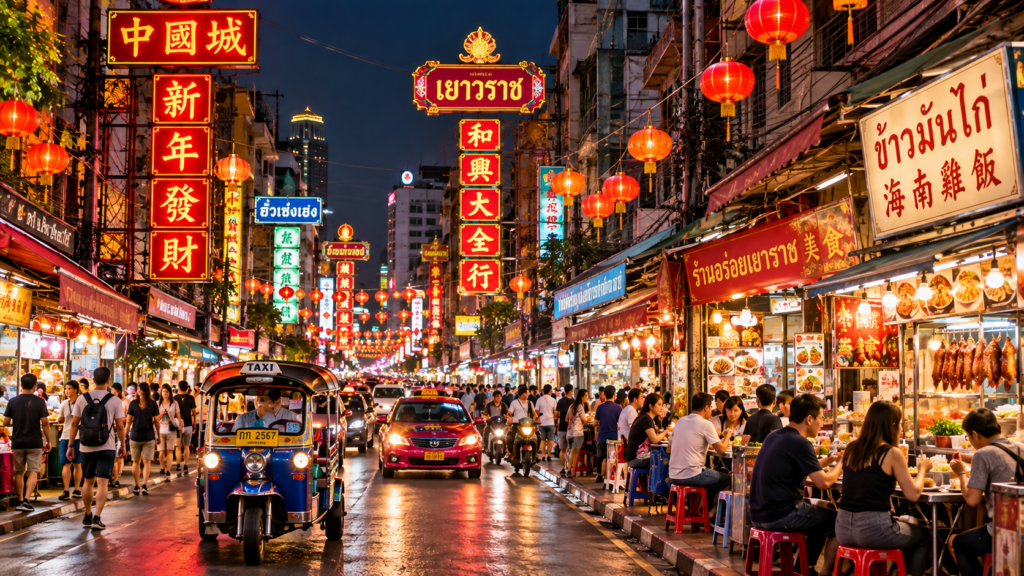
Chinatown
A lively neighbourhood packed with street food, markets, colourful signs, traditional shops, temples, and busy streets.
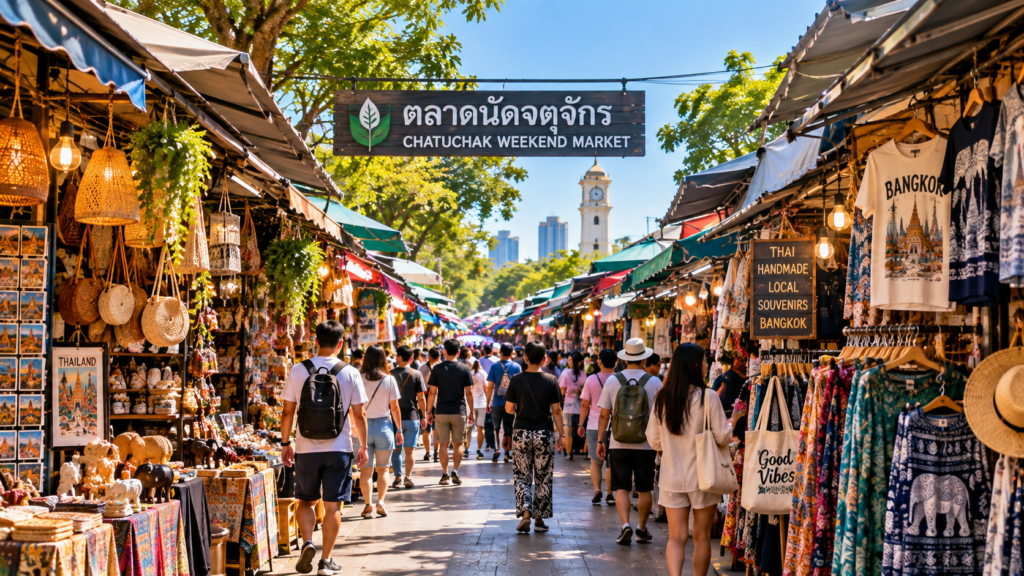
Chatuchak Market
One of Bangkok’s biggest markets, with thousands of stalls selling food, clothing, souvenirs, art, and almost everything imaginable.
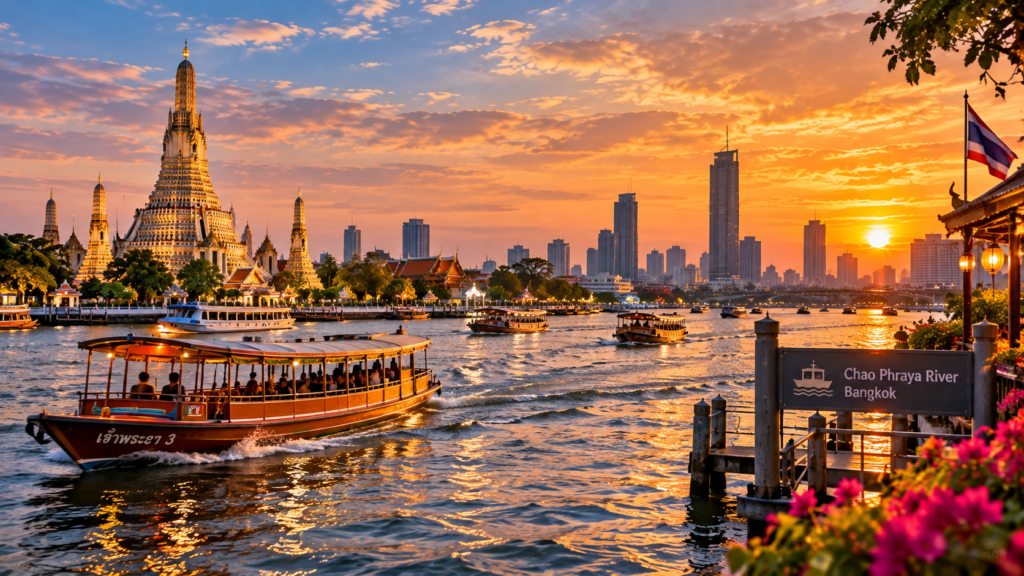
Chao Phraya River
Experience Bangkok from the water, passing temples, historic neighbourhoods, skyscrapers, and landmarks along the river.
BANGKOK TRAVEL GUIDE
Everything you need to know to plan your trip to Bangkok, from the best time to visit and travel costs to transport, accommodation, food, and practical tips.
BEST TIME TO VISIT BANGKOK
Bangkok can be visited throughout the year, but the weather is generally hot and humid, with distinct drier and wetter periods.
November to February is one of the most comfortable times to visit. Temperatures are generally slightly cooler, humidity can feel more manageable, and there is usually less rainfall. This is also one of the busiest periods, so accommodation prices can be higher.
March to May is typically very hot, with April often being particularly intense. If you visit during this period, plan outdoor sightseeing for the morning or later in the afternoon and take regular breaks from the heat.
June to October brings the wetter monsoon season. Heavy showers are more common, but rain often comes in bursts rather than lasting all day. You can still explore Bangkok during this period, and there may be fewer visitors at some attractions.
For a good balance of comfortable weather and sightseeing conditions, November to February is generally the easiest period for a first visit to Bangkok.
HOW MUCH DOES BANGKOK COST?
Bangkok can be very affordable, although your daily budget will depend heavily on your accommodation, food choices, transport, nightlife, and activities.
A budget traveller can spend around ฿1,200–฿2,000 per day, excluding international flights, by staying in hostels or inexpensive accommodation, eating local food, and using public transport.
For a more comfortable trip with a private hotel room, restaurants, attractions, taxis, and occasional nightlife, around ฿2,500–฿5,000+ per day is more realistic.
Street food and local restaurants can be inexpensive, while rooftop bars, luxury hotels, international restaurants, and premium experiences can quickly increase your costs.
Public transport is affordable, particularly the BTS Skytrain and MRT. Boats along the Chao Phraya River can also be an inexpensive and enjoyable way to move between some attractions.
GETTING TO BANGKOK
Bangkok has two major airports: Suvarnabhumi Airport (BKK) and Don Mueang International Airport (DMK).
Suvarnabhumi handles many international and long-haul flights, while Don Mueang is widely used by low-cost airlines and regional services.
From Suvarnabhumi Airport, the Airport Rail Link provides a convenient connection towards central Bangkok, where you can transfer to other public transport.
Taxis and ride-hailing services are also available from both airports.
Bangkok is one of Southeast Asia’s major transport hubs, making it easy to combine with other destinations in Thailand or neighbouring countries.
GETTING AROUND BANGKOK
Bangkok is enormous, and traffic can be heavy, so choosing the right form of transport can save a lot of time.
The BTS Skytrain and MRT are among the easiest ways to travel around many parts of the city. They are generally fast, affordable, air-conditioned, and avoid road traffic.
River boats and ferries are useful for reaching attractions around the Chao Phraya River, including areas near the Grand Palace, Wat Pho, and Wat Arun.
Taxis and ride-hailing services are widely available, although journeys can take considerably longer during busy periods.
Tuk-tuks are part of the Bangkok experience, but agree on the fare before starting your journey and be cautious of offers involving unexpected stops at shops or other businesses.
Walking works well within individual neighbourhoods, but Bangkok’s size, heat, traffic, and busy roads mean it is rarely practical to walk everywhere.
WHERE TO STAY IN BANGKOK
Choosing the right neighbourhood can make a big difference to your Bangkok experience.
Sukhumvit is convenient for first-time visitors who want easy access to the BTS, restaurants, shopping centres, nightlife, and a huge range of hotels.
Siam is excellent for shopping and transport connections, with major shopping centres and easy access to both BTS lines.
Silom combines business districts, restaurants, nightlife, hotels, and convenient BTS and MRT connections.
Riverside is a good choice if you want scenic river views, luxury hotels, and easier access to some historic attractions.
Old Bangkok and the Khao San Road area put you closer to major historic sights such as the Grand Palace and Wat Pho and are popular with backpackers and budget travellers.
Wherever you stay, being within comfortable walking distance of a BTS or MRT station can make exploring Bangkok considerably easier.
FOOD TO TRY IN BANGKOK
Food is one of the highlights of visiting Bangkok. You can eat everywhere from simple street stalls and local markets to modern restaurants and fine-dining venues.
Popular Thai dishes to try include pad thai, pad kra pao, tom yum, green curry, som tam, mango sticky rice, and Thai-style grilled meats and seafood.
Bangkok’s markets and street-food areas are excellent places to try different dishes without spending much money.
Chinatown, particularly around Yaowarat Road, is one of the city’s most famous areas for street food and becomes especially lively in the evening.
Shopping centres also have large food courts where you can try Thai dishes in an air-conditioned environment at relatively affordable prices.
If you are sensitive to spicy food, you can ask for your dish to be prepared less spicy.
MONEY AND PAYMENTS
Thailand uses the Thai baht (฿ / THB).
Cards and contactless payments are common in hotels, shopping centres, larger restaurants, and many modern businesses, but cash remains very useful in Bangkok.
Street-food stalls, traditional markets, small shops, local restaurants, and some forms of transport may prefer or require cash.
ATMs are widely available throughout the city, although withdrawal fees can apply to foreign cards.
Avoid carrying large amounts of cash unnecessarily, and check exchange rates before using currency exchange counters.
When a card terminal or ATM offers to convert the transaction into your home currency, check the rate carefully before accepting the conversion.
INTERNET, SIM CARDS & WI-FI
Getting online in Bangkok is straightforward.
Wi-Fi is widely available in hotels, cafés, restaurants, shopping centres, and many other businesses.
Tourists can purchase Thai SIM cards from major mobile providers at airports, shopping centres, convenience stores, and official mobile shops.
An eSIM can also be a convenient option if your phone supports one.
Mobile coverage and internet speeds are generally good throughout Bangkok.
Having mobile data is particularly useful for navigation, public transport, translation, ride-hailing apps, checking attraction information, and finding restaurants while exploring the city.
SAFETY & PRACTICAL TIPS
Bangkok is a major international tourist destination and is generally straightforward to explore independently, but normal precautions are important.
Keep your phone, wallet, passport, camera, and other valuables secure in crowded markets, nightlife areas, tourist attractions, and public transport.
Be cautious if someone unexpectedly tells you that a major attraction is closed and immediately offers an alternative tour, tuk-tuk ride, or shopping stop.
Agree on tuk-tuk prices before the journey begins. When using regular taxis, using the meter is generally preferable to negotiating an inflated tourist fare.
Traffic is one of the biggest everyday hazards. Take extra care when crossing roads and do not assume vehicles will always stop for pedestrians.
Bangkok’s heat and humidity can also be intense. Drink plenty of water, use sun protection, and take breaks during long days of sightseeing.
Thailand’s emergency numbers vary by service; Tourist Police can be reached on 1155.
WHAT TO WEAR & WHAT TO PACK
Bangkok is hot and humid for much of the year, so lightweight and breathable clothing is usually the most comfortable choice.
Bring comfortable walking shoes, sunglasses, sun protection, and a reusable water bottle.
A small umbrella or lightweight rain jacket can be useful during the wetter months.
When visiting temples and religious sites, dress respectfully. Shoulders and knees may need to be covered, particularly at important sites such as the Grand Palace and Wat Phra Kaew.
Shoes must also be removed before entering certain temple buildings, so footwear that is easy to take on and off can be convenient.
It can be useful to carry a lightweight layer because shopping centres, trains, and other indoor spaces can be heavily air-conditioned.
HOW MANY DAYS DO YOU NEED IN BANGKOK?
For a first visit, 3–4 days gives you enough time to experience many of Bangkok’s major attractions without rushing too much.
With three days, you can explore major temples and historic sights, experience the Chao Phraya River, visit markets, try local food, and spend time in some of the city’s modern districts.
With 4–5 days, you can explore at a slower pace, discover more neighbourhoods, visit additional markets and shopping areas, enjoy Bangkok’s nightlife, or take a day trip outside the city.
Bangkok is much larger than it first appears, and travelling between different parts of the city can take time. Avoid trying to fit too many distant attractions into a single day.
MY BANGKOK TRAVEL TIPS
Use the BTS and MRT whenever they make sense. They are often much faster than travelling by road during busy periods.
Spend at least some time exploring the Chao Phraya River. Bangkok looks completely different from the water, and boats can also be a practical form of transport.
Visit major temples earlier in the day when possible, before the heat becomes more intense and the busiest crowds arrive.
Don’t limit yourself to restaurants. Bangkok’s street food, markets, local eateries, and food courts are a huge part of experiencing the city.
Carry some Thai baht because Bangkok is not completely cashless, particularly in markets and smaller local businesses.
Allow extra travel time when using taxis or other road transport. Bangkok traffic can turn a relatively short distance into a much longer journey.
Explore both sides of Bangkok: its historic temples and traditional neighbourhoods as well as its skyscrapers, shopping centres, rooftop views, and modern districts.
FINAL THOUGHTS ON BANGKOK
Bangkok is a city of contrasts. Ancient temples stand close to modern skyscrapers, traditional markets operate alongside enormous shopping centres, and quiet riverside communities exist only a short distance from some of the busiest streets in Southeast Asia.
The city can feel overwhelming when you first arrive, but once you understand the transport system and begin exploring different neighbourhoods, Bangkok becomes much easier to experience.
Whether you come for the temples, street food, markets, nightlife, shopping, culture, or simply the energy of the city, Bangkok offers enough variety to make every day feel different.
Give yourself time to explore beyond the most famous attractions, try the local food, use the river, and experience the everyday life happening between Bangkok’s major landmarks.
READY TO EXPLORE BANGKOK?
From magnificent temples and colourful markets to incredible street food, river journeys, modern shopping districts, and energetic neighbourhoods, Bangkok is a city packed with experiences. Take your time, explore different sides of the Thai capital, and discover what makes Bangkok one of Southeast Asia’s most fascinating cities.
GET TRAVEL INSPIRATION IN YOUR INBOX
Get practical travel tips, destination inspiration, and new guides delivered straight to your inbox.