
Explore Marrakech
Discover colourful souks, historic palaces, traditional Moroccan food, beautiful gardens, lively squares, and unforgettable experiences in Morocco’s Red City.
DISCOVER MARRAKECH
Marrakech is one of Morocco’s most fascinating cities, where centuries of history, traditional architecture, colourful markets, local food, and everyday life come together inside the walls of the old Medina.
At the heart of the city is Jemaa el-Fnaa, a famous square surrounded by souks and narrow streets filled with shops, cafés, food stalls, traditional crafts, and historic buildings. Beyond the Medina, Marrakech also has peaceful gardens, modern neighbourhoods, rooftop terraces, and easy access to the landscapes surrounding the Atlas Mountains.
Here you’ll find the best things to do, practical travel tips, costs, transport advice, and everything you need to start planning your own trip to Marrakech.
TOP THINGS TO DO IN MARRAKECH
Discover some of Marrakech’s must-see squares, palaces, gardens, markets, and historic landmarks.
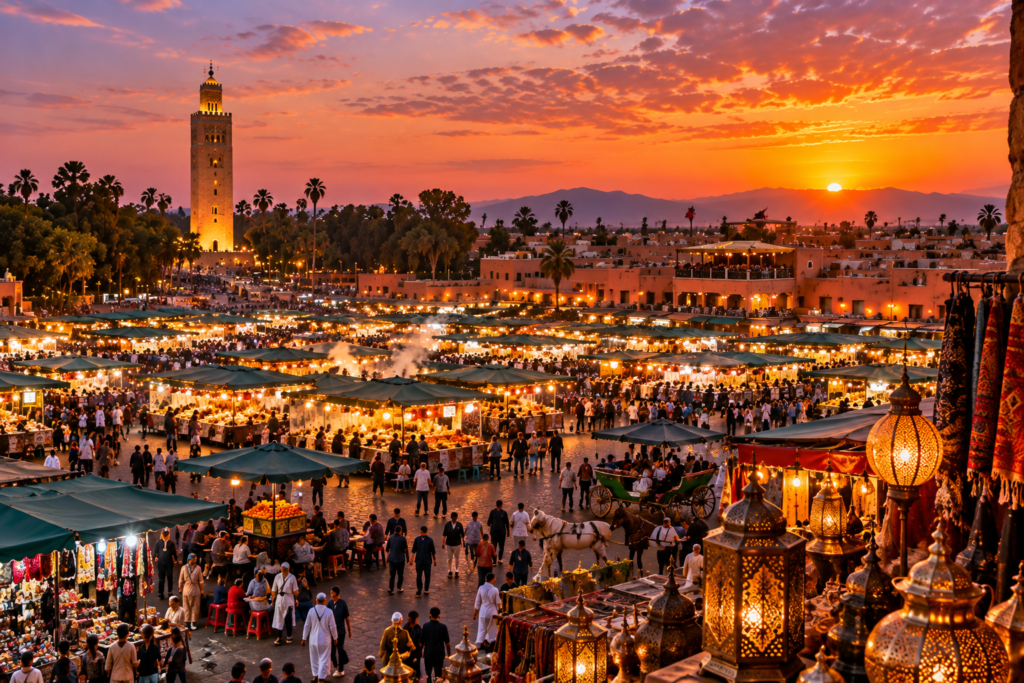
Jemaa el-Fnaa
Experience the heart of Marrakech at its famous central square, where food stalls, performers, cafés, markets, and crowds create an atmosphere that changes throughout the day and comes alive after sunset.
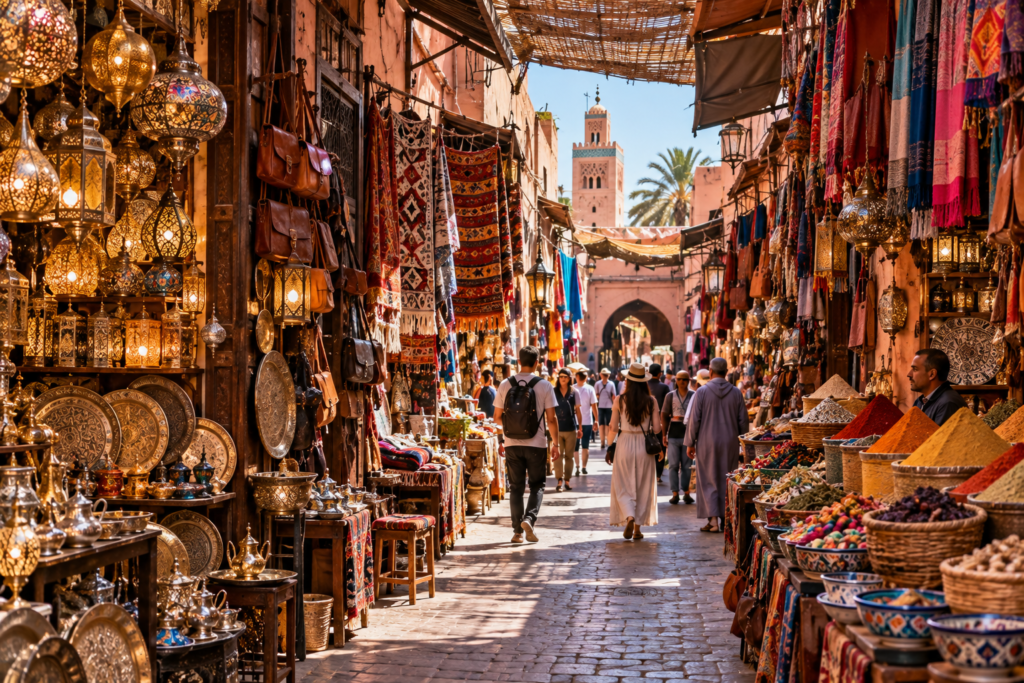
Marrakech Souks
Explore the maze of narrow streets surrounding Jemaa el-Fnaa, packed with colourful shops selling spices, leather goods, lamps, carpets, ceramics, clothing, jewellery, and traditional Moroccan crafts.
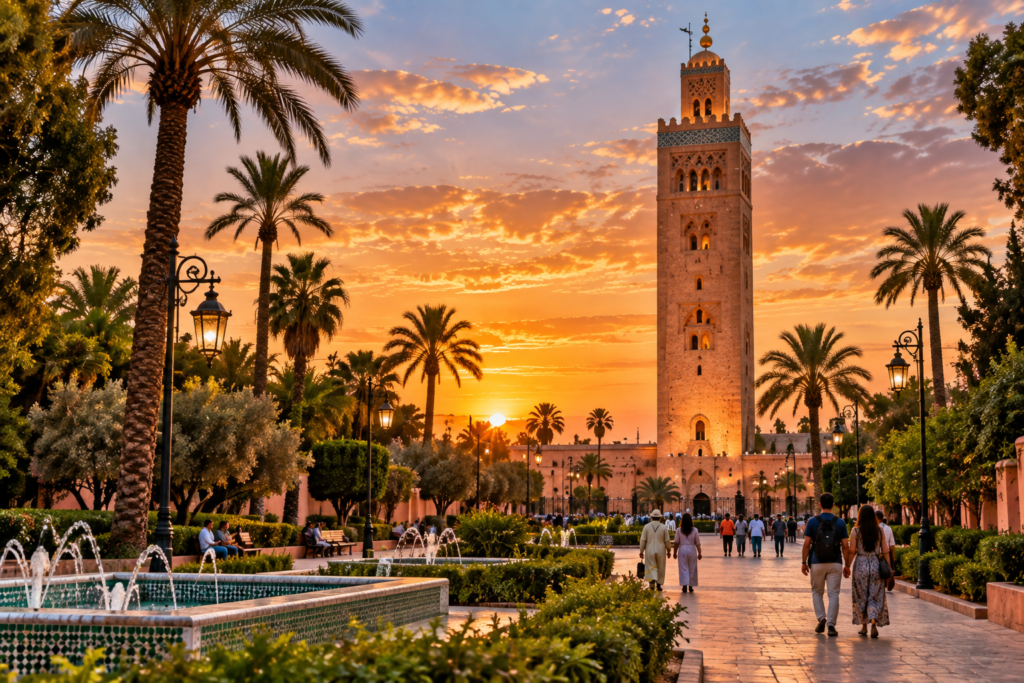
Koutoubia Mosque
See one of Marrakech’s most recognisable landmarks, famous for its impressive 77-metre minaret and location close to Jemaa el-Fnaa.
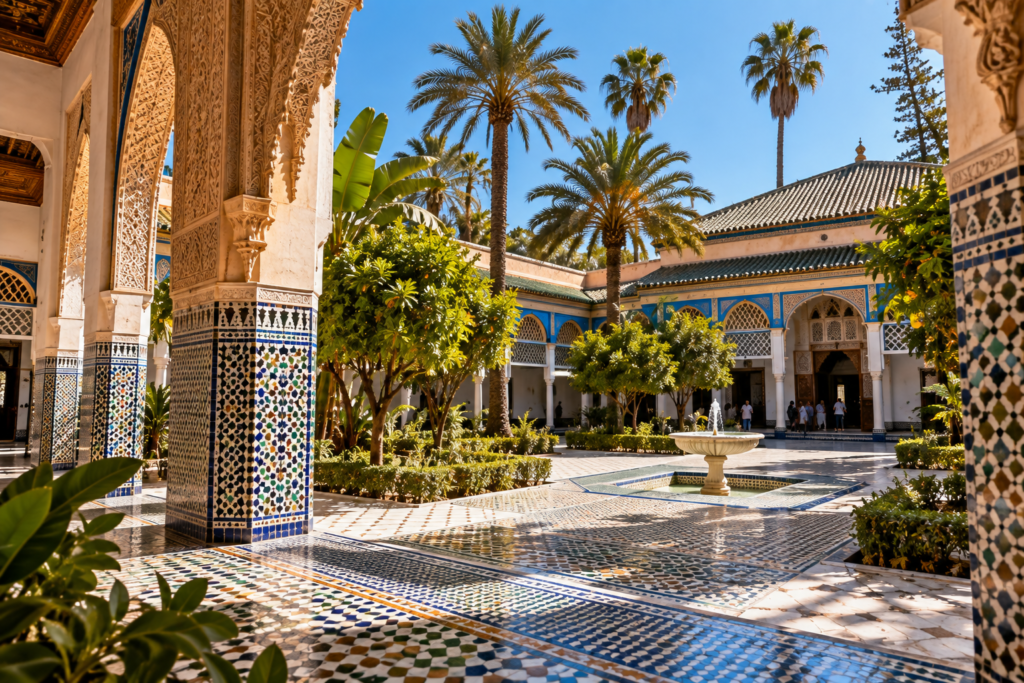
Bahia Palace
Discover beautiful Moroccan architecture, decorative courtyards, intricate tilework, carved details, and peaceful gardens inside one of Marrakech’s best-known historic palaces.
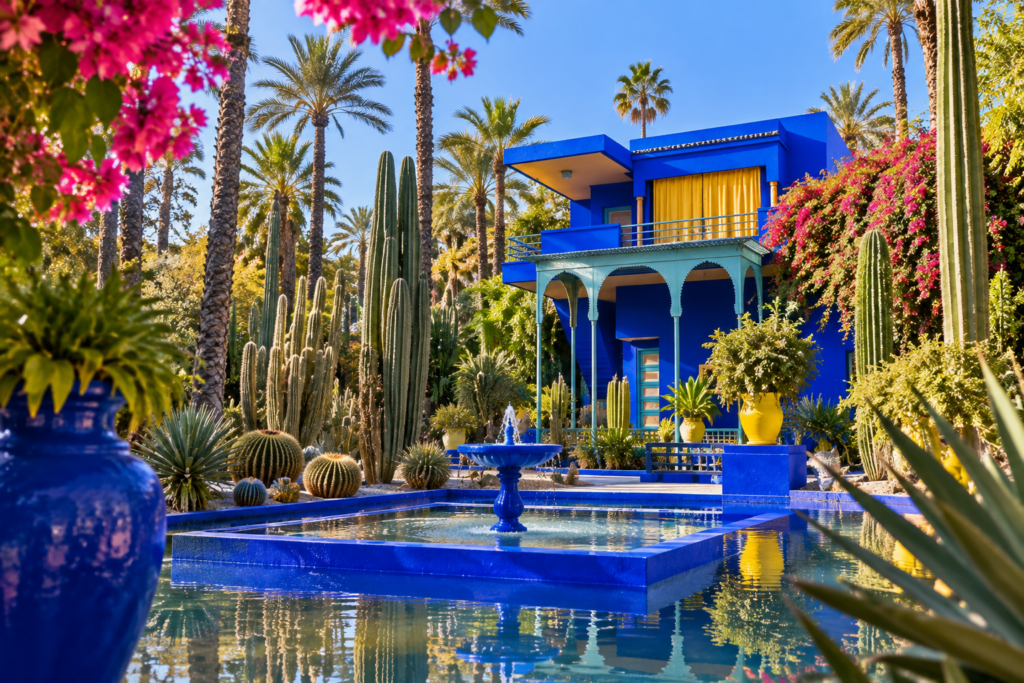
Jardin Majorelle
Escape the busy Medina and explore one of Marrakech’s most famous gardens, known for its exotic plants, striking architecture, colourful design, and peaceful pathways.
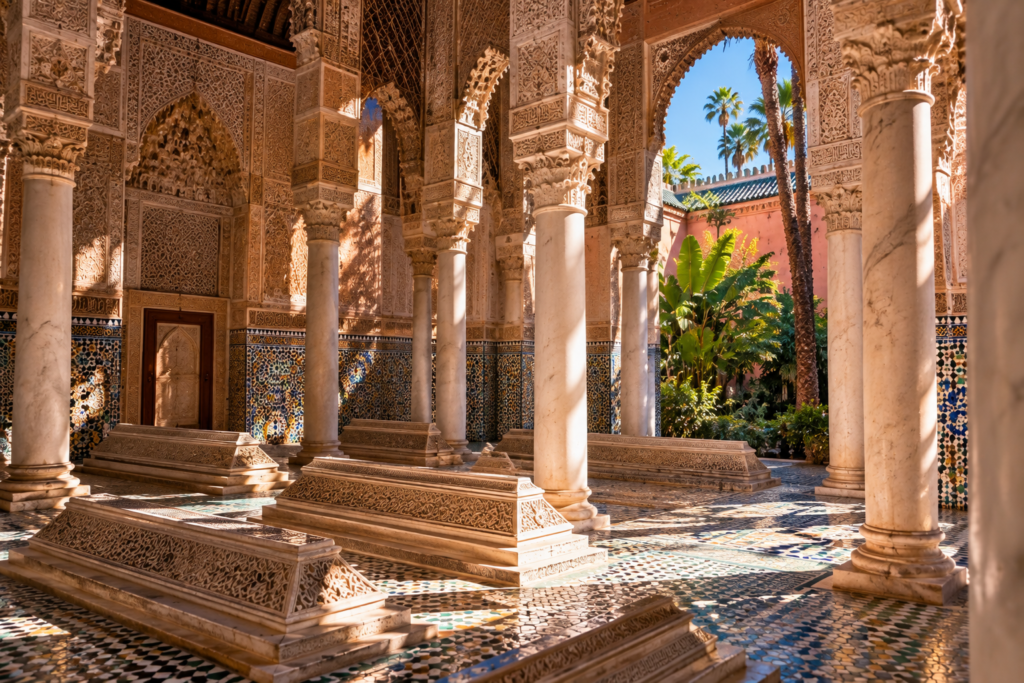
Saadian Tombs
Visit this historic royal burial site and discover ornate Moroccan decoration, beautiful architecture, peaceful courtyards, and an important part of Marrakech’s history.
MARRAKECH TRAVEL GUIDE
Everything you need to know to plan your trip to Marrakech, from the best time to visit and travel costs to transport, accommodation, food, and practical tips.
Best Time to Visit Marrakech
Marrakech can be visited throughout the year, but March to May and September to November are generally among the most comfortable periods for exploring the city. Days are often warm without the extreme heat that can occur during summer.
June to August can be extremely hot, particularly during the middle of the day. If you visit in summer, plan outdoor sightseeing for the morning and late afternoon and take breaks during the hottest hours.
December to February brings milder daytime weather, but mornings and evenings can feel surprisingly cool. Marrakech’s inland location means temperatures can change considerably between day and night.
How Much Does Marrakech Cost?
Marrakech can suit different budgets, with inexpensive local food and simple accommodation as well as luxury riads, restaurants, and resorts.
A budget traveller staying in affordable accommodation, eating mostly local food, and walking or using local transport could spend around 350–600 MAD per day, excluding international flights.
For a more comfortable trip with a good riad or hotel, restaurants, attractions, taxis, and other activities, around 800–1,500+ MAD per day is a more realistic budget.
Prices vary significantly depending on accommodation, season, activities, and how often you eat in tourist-oriented restaurants.
Getting to Marrakech
Most international visitors arrive at Marrakech Menara Airport (RAK), which serves Marrakech and has international connections including flights from European cities.
Taxis and other airport transport options connect the airport with the Medina, Gueliz, Hivernage, and other parts of Marrakech.
Marrakech is also connected by train with cities including Casablanca and other parts of Morocco, while long-distance coaches provide connections to destinations not served conveniently by rail.
Getting Around Marrakech
Walking is one of the best ways to explore the historic Medina. Many streets are narrow, crowded, and unsuitable for normal vehicle traffic, so exploring on foot allows you to experience the souks and historic areas properly.
Taxis are useful for travelling between the Medina and areas such as Gueliz, Hivernage, gardens, and attractions farther from the historic centre.
Marrakech also has local buses, while horse-drawn carriages are a traditional way to see parts of the city.
The Medina can be confusing at first, so keeping an offline map on your phone can be very useful.
Where to Stay in Marrakech
The Medina is ideal if you want to stay close to Marrakech’s historic streets, souks, traditional architecture, and Jemaa el-Fnaa. Staying in a traditional riad can also be part of the Marrakech experience.
Gueliz offers a more modern atmosphere with wider streets, cafés, restaurants, shops, and easier vehicle access.
Hivernage is known for larger hotels, resorts, restaurants, and a more modern setting.
For a first visit, staying in or close to the Medina can make it easier to explore many of Marrakech’s main attractions on foot. The Moroccan tourism authority distinguishes the historic Medina from the more modern Gueliz and Hivernage districts.
Food in Marrakech
Food is a major part of the Marrakech experience.
Try traditional dishes such as tagine, couscous, pastilla, harira, grilled meats, Moroccan salads, and freshly baked bread.
One dish particularly associated with Marrakech is tanjia, a slow-cooked meat dish traditionally prepared in a clay pot.
Jemaa el-Fnaa becomes especially lively in the evening when numerous food stalls begin serving local dishes.
Moroccan mint tea is found almost everywhere, from traditional cafés and riads to restaurants and rooftop terraces.
Money and Payments
The official currency is the Moroccan dirham (MAD).
Cards are accepted by many hotels, restaurants, and larger businesses, but cash remains useful for souks, small shops, cafés, taxis, and local purchases. ATMs are widely available, and currency can be exchanged at authorised exchange offices, airports, banks, and some hotels.
It is useful to carry smaller notes and coins when shopping in markets or paying for inexpensive purchases.
Staying Connected
Wi-Fi is available in most hotels, riads, restaurants, and cafés around Marrakech.
A Moroccan prepaid SIM card or eSIM can be useful if you want mobile data throughout your trip.
Having internet access is particularly helpful inside the Medina for navigation, checking opening times, arranging transport, and finding accommodation.
Downloading an offline map before exploring the Medina is also a good idea.
Is Marrakech Safe for Solo Travellers?
Marrakech is a major tourist destination, but normal precautions are important, particularly when exploring crowded areas.
Keep your valuables secure in busy places such as Jemaa el-Fnaa and the souks, and be cautious if someone approaches you offering unsolicited directions or services.
The Medina’s narrow streets can become confusing, especially after dark, so having your accommodation location saved on your phone is useful.
When arranging tours or activities outside Marrakech, use established operators and check current local conditions before travelling.
Visa and Entry Requirements
Entry requirements depend on your nationality, passport, purpose of travel, and length of stay.
For travellers using a full British citizen passport, Morocco currently allows tourist visits of up to 90 days without a visa. The passport must have an expiry date at least three months after the date you arrive, according to current UK government guidance.
Other nationalities may have different requirements, including visas or electronic travel authorisations. Morocco’s official tourism authority advises travellers to check the requirements applicable to their nationality before departure.
Entry requirements can change, so always check the latest official information before travelling.
What to Wear in Marrakech
Lightweight and breathable clothing is useful during warmer months, particularly when temperatures rise during the day.
Marrakech is a culturally conservative destination, so relatively modest clothing is a practical choice when exploring local neighbourhoods and religious areas.
Comfortable walking shoes are important because the Medina has uneven surfaces, narrow lanes, and plenty of areas best explored on foot.
During winter and the cooler months, bring layers because evenings and early mornings can feel considerably colder than daytime temperatures.
A hat, sunglasses, and sunscreen are useful throughout much of the year.
How Long Do You Need in Marrakech?
2 days gives you enough time to experience the main highlights, including Jemaa el-Fnaa, the souks, several historic attractions, and some traditional Moroccan food.
3–4 days is ideal for exploring Marrakech at a more comfortable pace, visiting gardens and palaces, spending time in different neighbourhoods, and enjoying the city without rushing.
With 5 days or more, you can combine Marrakech with excursions outside the city, such as the Atlas Mountains, Agafay area, or other nearby destinations.
Final Tips for Visiting Marrakech
Explore Jemaa el-Fnaa both during the day and after sunset because the atmosphere changes dramatically.
Give yourself time to wander through the souks rather than trying to follow one exact route.
Carry some Moroccan dirhams for small purchases, taxis, markets, and local businesses.
Agree on prices before accepting services when the price is not clearly displayed.
Stay hydrated, especially during the warmer months.
Save the location of your riad or hotel on your phone because the Medina can be confusing when you first arrive.
Try traditional Moroccan food and visit a rooftop terrace for a different perspective over the city.
And don’t spend your entire trip inside the busiest tourist streets. Marrakech also has gardens, modern districts, quieter neighbourhoods, and surrounding landscapes worth experiencing.
READY TO EXPLORE MARRAKECH?
From the energy of Jemaa el-Fnaa and colourful maze of the souks to historic palaces, peaceful gardens, traditional Moroccan food, and the distinctive red architecture of the Medina, Marrakech offers an unforgettable introduction to Morocco. Start planning your trip and experience the Red City for yourself.
GET TRAVEL INSPIRATION IN YOUR INBOX
Get practical travel tips, destination inspiration, and new guides delivered straight to your inbox.