
Explore Armenia
Discover ancient history, beautiful monasteries, dramatic mountain landscapes, incredible food, and the distinctive culture of one of the world’s oldest countries.
DISCOVER ARMENIA
Armenia is a fascinating destination filled with ancient history, dramatic landscapes, traditional food, and a strong cultural identity. Although relatively small, the country has an impressive variety of experiences, from lively city streets and historic monasteries to mountains, lakes, valleys, and remote villages.
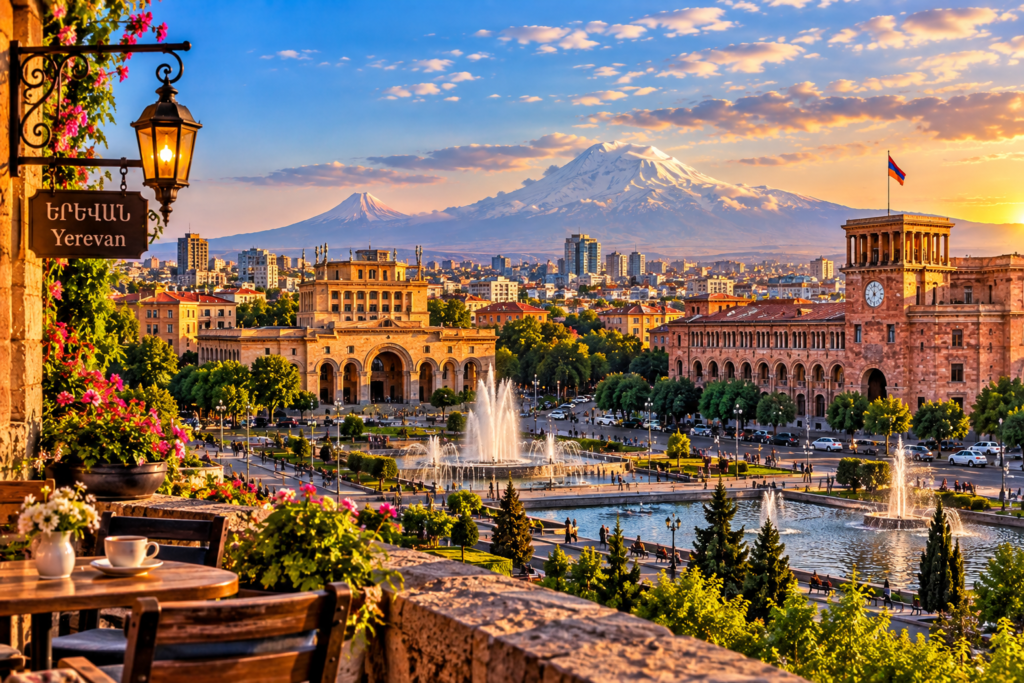
The capital, Yerevan, is usually the starting point for first-time visitors. Known for its distinctive pink stone architecture, café culture, museums, markets, and views towards Mount Ararat, the city combines thousands of years of history with modern everyday life.
Beyond Yerevan, Armenia is known for its ancient churches and monasteries, mountainous countryside, Lake Sevan, traditional villages, and archaeological sites.
Here you’ll find my experience in Yerevan, practical travel tips, and useful information to help you plan your own trip to Armenia.
PLACES I’VE VISITED IN ARMENIA
Explore my experience in Yerevan, Armenia’s vibrant capital, where distinctive architecture, ancient history, local food, lively streets, and café culture come together.
Yerevan
Armenia’s vibrant capital, known for its pink-stone architecture, lively Republic Square, café culture, traditional food, fascinating history, and views towards Mount Ararat.
ARMENIA TRAVEL GUIDE
Everything you need to know to plan your trip to Armenia, from the best time to visit and travel costs to transport, accommodation, food, and practical tips.
BEST TIME TO VISIT ARMENIA
Spring and autumn are particularly good times to visit Armenia, especially if you plan to combine Yerevan with sightseeing around the country.
From around April to June, temperatures become increasingly comfortable and the countryside turns greener, making this a good period for exploring monasteries, historic sites, and natural landscapes.
September and October can also be excellent, with generally pleasant temperatures and beautiful autumn scenery in parts of the country.
July and August can become very hot in Yerevan, although temperatures vary significantly with altitude.
Winters can be cold and snowy, particularly outside the capital and at higher elevations. However, winter can offer a completely different experience if you’re interested in snow-covered landscapes and winter activities.
HOW MUCH DOES ARMENIA COST?
Armenia can offer good value for travellers compared with many Western European destinations.
For a budget traveller, approximately 15,000–25,000 AMD per day can be a useful starting point, excluding international flights. This can cover inexpensive accommodation, local meals, public transport, and relatively inexpensive sightseeing.
For a more comfortable trip with a private hotel room, restaurants, taxis, and day trips, approximately 35,000–65,000+ AMD per day is a more realistic starting range.
Your costs will depend considerably on your accommodation and how much travelling you do outside Yerevan.
Local restaurants, bakeries, markets, and public transport can help keep your daily spending relatively low, while private tours and drivers will increase your budget.
These are planning estimates rather than fixed prices, so always check current costs before travelling.
GETTING TO ARMENIA
Most international travellers visiting Yerevan arrive through Zvartnots International Airport, located outside the city centre.
The airport connects Armenia with destinations across Europe, the Middle East, and surrounding regions.
From the airport, you can reach central Yerevan using taxis and other transportation services.
Armenia can also be reached overland through Georgia and Iran.
However, not all of Armenia’s international land borders operate normally. Border situations can change, particularly in this region, so always check the latest official information before planning an overland journey.
If you’re combining Armenia and Georgia, travelling between Yerevan and Tbilisi is a popular route.
GETTING AROUND ARMENIA
Yerevan is relatively easy to explore independently.
The city has a metro system, buses, minibuses, and taxis. Many central attractions are also within walking distance of each other.
Ride-hailing apps can be particularly convenient and relatively inexpensive for travelling around the capital.
For journeys outside Yerevan, buses and minibuses connect the capital with many towns and cities.
However, reaching remote monasteries, mountain areas, and smaller villages can be more difficult using public transport alone. For these places, organised day tours or private drivers can make travelling considerably easier.
If you’re renting a car, pay extra attention to road conditions outside the main cities, particularly in mountainous areas.
WHERE TO STAY IN ARMENIA
For a first visit, I recommend staying in central Yerevan.
The area around Republic Square is particularly convenient because you’ll be close to restaurants, cafés, museums, shops, and many of the city’s main attractions.
The area around Northern Avenue is another convenient option, particularly if you want restaurants, shopping, and easy access to central Yerevan.
Staying somewhere between Republic Square and the Cascade gives you excellent access to much of the city centre on foot.
For solo travellers, choosing accommodation in a central location can make exploring Yerevan considerably easier, particularly in the evening.
FOOD IN ARMENIA
Food is an important part of travelling in Armenia, and the cuisine combines fresh ingredients, grilled meats, breads, vegetables, herbs, cheeses, and regional traditions.
One food you’ll see everywhere is lavash, Armenia’s traditional thin flatbread.
Other dishes worth trying include khorovats, Armenian-style grilled meat; dolma, stuffed vine leaves or vegetables; harissa, a traditional wheat and meat dish; and different soups, salads, cheeses, and grilled vegetables.
Armenia is also known for dried fruits, nuts, sweets, wine, and brandy.
In Yerevan, you’ll find everything from traditional Armenian restaurants to modern cafés and international food.
Try some smaller local restaurants as well as the more famous establishments around the city centre.
MONEY AND PAYMENTS IN ARMENIA
Armenia’s official currency is the Armenian Dram (AMD).
Credit and debit cards are widely accepted in Yerevan at hotels, restaurants, supermarkets, shopping centres, and many established businesses.
However, carrying some cash is still useful, particularly when visiting markets, smaller businesses, villages, and destinations outside the capital.
ATMs and currency exchange offices are widely available in Yerevan.
Avoid carrying unnecessarily large amounts of cash, and check your bank’s foreign transaction and ATM fees before travelling.
STAYING CONNECTED IN ARMENIA
Getting online in Armenia is relatively straightforward.
Wi-Fi is widely available in hotels, cafés, restaurants, and other businesses in Yerevan.
A local SIM card or eSIM can be useful if you’re travelling around the country and want reliable access to maps, translation, transport information, and messaging.
Mobile coverage is generally good in Yerevan and other populated areas, although it can become weaker in remote mountain regions.
Download offline maps before travelling into isolated areas so you aren’t completely dependent on mobile reception.
IS ARMENIA SAFE FOR SOLO TRAVELLERS?
Many visitors travel independently around Yerevan and Armenia, but normal travel precautions still apply.
Keep your passport, phone, wallet, and other valuables secure, particularly in busy areas and on public transport.
Road conditions and driving standards can vary, so take additional care if you’re driving outside Yerevan.
More importantly, the security situation is different near Armenia’s international borders. The UK government currently advises against travel to certain areas close to the Armenia-Azerbaijan border, so travellers should check the latest official advice before travelling outside established tourist routes.
ARMENIA VISA AND ENTRY REQUIREMENTS
Entry requirements depend on your nationality, so always check the rules that apply to your passport.
Travellers using a full British citizen passport currently do not need a visa for visits to Armenia for up to 180 days in a 12-month period.
Your passport must meet Armenia’s current validity requirements, and immigration officials ultimately determine permission to enter.
Requirements can change, so always check official information shortly before travelling rather than relying entirely on an older travel guide.
WHAT TO WEAR IN ARMENIA
What you should pack depends heavily on the season.
Summers in Yerevan can be very hot and dry, so lightweight, breathable clothing and comfortable walking shoes are useful.
Spring and autumn can have significant temperature differences between daytime and evening, so bring layers.
During winter, you’ll need proper warm clothing, particularly if you’re travelling outside Yerevan or into mountainous areas.
If you’re visiting churches and monasteries, dress respectfully. Clothing covering your shoulders and knees is a sensible choice.
Comfortable footwear is especially important if you’re exploring monasteries, archaeological sites, or mountain areas where surfaces can be uneven.
HOW LONG DO YOU NEED IN ARMENIA?
For Yerevan alone, around 3 days gives you enough time to explore Republic Square, the Cascade, museums, markets, restaurants, and different parts of the city centre.
With 5–7 days, you can combine Yerevan with several day trips to monasteries, historic sites, Lake Sevan, and surrounding countryside.
For a broader trip around Armenia, around 7–10 days gives you considerably more flexibility.
If you have two weeks, you can travel at a slower pace and experience smaller towns, mountain landscapes, monasteries, and more remote parts of the country.
Don’t judge Armenia entirely by Yerevan. Some of the country’s most impressive landscapes and historic sites are found outside the capital.
FINAL TIPS FOR VISITING ARMENIA
Spend enough time exploring Yerevan on foot. Republic Square, the Cascade, local markets, cafés, churches, and surrounding neighbourhoods reveal very different sides of the capital.
Try Armenian food beyond the most familiar dishes, visit local bakeries and markets, and don’t be afraid to explore streets away from the main tourist areas.
If you have enough time, take at least one trip outside Yerevan. Armenia’s monasteries, mountains, countryside, and Lake Sevan provide a completely different experience from the capital.
Carry some Armenian dram for smaller businesses, download offline maps before travelling to remote areas, and always check current border and road conditions before planning journeys near Armenia’s international frontiers.
READY TO EXPLORE ARMENIA?
From the pink-stone streets and café culture of Yerevan to ancient monasteries, dramatic mountains, traditional food, and beautiful landscapes, Armenia has so much to discover. Start planning your trip and experience it for yourself.
GET TRAVEL INSPIRATION IN YOUR INBOX
Get practical travel tips, destination inspiration, and new guides delivered straight to your inbox.