
Explore France
Discover iconic cities, world-famous landmarks, beautiful countryside, incredible food, historic architecture, and diverse landscapes across France.
DISCOVER FRANCE
France is one of Europe’s most popular destinations, offering an incredible mix of historic cities, beautiful countryside, Mediterranean beaches, mountain landscapes, charming villages, and some of the world’s most recognisable landmarks.
Paris may be the country’s most famous destination, but France extends far beyond its capital. From the vineyards and historic towns of the countryside to the beaches of the French Riviera, the Alps, medieval villages, and dramatic Atlantic coastline, every region offers something different.
Food is also an important part of travelling through France. Fresh bread, pastries, cheese, regional dishes, cafés, markets, and local restaurants are all part of the experience.
Here you’ll find my experience in Paris, practical travel tips, and useful information to help you plan your own trip to France.
PLACES I’VE VISITED IN FRANCE
Explore my experience in Paris, France’s iconic capital, filled with world-famous landmarks, beautiful architecture, historic neighbourhoods, museums, cafés, and everyday Parisian life.
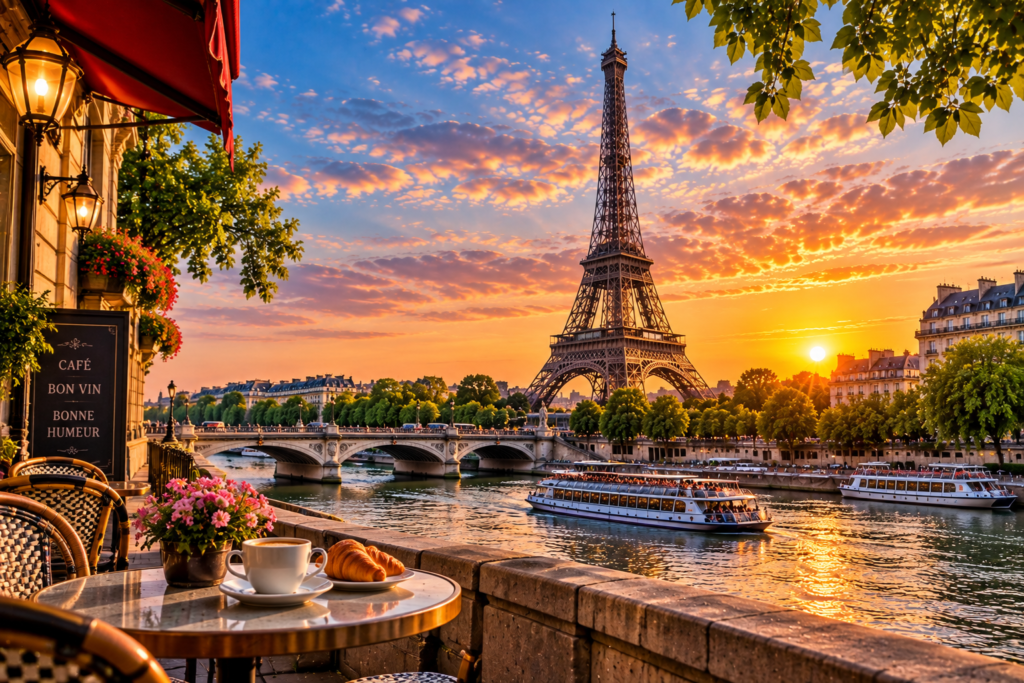
Paris
France’s iconic capital, known for the Eiffel Tower, beautiful boulevards, historic architecture, world-class museums, charming cafés, and unforgettable views along the River Seine.
FRANCE TRAVEL GUIDE
Everything you need to know to plan your trip to France, from the best time to visit and travel costs to transport, accommodation, food, and practical tips.
BEST TIME TO VISIT FRANCE
France can be visited throughout the year, although the best time depends on where you’re travelling and what you want to experience.
April to June and September to October are excellent periods for many visitors. Temperatures are generally comfortable, days are relatively long, and major destinations can be less crowded than during the peak summer season.
July and August bring warm weather and are particularly popular for coastal destinations and the south of France. However, this is also peak holiday season, meaning popular attractions can be busy and accommodation prices may be higher.
Winter can be a good time for visiting Paris and other cities if you don’t mind colder weather, while the French Alps attract visitors for skiing and other winter activities.
France is geographically diverse, so weather conditions can vary significantly between Paris, the Mediterranean coast, the Atlantic coast, and mountain regions.
HOW MUCH DOES FRANCE COST?
France can be relatively expensive, particularly in Paris and popular tourist destinations, but travelling on a moderate budget is certainly possible.
For a budget traveller, approximately €70–€120 per day can cover inexpensive accommodation, public transport, supermarket food or affordable restaurants, and a mixture of free and paid attractions.
For a more comfortable trip with a private hotel room, restaurants, intercity transport, and paid attractions, around €150–€300+ per day is more realistic.
Paris will generally be more expensive than many smaller French cities.
You can reduce costs by booking accommodation and long-distance trains early, using public transport, eating occasionally at bakeries and local markets, and taking advantage of free attractions and neighbourhood walks.
Remember that these are general estimates and your actual spending will depend heavily on accommodation, travel style, destination, and season.
GETTING TO FRANCE
France is extremely well connected with the rest of Europe and the world.
Paris Charles de Gaulle Airport (CDG) is the country’s largest international airport and handles flights from destinations around the world. Paris Orly Airport (ORY) is another major airport serving the capital.
Other French cities including Nice, Lyon, Marseille, Bordeaux, Toulouse, and Nantes also have airports with international connections.
France has excellent rail connections with neighbouring European countries.
From London, Eurostar provides direct train services to Paris through the Channel Tunnel, making travelling between the UK and France particularly convenient.
International trains also connect France with countries including Belgium, the Netherlands, Germany, Switzerland, Italy, Spain, and Luxembourg.
Buses and coaches can provide cheaper alternatives for travellers who don’t mind longer journey times.
GETTING AROUND FRANCE
France has an extensive public transportation network, making it relatively easy to travel without a car.
High-speed TGV trains connect Paris with many major French cities and can significantly reduce travel time between destinations.
Regional trains connect smaller cities and towns, while buses provide additional connections.
Booking long-distance trains in advance is usually worthwhile because ticket prices can increase as the travel date approaches.
Paris has an extensive public transport system consisting of the Métro, RER trains, buses, and trams, making a car unnecessary for most visitors.
A rental car becomes much more useful when exploring rural areas, small villages, countryside, vineyards, or regions where public transportation is limited.
If you’re driving, remember that traffic travels on the right-hand side of the road.
WHERE TO STAY IN FRANCE
The best area to stay depends entirely on your destination and travel style.
In Paris, staying relatively close to a Métro station is often more important than being directly beside a famous attraction. The city’s public transportation system makes it easy to explore different neighbourhoods.
Central areas can be convenient but expensive. Staying slightly farther from the major tourist attractions can provide better value while still allowing easy access to the centre.
Paris is divided into 20 arrondissements, each with a different atmosphere.
Popular areas include the Latin Quarter, Le Marais, Saint-Germain-des-Prés, Montmartre, and neighbourhoods around the central arrondissements.
Outside Paris, staying close to a historic centre or railway station can be particularly convenient if you’re travelling around France by train.
Always check transportation connections before booking cheaper accommodation far outside the centre.
FOOD IN FRANCE
Food is a major part of travelling through France, and different regions have their own dishes and culinary traditions.
Classic foods worth trying include croissants, baguettes, crêpes, French cheeses, onion soup, quiche, steak frites, ratatouille, and a huge variety of pastries and desserts.
France is also famous for its bakeries, known as boulangeries, where you can buy fresh bread, sandwiches, pastries, and inexpensive meals.
Paris has everything from traditional cafés and neighbourhood bistros to international restaurants and fine dining.
Local markets are also worth exploring for fresh produce, cheese, bread, meat, pastries, and regional products.
Don’t feel that every meal needs to be at an expensive restaurant. Picking up fresh bread, cheese, fruit, or sandwiches from local shops can be inexpensive and part of the French experience.
MONEY AND PAYMENTS IN FRANCE
France uses the Euro (€).
Credit and debit cards are widely accepted in hotels, restaurants, supermarkets, shops, and tourist attractions.
Contactless payment is also common, particularly in cities.
It’s still useful to carry a small amount of cash for smaller businesses, markets, public toilets, or situations where cards may not be accepted.
ATMs are widely available throughout cities and towns.
If you’re using a foreign bank card, check whether your bank charges foreign transaction or cash withdrawal fees.
When a payment terminal or ATM offers to convert your purchase into your home currency, check the exchange rate carefully. Paying in euros is often preferable to accepting an unfavourable dynamic currency conversion rate.
STAYING CONNECTED IN FRANCE
Getting online in France is straightforward.
Wi-Fi is widely available in hotels, cafés, restaurants, airports, railway stations, and many public places.
Visitors can purchase a French or European SIM card or use an eSIM before or after arriving.
Mobile coverage is generally strong in cities and populated areas, although reception can become weaker in remote countryside and mountain regions.
If you’re travelling around France by train or car, having mobile data is particularly useful for maps, train information, accommodation bookings, and translation.
Downloading offline maps before travelling to remote areas can also be useful.
IS FRANCE SAFE FOR SOLO TRAVELLERS?
France is a popular destination for independent and solo travellers, and its extensive public transportation network makes getting around relatively straightforward.
As in any major tourist destination, however, you should take normal precautions.
Pickpocketing and distraction theft can be concerns in busy tourist areas, particularly around major attractions, railway stations, airports, and crowded public transport in Paris.
Keep your phone, wallet, passport, camera, and other valuables secure and avoid leaving belongings unattended.
Be especially aware of your surroundings when using your phone in crowded places.
France also experiences demonstrations and transport strikes from time to time, which can affect local transportation or access to certain areas. Check current conditions during your trip.
The European emergency number 112 works in France.
VISA AND ENTRY REQUIREMENTS
France is part of the Schengen Area, so entry requirements depend on your nationality.
British citizens travelling with a full British citizen passport can generally visit France and other Schengen countries for up to 90 days in any 180-day period without a visa for tourism and certain other permitted activities.
Your passport must also meet the applicable Schengen validity requirements.
European border procedures are changing, including the introduction of the Entry/Exit System (EES) and the planned ETIAS travel authorisation system. Because implementation dates and requirements can change, don’t rely on old travel information when planning your trip.
Always check the latest official requirements for your nationality before booking or travelling.
WHAT TO WEAR IN FRANCE
What to pack depends on the season and region you’re visiting.
During summer, lightweight clothing is suitable for most cities, although bringing a light jacket for cooler evenings is sensible.
Spring and autumn can bring a mixture of warm, cool, and rainy weather, so layers and a lightweight waterproof jacket are useful.
Winter can be cold, particularly in northern and eastern France, while mountain areas require proper winter clothing.
Comfortable walking shoes are especially important in Paris and historic cities because sightseeing often involves spending many hours on foot.
If you’re visiting religious sites, respectful clothing may be appropriate.
A compact umbrella is also useful throughout much of the year.
HOW LONG DO YOU NEED IN FRANCE?
For Paris alone, I recommend around 4–5 days for a first visit. This gives you enough time to see the major landmarks while also exploring different neighbourhoods without rushing constantly.
With 7 days in France, you could combine Paris with another destination or take several day trips.
With 10–14 days, you can experience Paris alongside several other parts of the country and begin to appreciate how different France can be outside its capital.
For a larger trip covering multiple regions, two to three weeks would provide a much more relaxed experience.
Avoid trying to see too much in a short period. France is a large country, and travelling continuously between cities can quickly consume a significant part of your holiday.
FINAL TIPS FOR VISITING FRANCE
If Paris is your first destination, don’t spend your entire trip moving between famous landmarks.
Of course, places such as the Eiffel Tower, the Louvre, Arc de Triomphe, Notre-Dame, and the River Seine are important parts of a first visit, but some of the best experiences come from simply exploring neighbourhoods, cafés, markets, parks, and quieter streets.
Book major attractions in advance when possible, particularly during busy periods.
For travel around France, compare train prices early rather than waiting until the last minute.
Learn a few basic French expressions. You don’t need to speak fluent French, but a simple bonjour, merci, and s’il vous plaît can be useful and appreciated.
Most importantly, leave some time without a strict itinerary. France is a destination where sitting at a café, walking through a neighbourhood, exploring a local market, or discovering somewhere unexpectedly can be just as memorable as visiting another famous attraction.
READY TO EXPLORE FRANCE?
From the iconic streets and landmarks of Paris to beautiful countryside, Mediterranean coastlines, historic towns, incredible food, and diverse landscapes, France has so much to discover. Start planning your trip and experience it for yourself.
GET TRAVEL INSPIRATION IN YOUR INBOX
Get practical travel tips, destination inspiration, and new guides delivered straight to your inbox.