
Explore Morocco
Discover colourful cities, ancient medinas, incredible food, and unforgettable experiences across Morocco.
DISCOVER MOROCCO
Morocco is one of the most fascinating countries I’ve explored, with each city offering a completely different experience. From the colourful streets and lively souks of Marrakech to the modern side of Casablanca, the ancient medina of Fes, and the beautiful blue streets of Chefchaouen, Morocco is full of culture, history, food, and unforgettable places to discover. Here you’ll find my experiences, practical travel tips, and everything you need to plan your own trip to Morocco.
PLACES I’VE VISITED IN MOROCCO
Explore some of the places I’ve visited across Morocco, each offering a different side of the country.
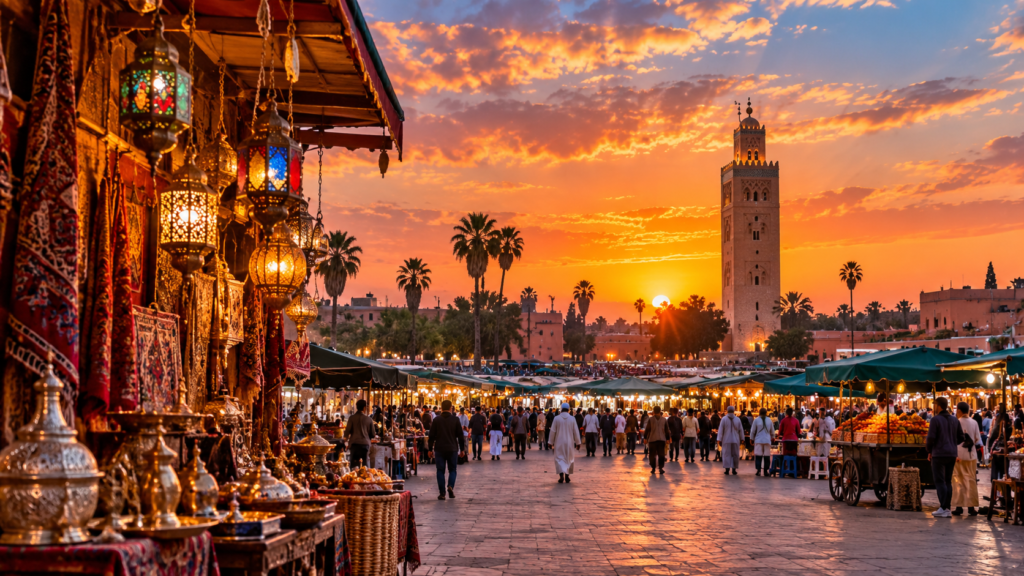
Marrakech
Colourful souks, historic palaces, street food and lively medina life.
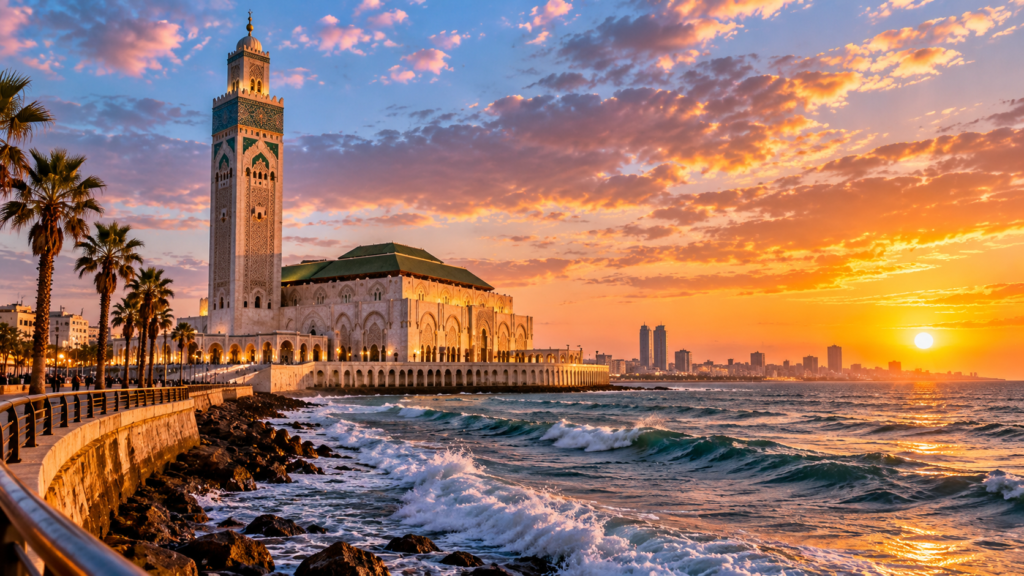
Casablanca
Modern city life, coastal views and impressive architecture.
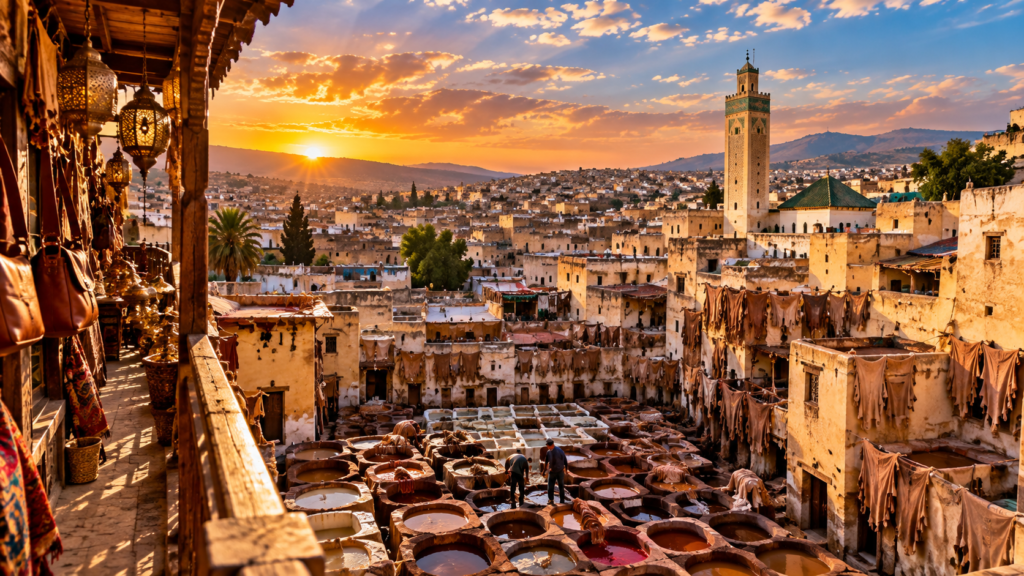
Fes
Ancient medina, traditional markets and centuries of history.
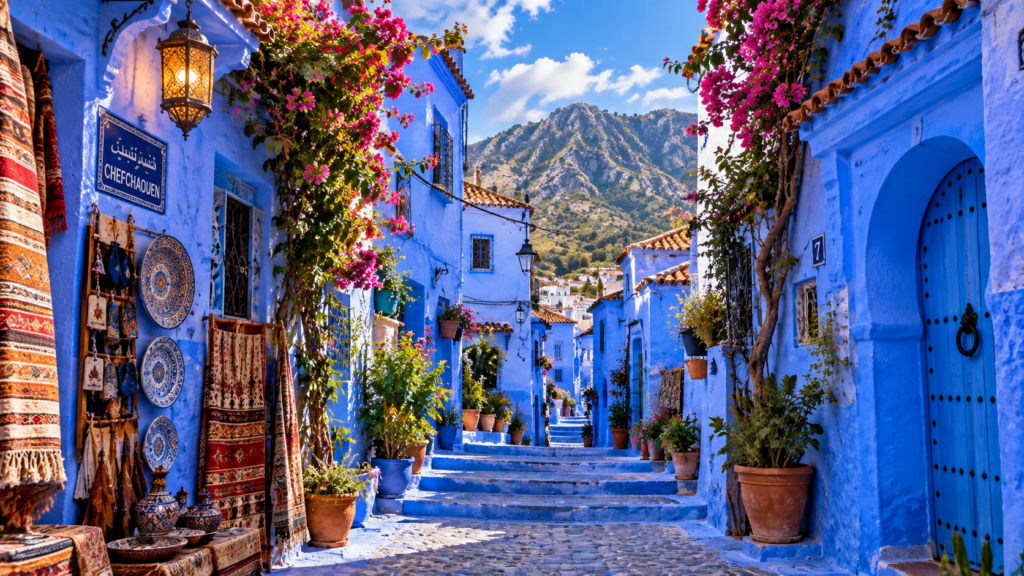
Chefchaouen
Beautiful blue streets, mountain scenery and a relaxed atmosphere.
MOROCCO TRAVEL GUIDE
Everything you need to know to plan your trip to Morocco, from the best time to visit and travel costs to transport, accommodation, food, and practical tips.
Best Time to Visit Morocco
Morocco can be visited throughout the year, but the best time to visit is generally during spring (March to May) and autumn (September to November). During these months, temperatures are usually comfortable for exploring cities, walking through medinas, visiting markets, and travelling between different parts of the country.
Summer, particularly July and August, can be very hot in inland destinations such as Marrakech and Fes. Coastal cities such as Casablanca are generally more comfortable, while evenings and mountain areas can feel considerably cooler.
Winter, from December to February, can also be a good time for sightseeing, especially if you prefer fewer crowds and cooler temperatures. However, mornings and evenings can become surprisingly cold, particularly in the mountains and inland areas.
For a trip combining Marrakech, Casablanca, Fes and Chefchaouen, I would personally choose April–May or September–October for a good balance of comfortable weather and sightseeing conditions.
How Much Does It Cost to Travel in Morocco?
Morocco can be a relatively affordable destination, especially compared with many countries in Western Europe. How much you spend will depend on your travel style, the cities you visit, and the type of accommodation and activities you choose.
For a budget traveller, around £30–£50 per day can be enough for simple accommodation, local food, public transport and some sightseeing. If you prefer comfortable hotels or riads, restaurant meals, taxis and more paid attractions, a budget of around £60–£100+ per day is more realistic. These estimates exclude international flights.
Accommodation varies considerably. Hostels and simple guesthouses can be inexpensive, while traditional riads offer a more distinctive Moroccan experience and range from budget options to luxury properties. Marrakech and other heavily visited areas generally have a wider range of prices, so comparing accommodation before booking is worthwhile.
Food is one of the areas where you can travel quite cheaply. Local cafés, bakeries, markets and small restaurants can offer good-value meals, including tagine, couscous, grilled meats, sandwiches and Moroccan pastries. Restaurants around major tourist attractions and popular squares are usually more expensive.
Transport between cities can also be affordable. Trains are useful for travelling between Marrakech, Casablanca and Fes, while buses and shared taxis can help you reach places that are not on the railway network, including Chefchaouen. Within cities, walking is often the best way to explore medinas, which also helps keep daily transport costs down.
Remember to budget separately for entrance fees, guided tours, shopping, hammams and day trips. Morocco’s souks can also be very tempting, so if you plan to buy carpets, leather goods, ceramics, spices or souvenirs, it is worth setting aside a separate shopping budget.
Overall, Morocco works well for both budget and mid-range travellers. You don’t need to spend heavily to have a good experience, but having some flexibility in your budget makes it easier to enjoy activities and experiences along the way.
Getting to Morocco
Morocco is easy to reach from the UK and many parts of Europe, with frequent direct flights to several cities. Marrakech Menara Airport (RAK) and Casablanca Mohammed V International Airport (CMN) are two of the country’s main international gateways, while Fes–Saïss Airport (FEZ) is another useful option if you want to start your trip in northern or central Morocco.
From London and other major European cities, both full-service and low-cost airlines operate routes to Morocco. Marrakech usually has particularly good connections with Europe, so it can be a convenient and affordable place to begin a Morocco trip. Flight prices can vary significantly depending on the season, so booking ahead and comparing different departure airports and dates can help you find cheaper fares.
If you’re planning to visit several cities, you don’t necessarily need to fly in and out of the same airport. An open-jaw trip—for example, arriving in Marrakech and departing from Casablanca or Fes—can save you from travelling back across the country at the end of your trip.
Once you’re in Morocco, travelling between major cities is relatively straightforward. Marrakech, Casablanca and Fes are connected by rail, while destinations without a railway station, such as Chefchaouen, can be reached by bus or road transport. This makes it possible to visit several parts of Morocco on one trip without renting a car.
Before booking your flight, always check the latest entry and visa requirements for your passport, as these can vary by nationality and may change over time.
Getting Around Morocco
Morocco has a good mix of trains, buses, taxis and local transport, making it relatively easy to travel around without renting a car. The best option depends on where you are going, but for a trip covering several cities, using a combination of trains and buses is often convenient and affordable.
Trains are one of the easiest ways to travel between major cities. Morocco’s rail network connects destinations including Casablanca, Marrakech and Fes. Trains are generally comfortable and are a good choice for longer journeys, especially if you are travelling solo and don’t want the hassle of driving. Morocco also has the Al Boraq high-speed railway connecting Casablanca with cities further north, including Rabat and Tangier.
For destinations that are not connected by train, long-distance buses are an important option. Companies such as CTM and Supratours operate services across the country. This is particularly useful for places such as Chefchaouen, which does not have a railway station. Depending on your route, you can take a train part of the way and continue by bus or taxi.
Within cities, you’ll find petit taxis, which are small taxis mainly used for shorter journeys inside the city. Larger grand taxis are commonly used for longer journeys and routes between towns. It’s a good idea to confirm how the fare will be calculated before starting your journey, particularly when a meter is not being used.
In historic areas such as the medinas of Marrakech and Fes, walking is often the best—and sometimes the only practical—way to explore. The streets can be narrow, busy and confusing, so having an offline map on your phone can be very useful. Getting a little lost in the medina is quite normal, especially on your first visit.
If you’re travelling between the four places I visited—Marrakech, Casablanca, Fes and Chefchaouen—you can comfortably organise the trip using public transport without needing to rent a car. For solo and budget travellers, this can keep costs down while still allowing you to experience very different parts of Morocco.
Where to Stay in Morocco
Morocco offers a wide range of accommodation, from budget hostels and simple guesthouses to traditional riads, modern hotels and luxury resorts. Where you stay can make a big difference to your experience, particularly in historic cities where the medina and newer parts of the city can feel completely different.
One of the most distinctive accommodation options in Morocco is a riad. These traditional Moroccan houses are usually built around an internal courtyard and many have been converted into small hotels or guesthouses. Staying in a riad can be a great way to experience Moroccan architecture and hospitality, especially in cities such as Marrakech and Fes.
In Marrakech, staying inside or close to the medina puts you within walking distance of the souks, Jemaa el-Fnaa and many historic attractions. However, the medina can be busy and confusing, particularly when arriving with luggage. The newer areas, such as Gueliz, can be more convenient if you prefer modern hotels, wider streets and easier taxi access.
In Casablanca, accommodation is more similar to what you would expect in a modern international city, with hotels and apartments spread across different neighbourhoods. Staying somewhere with convenient transport connections can be useful because Casablanca is much larger and more spread out than the historic medinas of Marrakech or Fes.
In Fes, staying in or near Fes el-Bali, the historic medina, gives you the most atmospheric experience and easy access to its markets, traditional workshops and historic sights. Just remember that many streets inside the medina are pedestrian-only, so check exactly how you will reach your accommodation before arriving.
For Chefchaouen, I would recommend staying close to the old town if possible. The city is relatively compact, and being near the blue medina makes it easy to explore early in the morning or later in the evening when the streets can be quieter.
For solo travellers, I’d also recommend checking recent guest reviews, the exact location and how easy the property is to reach, rather than choosing accommodation based only on price. A slightly more convenient location can save a lot of time and make exploring Morocco much easier.
Food & Drink in Morocco
Moroccan food is one of the highlights of travelling around the country, with a mix of North African, Arab, Berber and Mediterranean influences. Each city has plenty of opportunities to try traditional dishes, from small local cafés and bakeries to street-food stalls and more formal restaurants.
One of the most famous Moroccan dishes is tagine, a slow-cooked meal traditionally prepared in a clay pot. There are many varieties, including chicken with preserved lemon and olives, lamb with prunes, and vegetable tagines. Couscous is another traditional favourite, while dishes such as harira soup, grilled meats and Moroccan salads are also widely available.
In Marrakech, the medina and the area around Jemaa el-Fnaa are particularly interesting for food. In the evening, the square becomes filled with food stalls serving grilled meat, seafood, soups and other local dishes. Tourist areas can be more expensive, so walking a few streets away from the busiest attractions can often lead to more affordable local restaurants.
Morocco is also known for its mint tea, which you’ll see served almost everywhere—from cafés and restaurants to riads and shops. Fresh orange juice is also very popular, particularly in Marrakech, while bakeries are a good place to try Moroccan breads, pastries and sweet treats.
If you’re travelling on a budget, eating local food can help keep your costs down. Small restaurants and cafés are often considerably cheaper than places aimed mainly at tourists, while markets can be useful for buying fruit, bread, snacks and other food during the day.
As with any destination, choose busy food stalls and restaurants where food appears fresh and well prepared. If you have a sensitive stomach, take a little more care with raw foods and drinking water, particularly during your first few days.
For me, trying the local food is an important part of experiencing Morocco, and each of the cities I visited offered something slightly different in terms of atmosphere, restaurants and street food.
Money & Paying in Morocco
The official currency of Morocco is the Moroccan dirham (MAD). Cash is still widely used, particularly in traditional markets, small shops, local restaurants, cafés, taxis and smaller businesses, so it’s useful to carry some dirhams with you rather than relying completely on cards.
Credit and debit cards are accepted more commonly in larger hotels, modern restaurants, shopping centres and some tourist businesses, especially in cities such as Marrakech and Casablanca. However, in the medinas of Marrakech and Fes, smaller shops and market stalls often prefer or only accept cash.
ATMs are widely available in major cities and are usually the easiest way to withdraw local currency. Before travelling, check whether your bank charges fees for overseas cash withdrawals or foreign-currency transactions. When an ATM or card machine offers to convert the payment into pounds or another home currency, it can often be better to choose payment in Moroccan dirhams and let your own bank handle the conversion.
It’s also useful to carry smaller notes and coins for taxis, cafés, snacks, tips and small purchases. Shopkeepers or taxi drivers may not always have change for large notes.
Bargaining is common in Morocco’s souks and traditional markets, particularly when buying souvenirs, leather goods, clothing, ceramics or other handicrafts. Prices may not always be fixed, so negotiating politely is part of the shopping experience. In supermarkets, shopping centres and most modern stores, prices are normally fixed.
Keep some cash separate from your main wallet, particularly when exploring crowded markets and medinas. You also don’t need to carry large amounts of cash at once, as ATMs are readily available in the main cities.
SIM Cards & Internet in Morocco
Staying connected in Morocco is relatively easy, especially in major cities and tourist areas. Mobile data is generally affordable, and having internet access on your phone is particularly useful for maps, transport, translation, accommodation bookings and navigating the narrow streets of the medinas.
Morocco has several major mobile networks, including Maroc Telecom, Orange Morocco and inwi. Prepaid SIM cards and data packages are widely available, and visitors can usually buy them at airports, official mobile-phone shops and other authorised retailers. You’ll normally need to show your passport when registering a local SIM card.
If you’re arriving at a major airport such as Marrakech or Casablanca, buying a SIM shortly after arrival can be convenient. However, it’s worth comparing the available data packages rather than automatically choosing the first option you see.
An eSIM can also be convenient if your phone supports one. You can arrange it before travelling and have mobile data available soon after you arrive, although a local physical SIM may sometimes offer better value for longer stays or heavier data use.
Wi-Fi is widely available in hotels, riads, cafés and restaurants, but the speed and reliability can vary. I wouldn’t rely entirely on public Wi-Fi if you’re moving between cities or spending a lot of time exploring outside your accommodation.
Having mobile data is especially helpful in Marrakech and Fes, where medina streets can be complicated and GPS isn’t always perfect. I recommend downloading offline maps as a backup as well—you may occasionally find yourself in narrow streets where the signal or GPS location is less accurate.
If you create travel content or upload large videos, remember that mobile data allowances can disappear quickly. Hotel or riad Wi-Fi is usually better for large uploads, while mobile data is more useful when you’re out exploring.
Safety in Morocco
Morocco is generally a popular and manageable destination for travellers, including people travelling solo, but it’s still important to stay aware of your surroundings and understand some of the common issues visitors may encounter.
In busy tourist areas, particularly the medinas, souks and major attractions in Marrakech and Fes, keep an eye on your phone, wallet and camera. Crowded streets and markets can create opportunities for pickpocketing, so avoid keeping valuables in easily accessible pockets and carry only the cash you need for the day.
One thing first-time visitors may notice is that some people offer unsolicited help or directions, particularly inside the medinas. Someone may tell you that a street is closed, offer to guide you somewhere, or walk with you and later expect payment. Not everyone offering help is trying to scam you, but it’s better to politely decline if you don’t need assistance. If you genuinely need a guide, arranging an official or well-reviewed guide is usually a better option.
Taxis are another area where it helps to be prepared. Where meters are available, ask for them to be used, or agree on the fare before starting the journey. Having an idea of the approximate route and price can help avoid misunderstandings.
The old medinas can also be confusing, particularly in Fes and Marrakech, where narrow streets form a maze and GPS may occasionally struggle. Downloading offline maps before exploring is useful, and if you’re returning to your accommodation late at night, consider using a taxi to the nearest accessible point rather than walking through unfamiliar streets alone.
In Chefchaouen, the atmosphere can feel more relaxed, while Casablanca is a much larger modern city where normal big-city precautions are sensible. Wherever you are, avoid displaying large amounts of cash or expensive equipment unnecessarily, especially in crowded places.
Solo travellers should also think about accommodation location. Choosing a well-reviewed riad or hotel in an accessible area can make arriving, leaving and returning at night much easier. Let someone know your plans when taking longer day trips, and keep copies of important travel documents separate from the originals.
Morocco is a culturally conservative country, so being respectful of local customs and dress, particularly away from major tourist areas, can help you feel more comfortable and avoid unwanted attention.
Most visits to Morocco are trouble-free, but conditions and travel advice can change. Before travelling, check the latest official guidance for your nationality and destination.
Culture, Customs & What to Know Before Visiting Morocco
Morocco has a rich mix of Arab, Amazigh (Berber), African and Mediterranean influences, and understanding a little about the local culture before you arrive can make your trip more enjoyable. Hospitality is an important part of Moroccan culture, and visitors will often experience this through food, conversation and the tradition of sharing mint tea.
Morocco is a predominantly Muslim country, and although major tourist destinations are accustomed to international visitors, it’s still important to respect local customs. There is no need for most tourists to dress exactly like locals, but wearing relatively modest clothing—particularly when visiting religious or less touristy areas—is a respectful choice. When visiting a mosque or religious site that permits non-Muslim visitors, pay attention to any specific dress or access rules.
During Ramadan, daily routines can change. Some cafés, restaurants and shops may operate different hours during the day, while evenings can become particularly lively after people break their fast. Travelling during Ramadan can be an interesting cultural experience, but it helps to be aware of these changes when planning meals, transport and activities.
In the souks and traditional markets, bargaining is common and is often part of the shopping experience. Keep negotiations friendly and respectful, and don’t feel pressured to buy something simply because you have asked for the price. If you’re genuinely interested in an item, negotiating politely can be part of the fun.
You may also be approached by shopkeepers, guides or people offering assistance, especially in busy tourist areas. A polite but firm “no, thank you” is usually enough when you’re not interested. Staying friendly while being confident about what you want can make navigating busy medinas much easier.
Photography is another thing to be mindful of. Morocco is incredibly photogenic, but ask permission before taking close-up photographs of people, particularly market traders, artisans and local residents. Some people may not want to be photographed, while others may expect a small tip.
A few words of Arabic or French can also be useful. Moroccan Arabic, known as Darija, is widely spoken, while French is commonly used in tourism, restaurants, hotels and businesses. English is also spoken in many tourist areas, but you shouldn’t expect everyone to speak it.
Finally, remember that places such as Marrakech, Casablanca, Fes and Chefchaouen each have a different atmosphere. Marrakech and Fes can feel intense and energetic, Casablanca feels much more like a large modern city, while Chefchaouen generally offers a slower and more relaxed experience. Experiencing these differences is one of the things that makes travelling around Morocco so interesting.
Visa & Entry Requirements for Morocco
Entry requirements for Morocco depend on your nationality, passport and length of stay, so it’s important to check the latest rules before booking your trip. Many nationalities can visit Morocco for short tourist stays without obtaining a visa in advance, while travellers with other passports may need to apply for a visa or electronic authorisation before travelling.
Your passport should meet Morocco’s current entry requirements and remain valid for the required period. Immigration officers may also ask about your accommodation, return or onward travel, or the purpose of your visit, so it’s useful to have your booking information easily accessible.
If you’re travelling through another country on the way to Morocco, remember to check any transit visa requirements as well, particularly if your journey involves changing airports or passing through immigration.
Visa rules can change, and they are not the same for every passport. Rather than relying on information from blogs or older travel guides, always confirm the requirements using the official Moroccan authorities and your own government’s latest travel advice before departure.
If you plan to stay longer than the normal permitted tourist period, work, study, or undertake activities beyond ordinary tourism, different immigration rules may apply.
Language & Communication in Morocco
Morocco is a multilingual country, and you’ll hear several languages while travelling. The two official languages are Arabic and Amazigh (Berber), while Moroccan Arabic, known as Darija, is the form of Arabic most commonly used in everyday conversation.
French is also widely used, particularly in hotels, restaurants, transport, shops and other businesses. You’ll see French on many signs, menus and official information, especially in larger cities such as Casablanca and Marrakech.
English is increasingly spoken in popular tourist destinations, and in places such as Marrakech, Fes and Chefchaouen, you can usually manage the main parts of a trip using English. However, you shouldn’t expect everyone—particularly taxi drivers, market traders or people outside tourist areas—to speak it fluently.
Learning a few basic local words can make interactions easier and is often appreciated. For example, “Salam” is a common greeting, while “Shukran” means thank you. Even a few simple words can help when shopping, ordering food or speaking with local people.
A translation app can be useful when there is a language barrier, so downloading Arabic and French for offline usebefore your trip is a good idea. Having mobile data also makes it easier to translate menus, addresses and messages while you’re travelling.
When using taxis or trying to find accommodation inside a medina, it can help to have the name and address of your destination written on your phone. Medina streets can be complicated, and sometimes showing the location is easier than trying to explain it verbally.
Overall, language shouldn’t be a major obstacle for most visitors to Morocco. In the main tourist destinations, you’ll often find people who communicate in several languages, which is one of the interesting things you notice while travelling around the country.
Shopping & Souks in Morocco
Shopping is a big part of the experience in Morocco, especially if you enjoy exploring traditional markets. The souks are filled with small shops and workshops selling everything from leather goods and handmade rugs to ceramics, lanterns, spices, jewellery, clothing and traditional Moroccan handicrafts.
Marrakech has some of the busiest and most colourful souks, particularly around the medina and Jemaa el-Fnaa. You can easily spend hours walking through the narrow streets, watching artisans at work and browsing hundreds of small shops. It can feel overwhelming at first, but exploring the souks is part of the Marrakech experience.
Fes offers a different atmosphere. Its historic medina is famous for traditional craftsmanship, particularly leather products, ceramics, metalwork and textiles. The traditional tanneries are also one of the city’s best-known sights, and many surrounding shops sell locally produced leather goods.
In Chefchaouen, you’ll find smaller shops throughout the blue medina selling textiles, woven products, souvenirs, soaps and locally made crafts. The shopping experience generally feels more relaxed than in the busiest parts of Marrakech and Fes.
Argan oil is another product Morocco is famous for and is a popular thing to buy while travelling around the country. Produced mainly in southwestern Morocco, it comes in different forms: cosmetic argan oil is commonly used for hair and skin, while culinary argan oil is made for eating and has a distinctive nutty flavour. You’ll see argan oil and argan-based products in markets and shops throughout Morocco. If you want to buy some, look for 100% pure argan oil from a reputable seller or women’s cooperative, as quality can vary and some cheaper products may be diluted with other oils.
Bargaining is common in traditional souks, and the first price you are offered may not necessarily be the final price. If you’re interested in buying something, negotiate politely and only agree to a price you’re comfortable paying. There’s no need to feel pressured into making a purchase.
For more expensive items such as carpets or leather goods, take your time and compare prices and quality between different shops. Be cautious of claims that something is handmade, antique or made from a particular material unless you are confident about what you’re buying.
Cash is useful in the souks, particularly for smaller purchases, although some larger shops may accept cards. Carrying smaller denominations also makes paying and negotiating easier.
Even if you don’t plan to buy much, I think walking through Morocco’s souks is an experience in itself. The colours, smells, sounds, food, workshops and interactions with local traders are a memorable part of visiting the country.
Final Tips for Visiting Morocco
Morocco can feel exciting, colourful and sometimes a little intense, particularly when you first arrive. Giving yourself time to adjust to the busy medinas, traffic, markets and different pace of daily life can make the experience much more enjoyable.
Try not to plan every day too tightly. Cities such as Marrakech and Fes are best explored partly on foot, and some of the most interesting experiences come from wandering through the medina, discovering small markets, cafés, workshops and streets you didn’t originally plan to visit.
Carry some cash and small notes, keep offline maps on your phone, and make sure you have mobile data when exploring. Comfortable walking shoes are also important—the medinas can involve long days of walking, uneven surfaces and plenty of narrow streets.
When shopping in the souks, take your time, compare prices and don’t feel pressured to buy. Bargaining is normal, but it should remain friendly. For products such as argan oil, leather goods, carpets and other traditional crafts, quality can vary considerably, so buying from reputable shops or cooperatives is worthwhile.
Be respectful of local customs, particularly when photographing people, visiting religious areas or travelling during Ramadan. A few simple words in Arabic or French can also make interactions with local people easier and more enjoyable.
Most importantly, experience more than one part of the country if you have the time. Marrakech, Casablanca, Fes and Chefchaouen all felt very different, and travelling between them gives you a much better sense of Morocco than visiting only one city.
Morocco is a destination full of contrasts—from ancient medinas and traditional souks to modern cities, mountain scenery and incredible food. Arrive with an open mind, take your time, and enjoy the experience rather than trying to rush through everything.
READY TO EXPLORE MOROCCO?
From the colourful souks of Marrakech and the modern streets of Casablanca to the ancient medina of Fes and the blue alleys of Chefchaouen, Morocco offers an incredible variety of experiences.
Use this guide to plan your trip, travel with confidence, and discover more of what Morocco has to offer.