
Explore Turkey
Discover historic cities, ancient ruins, incredible food, beautiful coastlines, colourful bazaars, and landscapes shaped by thousands of years of history.
DISCOVER TURKEY
Turkey is a fascinating destination where Europe and Asia meet, combining ancient history, vibrant cities, beautiful coastlines, mountains, traditional villages, and one of the world’s most distinctive food cultures.
From the mosques, bazaars, and busy streets of Istanbul to the extraordinary landscapes of Cappadocia, ancient ruins along the Aegean coast, and turquoise waters of the Mediterranean, different parts of Turkey can offer completely different travel experiences. The country’s long history has left behind archaeological sites, palaces, mosques, churches, castles, and historic neighbourhoods spanning many civilisations.
Turkey is also large enough to visit several times and experience something completely different on each trip. Here you’ll find my experiences, practical travel tips, and useful information to help you plan your own journey.
PLACES I’VE VISITED IN TURKEY
Explore the places I’ve visited in Turkey, from the historic streets and vibrant neighbourhoods of Istanbul to the beautiful Mediterranean coastline of Antalya.
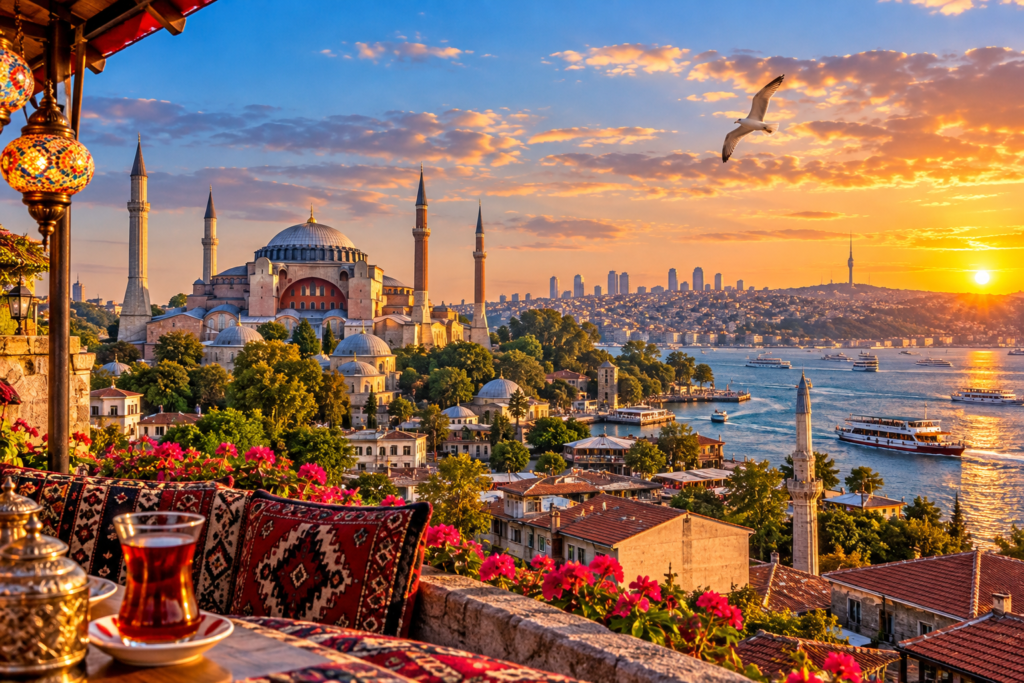
Istanbul
A fascinating city spanning Europe and Asia, filled with historic mosques, colourful bazaars, lively neighbourhoods, incredible food, and beautiful views across the Bosphorus.
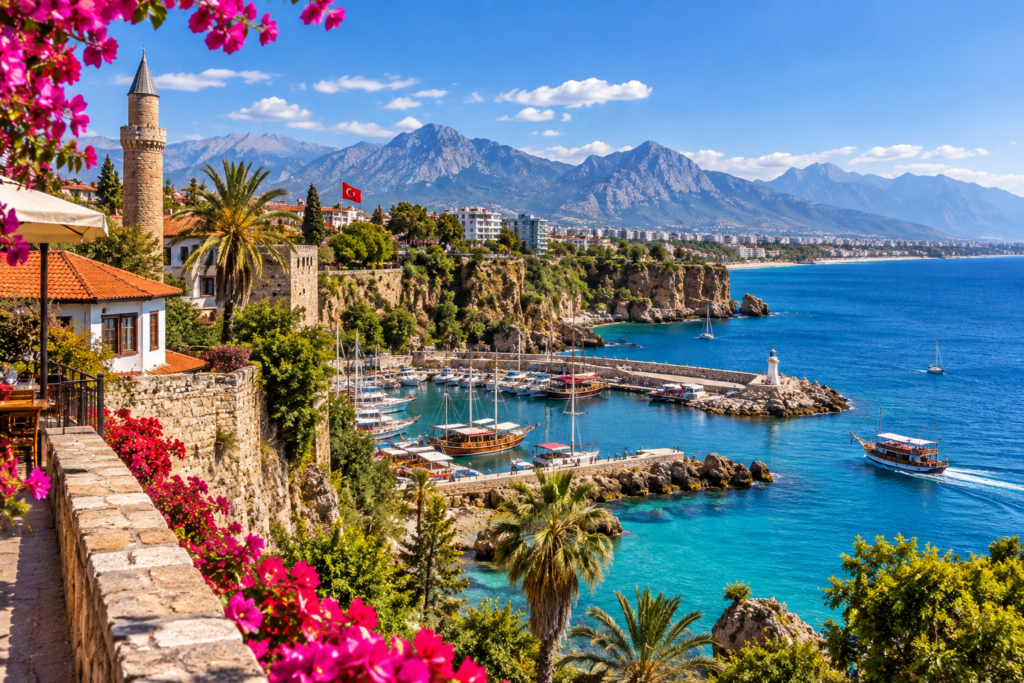
Antalya
A beautiful Mediterranean city combining turquoise coastline, beaches, historic streets, ancient landmarks, and a relaxed seaside atmosphere.
TURKEY TRAVEL GUIDE
Everything you need to know to plan your trip to Turkey, from the best time to visit and travel costs to transport, accommodation, food, and practical tips.
BEST TIME TO VISIT TURKEY
Turkey is a large country with different climates, so the best time to visit depends on where you’re travelling.
For sightseeing in places such as Istanbul and Cappadocia, spring from April to May and autumn from September to October are particularly pleasant. Temperatures are generally more comfortable for walking and exploring than during the hottest part of summer.
Summer, especially July and August, can be very hot in southern and western Turkey, but it’s also the main season for beach destinations along the Aegean and Mediterranean coasts.
Winter can be cold and wet in Istanbul, while central and eastern parts of Turkey can experience snow and freezing temperatures. Cappadocia covered in snow can be beautiful, but you’ll need proper winter clothing.
Turkey genuinely offers different experiences throughout the four seasons, so there isn’t one perfect month for every destination.
HOW MUCH DOES TURKEY COST?
Turkey can still offer good value for travellers, but prices have changed significantly in recent years and costs vary considerably between destinations.
Rather than relying on a fixed daily budget in Turkish lira—which can become outdated quickly—plan around your accommodation and travel style. Budget travellers can save money with hostels or simple guesthouses, local restaurants, public transport, and free attractions.
Istanbul, Cappadocia, Bodrum, and other major tourist destinations can be noticeably more expensive, particularly during busy periods. Hotels, organised tours, beach resorts, and popular attractions can quickly increase your spending.
Local restaurants, bakeries, markets, public transport, and intercity buses can help keep costs lower.
Tip: Because prices and exchange rates can change quickly, check current hotel, transport, and attraction prices shortly before travelling rather than relying entirely on an older travel budget.
GETTING TO TURKEY
Turkey is extremely well connected internationally.
Istanbul Airport is the country’s major international gateway, with connections to cities across Europe, Asia, the Middle East, Africa, and the Americas.
Sabiha Gökçen International Airport, on the Asian side of Istanbul, is another important airport and is particularly useful for many low-cost and regional flights.
Other major tourist destinations, including Antalya, İzmir, Ankara, Bodrum, and Dalaman, also have airports with domestic and international connections.
Turkey can also be entered overland from neighbouring countries and by sea from selected destinations, including connections across the Aegean.
GETTING AROUND TURKEY
Because Turkey is a large country, you’ll probably use several different types of transport during a longer trip.
Domestic flights are useful when travelling long distances, such as between Istanbul and destinations in eastern or southern Turkey.
Turkey also has an extensive intercity bus network, which can be an affordable way of travelling between cities. Long-distance buses are widely available and connect major cities with many smaller destinations.
Trains connect a number of important cities, and high-speed services operate on selected routes. Turkey’s official tourism site describes the country’s public transport network as including high-speed trains, domestic flights, buses, and metro systems.
Within Istanbul, you’ll find metro lines, trams, buses, ferries, and suburban trains. The ferries crossing the Bosphorus are not only useful transport but also a great way to experience the city.
WHERE TO STAY IN TURKEY
The best area to stay depends heavily on your destination and travel style.
In Istanbul, Sultanahmet is convenient for first-time visitors who want to be close to major historic attractions such as Hagia Sophia, the Blue Mosque, and Topkapı Palace.
Areas around Galata, Karaköy, and Beyoğlu are good alternatives if you want restaurants, cafés, nightlife, and easy access to different parts of the city.
In Cappadocia, Göreme is one of the most convenient bases for first-time visitors, with cave hotels, restaurants, tours, and access to the surrounding valleys.
Along Turkey’s Mediterranean and Aegean coasts, you’ll find everything from inexpensive guesthouses to large all-inclusive resorts and luxury hotels.
Wherever you stay, check the distance to public transport and the attractions you actually plan to visit before booking.
FOOD IN TURKEY
Food is one of the highlights of travelling around Turkey, and Turkish cuisine goes far beyond kebabs.
Some dishes and foods worth trying include döner, kebabs, pide, lahmacun, mantı, köfte, gözleme, börek, menemen, meze, and Turkish breakfast.
For dessert, try baklava, künefe, lokum (Turkish delight), and different regional sweets.
Street food is also part of the experience. Depending on where you travel, you’ll find simit, roasted chestnuts, grilled corn, fish sandwiches, stuffed mussels, and many other inexpensive snacks.
And of course, don’t leave without trying Turkish tea and Turkish coffee.
One of the interesting things about travelling around Turkey is that every region has its own specialities, so don’t eat exactly the same dishes everywhere you go. Turkey’s official tourism organisation highlights gastronomy as one of the country’s major travel experiences.
MONEY AND PAYMENTS IN TURKEY
Turkey’s official currency is the Turkish Lira (TRY or ₺).
Credit and debit cards are commonly accepted in hotels, restaurants, supermarkets, shopping centres, and many tourist businesses.
However, cash is still useful for markets, smaller restaurants, local shops, street food, and some transportation.
ATMs are widely available, including in smaller towns, although carrying some cash is sensible if you’re travelling somewhere remote.
Be careful when an ATM or card terminal offers to convert the transaction into your home currency. Check the exchange rate and fees before accepting any currency conversion.
STAYING CONNECTED IN TURKEY
Staying connected is relatively easy in Turkey.
Wi-Fi is widely available in hotels, cafés, restaurants, airports, and many other public places, although speeds can vary.
For a longer trip, a local SIM card or eSIM can make travelling much easier. Mobile data is particularly useful for maps, translation, checking public transport, booking accommodation, and finding restaurants.
Coverage is generally good in major cities and tourist areas, although it can become weaker in remote mountains and rural regions.
Download offline maps before travelling somewhere remote so you aren’t completely dependent on your mobile connection.
IS TURKEY SAFE FOR SOLO TRAVELLERS?
Millions of travellers visit Turkey independently, but it’s important to take normal precautions and check current travel advice before your trip.
Keep your valuables secure in crowded tourist areas, public transport, markets, and busy streets. Be cautious with unofficial taxis and use established transport services where possible.
Solo travellers should take the usual precautions when walking alone late at night, particularly somewhere unfamiliar.
It’s also important to understand that the security situation is not the same throughout the entire country. As of September 2026, the UK’s FCDO advises against travel to some parts of Turkey, so check the latest official travel advice when planning your route rather than treating the whole country identically.
TURKEY VISA AND ENTRY REQUIREMENTS
Entry requirements depend on your nationality, so always check the latest rules for your passport before travelling.
For travellers using a full British citizen passport, Turkey currently allows visits for tourism or business without a visa for up to 90 days in any 180-day period.
For British citizens, your passport must currently have an expiry date at least 150 days after the date you arrive, and it must have at least one blank page.
Different rules apply to some other types of British passport and other nationalities.
Visa and immigration requirements can change, so always check the latest official information before booking or travelling.
WHAT TO WEAR IN TURKEY
What to wear depends on both the season and the part of Turkey you’re visiting.
During summer, lightweight and breathable clothing is ideal, particularly along the Mediterranean and Aegean coasts where temperatures can become very hot.
Spring and autumn are more variable, so layers and a lightweight jacket are useful.
During winter, Istanbul can be cold and wet, while central and eastern Turkey can become significantly colder and experience snow.
When visiting mosques and religious sites, dress respectfully. Shoulders and knees should generally be covered, and women may need to cover their hair when entering a mosque. Some major mosques provide coverings for visitors.
Comfortable walking shoes are particularly important in Istanbul, where you’ll encounter hills, cobbled streets, and long days of sightseeing.
HOW LONG DO YOU NEED IN TURKEY?
Turkey is much larger and more diverse than many first-time visitors expect.
For Istanbul alone, I recommend around 3–5 days. This gives you time to experience the major historic attractions, neighbourhoods, markets, food, and Bosphorus without rushing through everything.
With 7–10 days, you could combine Istanbul with another destination such as Cappadocia.
With two weeks, you can build a much more varied itinerary combining Istanbul, Cappadocia, ancient sites, coastal destinations, or another major city.
If you have three weeks or longer, you can slow down and explore several regions rather than constantly moving between airports and hotels.
Turkey isn’t a country you need to see in one trip. Choosing fewer destinations and spending more time in each usually makes for a better experience.
FINAL TIPS FOR VISITING TURKEY
Turkey is a country where exploring beyond the famous attractions can completely change your experience.
In Istanbul, don’t spend your entire visit around Sultanahmet. Cross the Bosphorus to the Asian side, wander through local neighbourhoods, visit markets, take public ferries, and try restaurants away from the busiest tourist streets.
Use public transport where possible, carry some Turkish lira for smaller purchases, and check prices before ordering in highly touristy areas.
Try regional food rather than eating only kebabs, learn a few simple Turkish words, and leave enough flexibility in your itinerary to explore places you discover along the way.
Most importantly, remember how large Turkey is. Istanbul, Cappadocia, the Mediterranean coast, the Aegean, and eastern Turkey can feel like completely different trips.
READY TO EXPLORE TURKEY?
From the energy and history of Istanbul to ancient ruins, incredible food, dramatic landscapes, and beautiful coastlines, Turkey has so much to discover. Start planning your trip and experience it for yourself.
GET TRAVEL INSPIRATION IN YOUR INBOX
Get practical travel tips, destination inspiration, and new guides delivered straight to your inbox.