
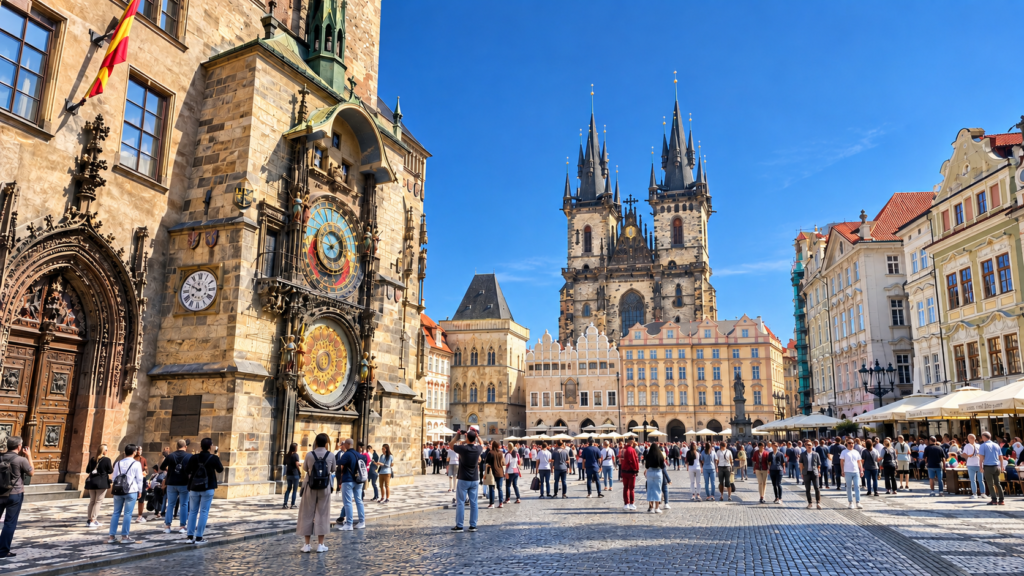
Planning to spend 3 days in Prague? With its colourful historic buildings, cobblestone streets, medieval towers and picturesque bridges, the Czech capital is an incredible destination for a short city break.
But is three days enough to explore Prague?
Absolutely! Three days in Prague are enough to discover many of the city’s main attractions, experience its atmosphere and enjoy some traditional Czech food without feeling constantly rushed.
I spent three days exploring Prague, mostly on foot, visiting famous landmarks and discovering interesting corners along the way. Based on my experience, I’ve put together this practical three-day Prague itinerary to help you make the most of your visit.
This itinerary is especially useful if you’re arriving in Prague in the late afternoon and have two full days to explore.
3 Days in Prague: Your Itinerary at a Glance
| Day | Main Highlights |
|---|---|
| Day 1 | Arrival, hotel check-in and an evening walk through Old Town |
| Day 2 | National Museum area, Wenceslas Square, Old Town Square, Astronomical Clock, Powder Tower and Charles Bridge |
| Day 3 | Malá Strana, Prague Castle, St. Vitus Cathedral, Golden Lane, Vltava River and Dancing House |
Most of this itinerary can be explored on foot, although public transport is useful when you’re tired or want to save time.
Day 1: Arrival in Prague and an Evening in Old Town
Check into Your Hotel
I arrived at my hotel in Prague at around 6 PM, so I didn’t have a full day available for sightseeing.
Instead of trying to visit several attractions before closing time, I decided to take things slowly and enjoy my first evening in the city.
I stayed at EA Hotel New Town, located at 28 Žitná in Prague’s New Town district.
The hotel was clean, comfortable and conveniently located. For someone like me who enjoys exploring cities on foot, it was a good base.
Explore Prague’s Old Town After Dark
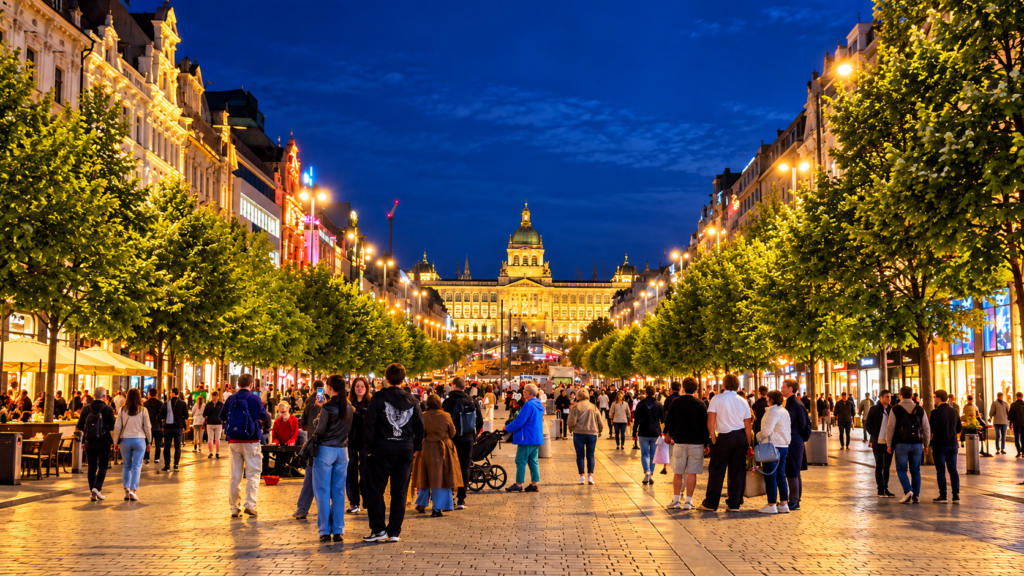
After checking in, head towards Prague’s historic centre.
One of the best things about Prague is that you don’t always need a detailed plan to enjoy it. Simply walking through its historic streets can be an experience in itself.
You’ll find beautiful architecture, narrow streets, restaurants, cafés and historic buildings illuminated in the evening.
The Old Town area is particularly atmospheric after dark.
If you’ve arrived after a long journey, I recommend keeping your first evening relaxed. Walk around, enjoy the surroundings and find somewhere for dinner.
My tip: Don’t try to fit too much into your arrival evening. Save the main attractions for the following morning, when you’ll have more time to explore.
Day 2: Explore Prague’s Historic Old Town and Charles Bridge
Your second day is all about discovering Prague’s historic heart.
This is one of the most enjoyable walking routes in the city, taking you through famous squares, historic streets, medieval architecture and eventually to the iconic Charles Bridge.
1. Start at the National Museum and Wenceslas Square
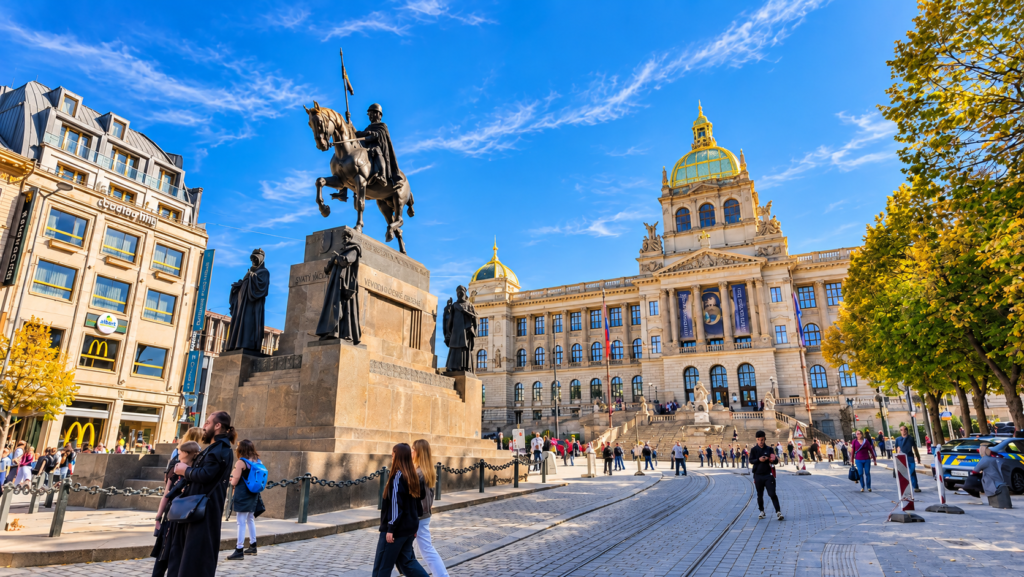
Begin your morning near the National Museum, one of Prague’s most impressive buildings.
The museum stands at the upper end of Wenceslas Square, a major landmark in the city’s New Town.
Even if you don’t plan to visit the museum’s exhibitions, its exterior is worth seeing.
From here, walk down Wenceslas Square towards the historic centre.
Despite its name, Wenceslas Square feels more like a wide boulevard than a traditional square. It’s lined with shops, hotels, cafés and restaurants.
During my visit, I started exploring this part of Prague on foot before continuing towards Old Town.
2. Discover Prague’s Old Town Square
Old Town Square is one of the highlights of any visit to Prague.
Surrounded by colourful historic buildings, churches and beautiful architecture, it’s easy to understand why this is one of the city’s most photographed locations.
Take your time exploring the square rather than rushing from one attraction to another.
Some of the main landmarks include:
- The Church of Our Lady before Týn
- The Old Town Hall
- Prague’s Astronomical Clock
- The Jan Hus Memorial
- The historic buildings surrounding the square
The atmosphere here is part of the experience, especially when visitors gather around the Astronomical Clock.
3. Watch the Astronomical Clock
One of Prague’s most famous attractions is the medieval Astronomical Clock, located on the Old Town Hall.
The clock is famous for its intricate design and hourly mechanical display.
It attracts large crowds, particularly around the hour when visitors gather to watch the figures move.
It’s worth seeing, but don’t expect a long performance. The display is brief.
My tip: Arrive a little before the hour if you want a good viewing position.
4. Walk to the Powder Tower
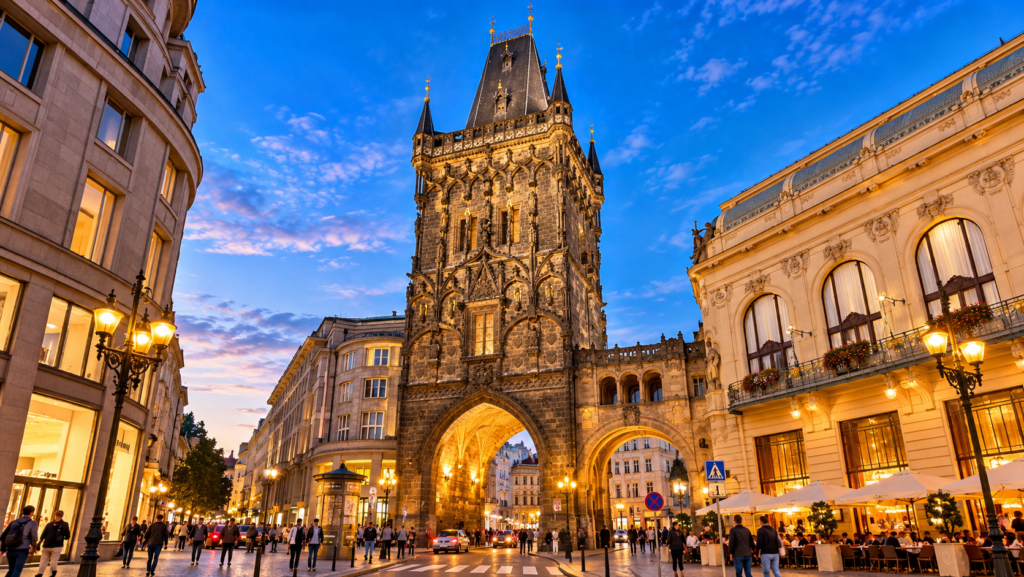
From Old Town Square, continue towards the Powder Tower.
Although I visited this landmark later during my actual trip, I recommend including it on Day 2 because of its convenient location near Old Town.
The Powder Tower is one of Prague’s historic Gothic gateways and was once part of the city’s medieval fortifications.
Its dark stone architecture makes it stand out from the surrounding buildings.
Nearby, you’ll also find the impressive Municipal House, known for its Art Nouveau architecture.
This is a good area to stop for photographs before continuing your walk.
5. Wander Through Prague’s Historic Streets
One of my favourite parts of exploring Prague was simply walking through its old streets.
Between the famous landmarks, you’ll discover interesting architecture, small shops, cafés and picturesque corners.
You don’t need to follow every street on a map.
Allow yourself time to explore, take photographs and enjoy the atmosphere.
This is one of the reasons I think Prague is such an enjoyable city for a short visit.
6. Cross the Famous Charles Bridge
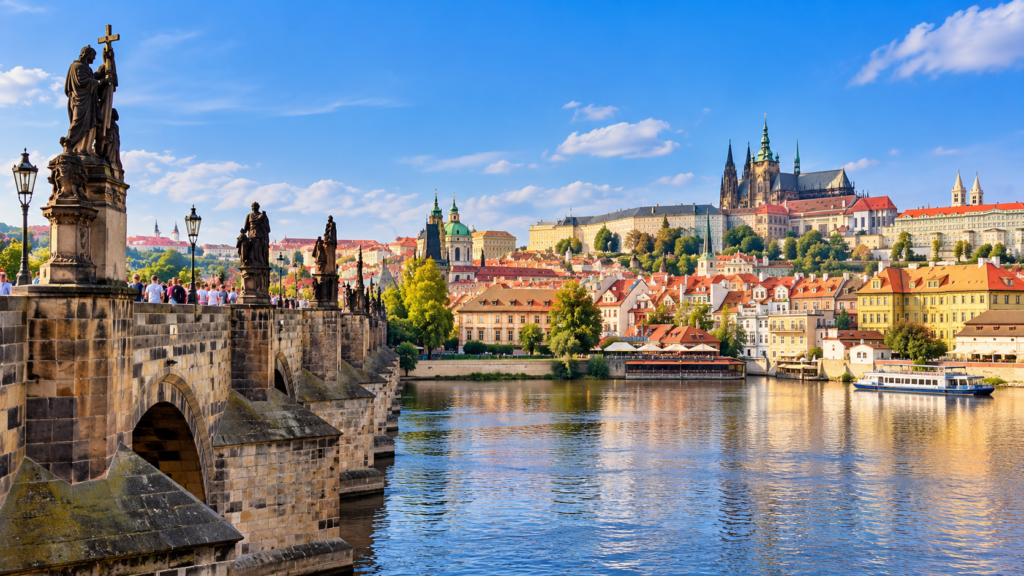
Finish your main sightseeing route at Charles Bridge, one of Prague’s most iconic landmarks.
Built during the medieval period, this historic stone bridge connects Old Town with Malá Strana, also known as Lesser Town.
The bridge is famous for its statues, historic towers and beautiful views over the Vltava River.
It’s also a lively place, with visitors, artists and musicians contributing to the atmosphere.
Take your time walking across and enjoying the views.
If you want quieter photographs, consider returning early in the morning.
7. Try Czech Food and Trdelník
After a full day of walking, it’s time to enjoy some food.
During my Prague visit, I explored local food options and tried Trdelník, a sweet pastry that’s particularly popular with tourists.
You’ll see it sold around Prague’s historic centre, sometimes filled with ice cream or other sweet toppings.
Although Trdelník is widely associated with Prague’s tourist areas, it isn’t originally a traditional Czech speciality.
For a more distinctly Czech meal, consider trying dishes such as goulash, svíčková or roast pork with dumplings.
My tip: Restaurants directly beside major attractions can be more expensive. Check menus and prices before ordering.
Day 3: Prague Castle, Lesser Town and the Vltava Riverside
Your final day takes you across the river to explore Prague’s castle district before returning towards the city centre.
This route includes some of Prague’s most impressive historic attractions, followed by a relaxing walk along the Vltava River.
1. Start Near Charles Bridge and Explore Malá Strana
Begin your morning near the western end of Charles Bridge.
From here, explore Malá Strana, one of Prague’s most charming historic neighbourhoods.
The area is known for its beautiful buildings, narrow streets and traditional atmosphere.
It’s also the starting point for the walk uphill towards Prague Castle.
Take your time, especially if you enjoy photography.
2. Walk Up to Prague Castle
Prague Castle is one of the city’s most important attractions and a highlight of this itinerary.
The castle complex sits above the city, offering impressive architecture and views across Prague.
Be prepared for an uphill walk if you’re approaching from Malá Strana.
The castle isn’t just one building. It’s a large historic complex containing churches, courtyards, palaces and smaller streets.
Allow several hours if you plan to explore the interiors.
Tickets: You can explore parts of the Prague Castle complex for free, but tickets are required to enter certain attractions, including Golden Lane and some cathedral areas. I recommend checking the latest ticket prices, opening hours and visitor information on the official Prague Castle website.
3. Admire St. Vitus Cathedral
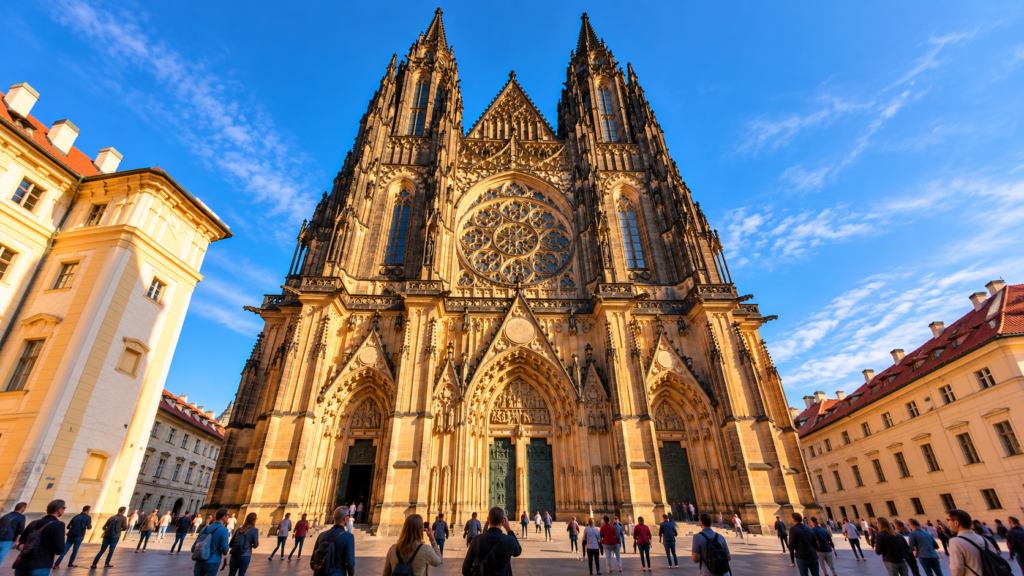
One of the most impressive buildings within Prague Castle is St. Vitus Cathedral.
Its Gothic architecture, towering spires and intricate exterior details make it one of Prague’s most recognisable landmarks.
Even if you aren’t particularly interested in religious buildings, the cathedral is worth seeing for its architecture and historical importance.
Access to different areas of the cathedral may depend on the ticket or visitor arrangements in place.
4. Explore Golden Lane
Golden Lane is another fascinating part of Prague Castle.
This small historic street is famous for its colourful houses and unusual appearance.
It’s one of those places that feels very different from the grand squares and large buildings elsewhere in Prague.
During my visit, exploring this part of the castle complex was one of the memorable experiences of the day.
Check current ticket arrangements before visiting, as access to Golden Lane is generally included in certain Prague Castle admission circuits.
5. Enjoy the Views and Walk Back Towards the River
After exploring the castle, make your way downhill towards the Vltava River.
One of the great things about Prague is how different the city looks from various viewpoints.
From the castle area, you can appreciate the historic rooftops, church towers and bridges that make Prague’s skyline so distinctive.
The walk back towards the river also gives you a chance to explore quieter streets away from the busiest tourist areas.
6. Walk Along the Vltava River
Once you reach the riverside, continue walking towards the southern part of the city centre.
This is a pleasant way to experience Prague from a different perspective.
Along the route, you’ll see historic buildings, bridges, boats and views across the river.
If you’ve spent most of the day exploring the castle, this is also a good opportunity to slow down and enjoy the surroundings.
7. Visit the Dancing House
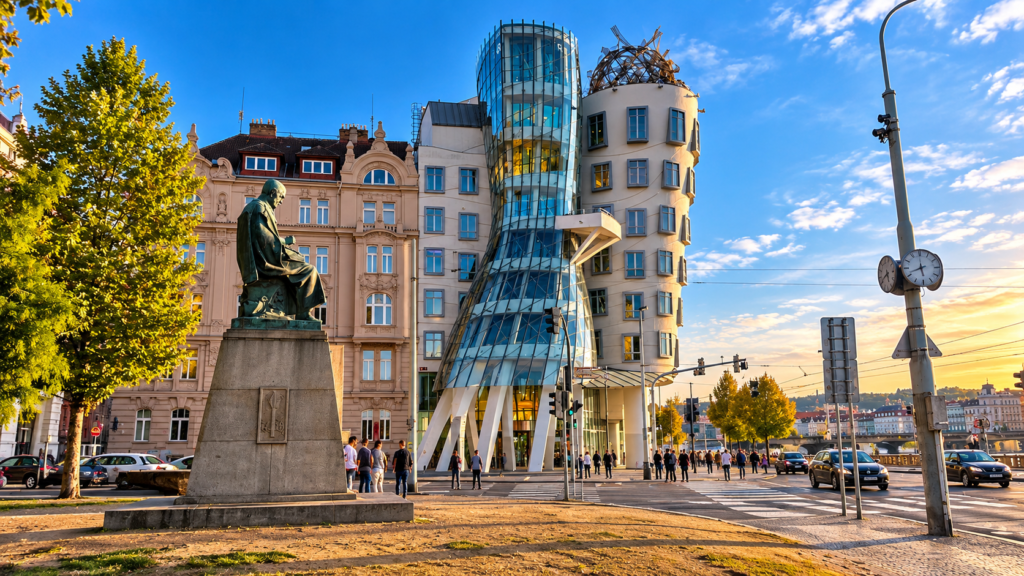
Finish your sightseeing at the Dancing House, one of Prague’s most unusual modern buildings.
Designed by architects Vlado Milunić and Frank Gehry, the building stands out from Prague’s traditional historic architecture.
Its curved design gives it the appearance of two figures dancing.
It’s an interesting contrast to the Gothic and Baroque buildings you’ve seen during the previous two days.
You don’t need to spend a long time here unless you plan to visit the building’s interior or enjoy the surrounding area.
My tip: The Dancing House is an interesting photography stop, but I wouldn’t plan an entire afternoon around it. Combine it with your riverside walk.
Where to Stay in Prague
Choosing the right area to stay in Prague can make a big difference to your trip, especially if you’re visiting for the first time. Fortunately, many of the city’s main attractions are within walking distance of each other, so staying somewhere central makes exploring much easier.
Here are three areas worth considering:
Old Town (Staré Město)
One of the best locations for first-time visitors who want to be close to Prague’s famous attractions, including Old Town Square, the Astronomical Clock and Charles Bridge. It’s full of restaurants, cafés and beautiful historic streets, although accommodation can be more expensive in the busiest tourist areas.
New Town (Nové Město)
A great alternative to Old Town, with plenty of hotels, restaurants, shops and convenient transport connections. Depending on where you stay, you can easily walk to Wenceslas Square, the National Museum and parts of the historic centre. This is the area I chose for my visit.
Malá Strana (Lesser Town)
Located across the river from Old Town, Malá Strana is known for its charming streets, historic buildings and beautiful surroundings. It’s an excellent choice if you prefer a more romantic atmosphere and want to stay near Charles Bridge and Prague Castle.
My recommendation: For a first trip to Prague, I’d choose Old Town or New Town for convenience, especially if you’re planning to follow this three-day walking itinerary.
My Hotel: EA Hotel New Town
During my three-day trip to Prague, I stayed at EA Hotel New Town, located in Prague’s New Town district, within walking distance of many central attractions.
Overall, I had a great experience. The hotel was clean, comfortable, and conveniently located for exploring the city on foot.
If you’re planning a short city break in Prague, it’s definitely worth considering, especially if you enjoy walking between attractions.
Accommodation prices vary depending on the season and booking dates, so I recommend comparing rates before booking.
Getting Around Prague
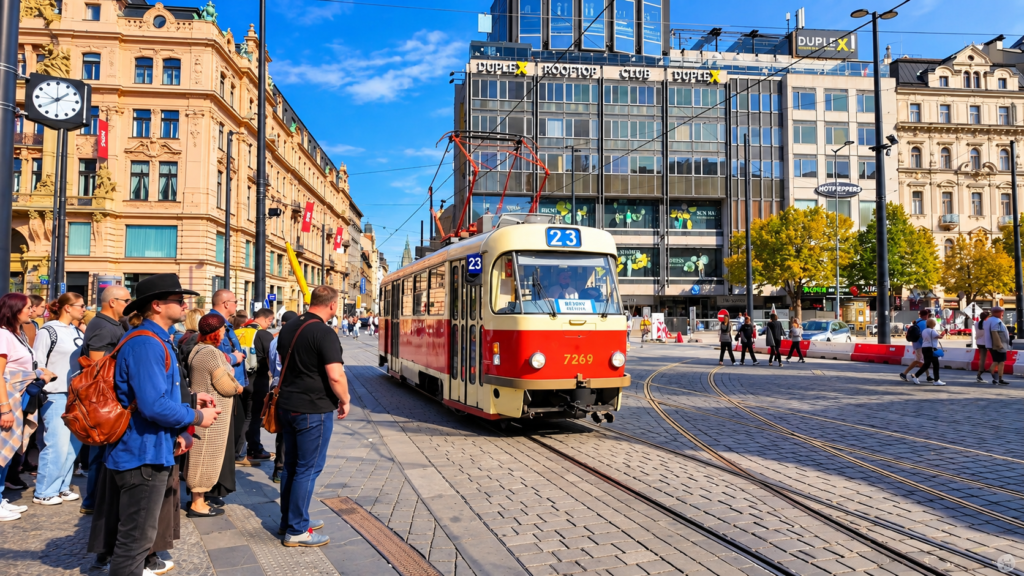
One of Prague’s biggest advantages is that many of its main attractions are relatively close together.
For this three-day itinerary, walking is an excellent way to explore.
However, Prague also has a useful public transport network, including:
- Metro
- Trams
- Buses
Public transport can be particularly helpful when travelling between your hotel and more distant attractions or when you’re tired after a long day of sightseeing.
Remember to check the current ticket rules and validate tickets where required.
Comfortable walking shoes are essential, especially around Prague Castle and the city’s cobblestone streets.
How Much Money Do You Need for Three Days in Prague?
Prague can be a relatively affordable European city break, although your total spending will depend on your accommodation, restaurant choices and the attractions you visit.
For a three-day trip, here are some approximate costs to help you plan your budget:
| Expense | Estimated Cost |
|---|---|
| Accommodation | €50–€120 per night |
| Food and drinks | €20–€40 per day |
| Public transport | €4–€8 per day |
| Attractions | €10–€30 per day |
These are rough planning estimates rather than fixed prices, and actual costs can vary depending on the season and your travel style.
One of the best things about Prague is that many of its highlights are free to enjoy, including walking across Charles Bridge, exploring Old Town Square and admiring the city’s beautiful architecture.
During my visit, I explored most of Prague on foot, which helped keep transport costs low.
My tip: If you’re travelling on a budget, choose accommodation within walking distance of the historic centre, check restaurant menus before ordering and compare attraction ticket prices in advance.
Is Three Days Enough for Prague?
In my experience, three days are enough to see many of Prague’s most famous attractions and get a good feeling for the city.
Prague is relatively compact compared with some other European capitals, and its historic centre is particularly enjoyable to explore on foot.
With an arrival evening and two full sightseeing days, I managed to visit Old Town, Charles Bridge, Prague Castle, Golden Lane, the Vltava riverside and Dancing House.
If you have an additional day, you can explore more neighbourhoods, visit museums or enjoy the city at a slower pace.
But for a first visit, I think three days offer a very satisfying introduction.
Final Thoughts: Is Prague Worth Visiting?
Absolutely.
What makes Prague special isn’t just its famous attractions. It’s the overall atmosphere of the city.
The narrow historic streets, colourful buildings, beautiful bridges and walkable neighbourhoods make exploring Prague an experience in itself.
For me, walking around the city was just as enjoyable as visiting its famous landmarks.
If you’re planning your first trip to Prague, I hope this three-day itinerary helps you discover the city’s highlights while leaving enough time to enjoy its unique atmosphere.
Have you visited Prague, or is it on your travel list? Share your thoughts in the comments!
Want to see what Prague actually looks and feels like? Watch my Prague travel videos on the Time For Travel YouTube channel, where I explore the city on foot and share my real experiences.