
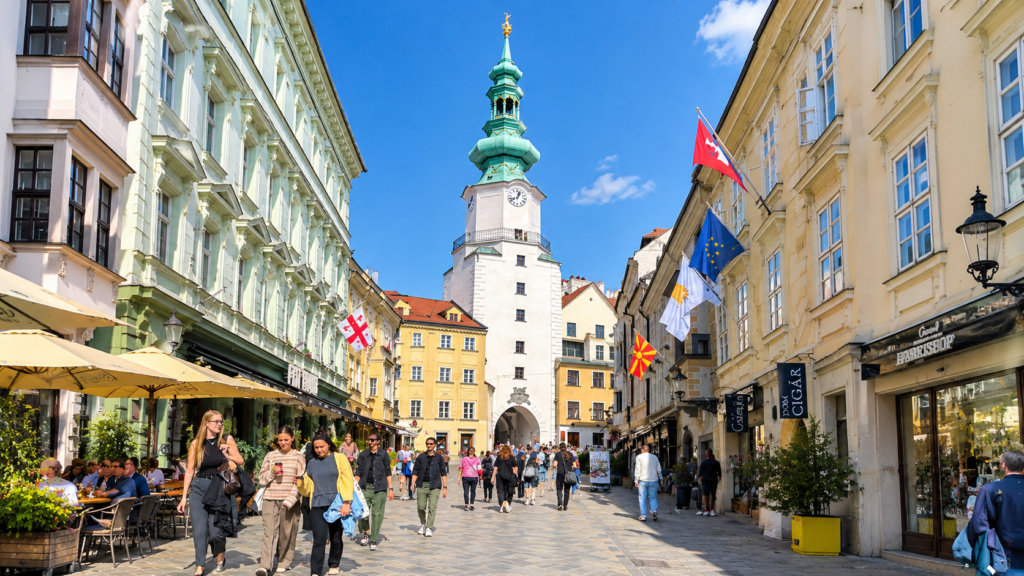
If you’re planning to spend one day in Bratislava, you might be wondering whether there’s enough time to explore Slovakia’s capital. The good news is that Bratislava is surprisingly compact, and many of its most interesting attractions are within walking distance of each other.
After exploring Prague, I travelled to Bratislava for the first time. I didn’t know much about the city before arriving, which made me even more curious to discover what it had to offer.
My first impression? Bratislava felt noticeably quieter than Prague. There were fewer crowds, the streets were easier to explore, and the historic centre had a relaxed atmosphere that I really enjoyed.
During my visit, I wandered through the Old Town, discovered unusual statues, explored historic squares, climbed to Bratislava Castle, enjoyed beautiful views of the Danube River, and tried one of Slovakia’s most traditional dishes.
In this guide, I’ll share the best things to do in Bratislava in one day, along with my personal experiences and practical tips to help you plan your visit.
Is One Day Enough in Bratislava?
Yes! If you’re visiting Bratislava for the first time, one full day is enough to explore many of its main attractions.
Unlike larger European capitals such as Prague, Vienna or Budapest, Bratislava has a relatively small historic centre. Most of the major sights are close together, making it a great destination for travellers who enjoy exploring cities on foot.
You can comfortably spend a day walking through the Old Town, visiting Michael’s Gate, discovering the famous Čumil statue, exploring St. Martin’s Cathedral, and climbing up to Bratislava Castle.
However, if you prefer travelling slowly, visiting museums or exploring beyond the historic centre, staying for two days would give you more flexibility.
My tip: Allow at least six to eight hours for sightseeing, including breaks for coffee, lunch and photographs.
Bratislava in One Day: A Suggested Itinerary
Here’s how I recommend organising your day:
| Time | Activity |
|---|---|
| 9:00 AM | Explore Bratislava Old Town |
| 10:00 AM | Visit Michael’s Gate |
| 11:00 AM | Discover Main Square and Čumil |
| 12:00 PM | Walk through the historic streets and squares |
| 1:00 PM | Visit St. Martin’s Cathedral |
| 2:00 PM | Climb to Bratislava Castle |
| 3:30 PM | Enjoy the castle views and gardens |
| 4:30 PM | Try traditional Slovak food |
| 6:00 PM | Take an optional walk along the Danube |
These times are suggestions rather than a strict schedule. You can easily adjust the route depending on when you arrive and how much time you want to spend at each attraction.
1. Explore Bratislava Old Town
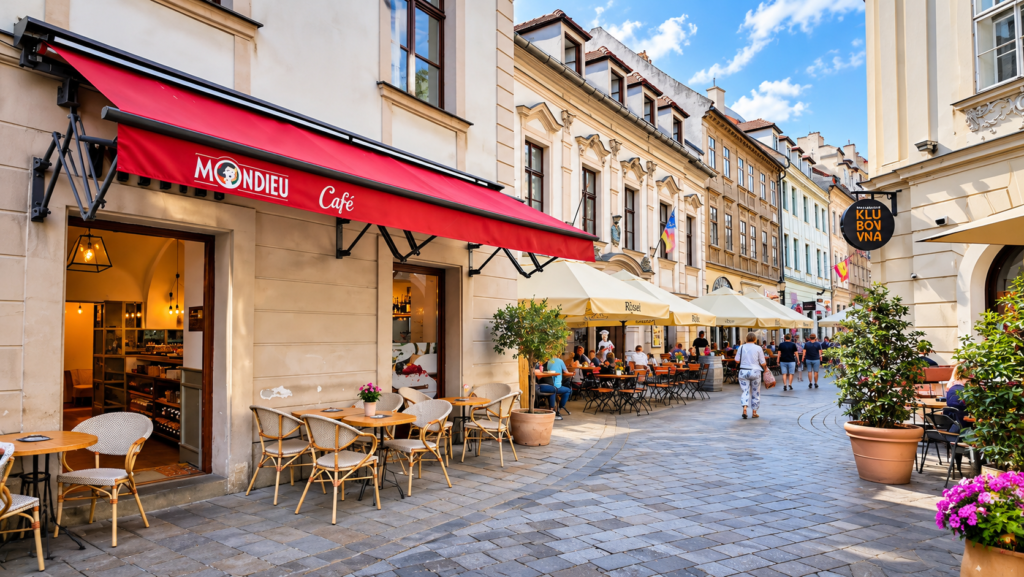
One of the best ways to begin your day in Bratislava is simply to explore its Old Town, known locally as Staré Mesto.
This was where I spent much of my time, wandering through narrow streets, admiring historic buildings and observing everyday life.
What immediately stood out to me was how peaceful the city felt compared with Prague. Although I came across groups of tourists, the streets generally felt less crowded.
The Old Town is filled with colourful buildings, small shops, cafés, restaurants and charming pedestrian streets.
I was also surprised by the variety of restaurants. Alongside traditional Slovak establishments, I noticed plenty of international dining options.
One of my favourite things about travelling is discovering a city without following a strict schedule. Bratislava’s Old Town is particularly enjoyable for this because you can walk around, turn into a side street and find something interesting without going far.
Travel tip: Wear comfortable walking shoes. Although much of the Old Town is relatively flat, some streets have cobblestones, and the walk to Bratislava Castle involves a climb.
2. Walk Through Michael’s Gate
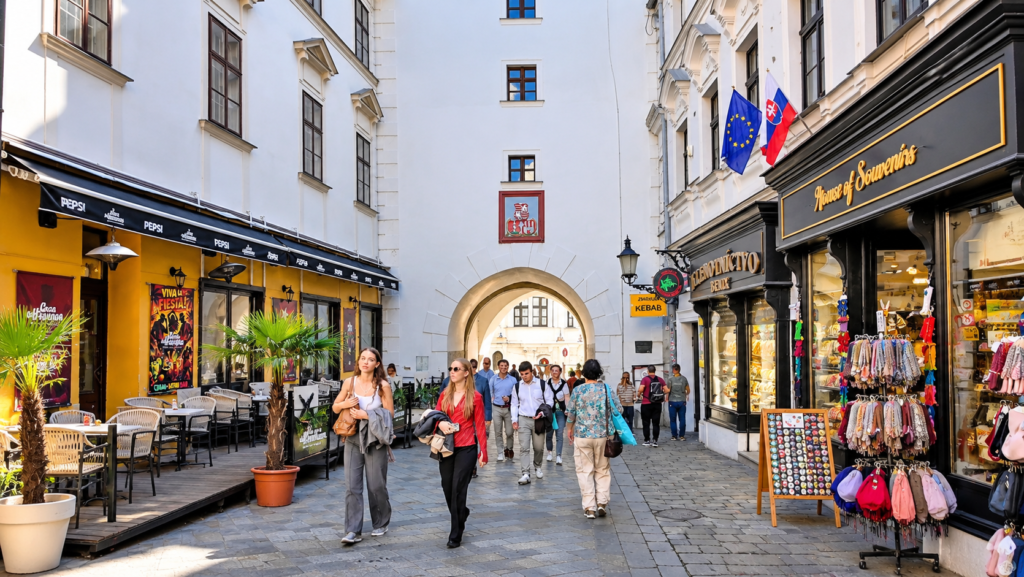
One of Bratislava’s most recognisable landmarks is Michael’s Gate, or Michalská brána.
This historic gateway is the only surviving gate from the city’s medieval fortifications and has stood for centuries.
When I arrived, I was impressed by its appearance and the way it connects the surrounding streets to the historic centre.
The tower rises above the narrow pedestrian street, creating one of the most picturesque views in Bratislava.
As you pass through the gate, look for the zero-kilometre marker beneath it, which shows distances to various cities around the world.
It’s a small but interesting detail that many visitors might overlook.
You can also visit the tower’s interior and viewpoint when open, although admission and opening hours should be checked before your trip.
Even if you don’t enter the tower, Michael’s Gate is worth visiting for its architecture and historical significance.
Photography tip: Try taking a photograph from further along Michalská Street so you can capture the tower framed by the surrounding buildings.
3. Visit Bratislava’s Main Square
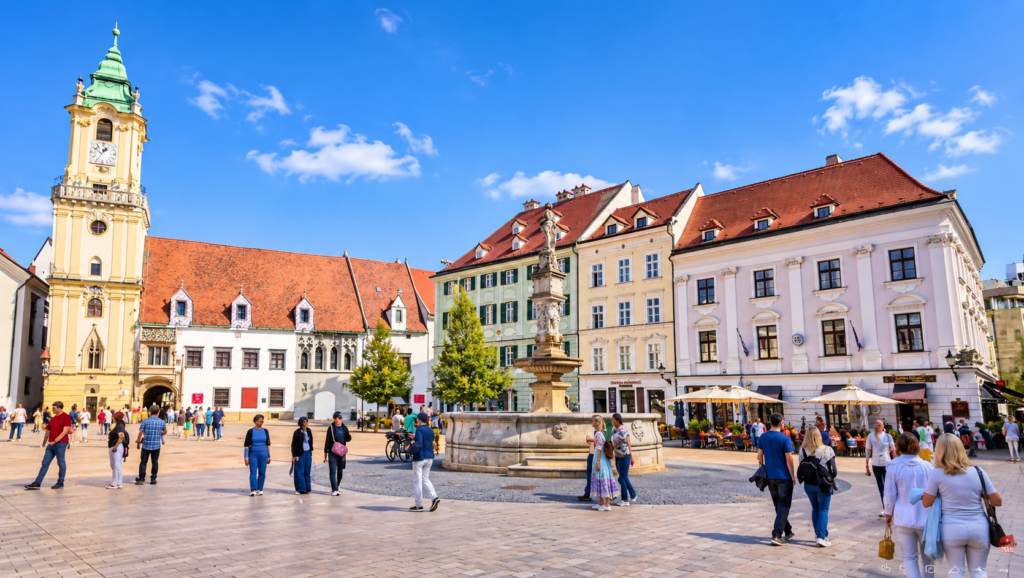
Continue walking through the Old Town until you reach Hlavné námestie, Bratislava’s Main Square.
This is one of the most attractive parts of the historic centre.
The square is surrounded by colourful buildings, historic architecture, restaurants and cafés. During my visit, I enjoyed looking at the different building styles and watching people moving through the area.
One of the main landmarks here is the Old Town Hall, which houses part of the Bratislava City Museum.
You’ll also notice the Maximilian Fountain, sometimes called the Roland Fountain, standing in the square.
If you enjoy photography, this is an excellent place to stop. The combination of historic buildings, the fountain and the open square makes it one of Bratislava’s most photogenic locations.
You can also sit at a nearby café and enjoy the atmosphere before continuing your walk.
4. Find the Famous Čumil Statue
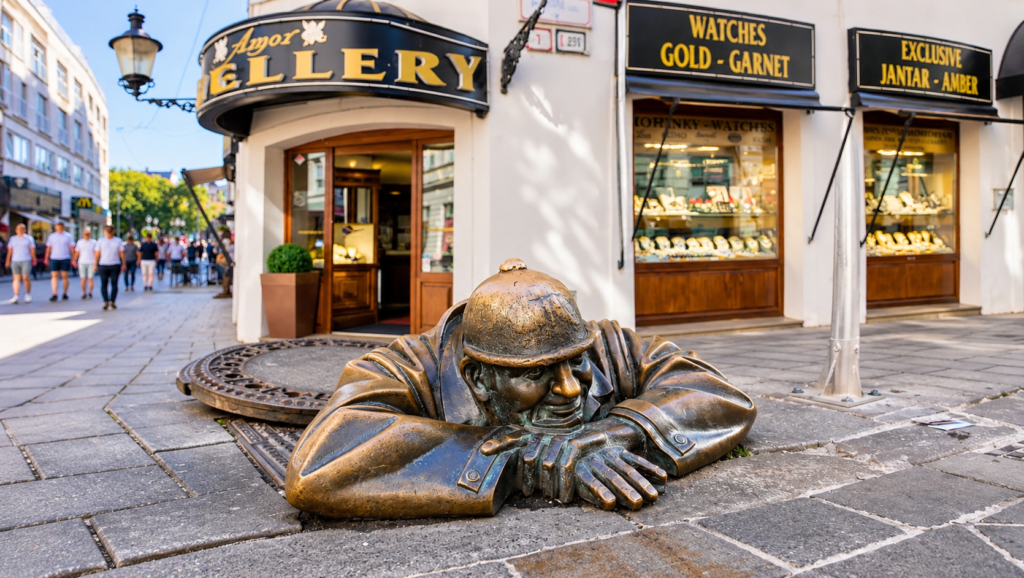
One of the most unusual attractions I discovered in Bratislava was the Čumil statue.
Unlike the grand monuments and historic sculptures you might expect to see in a European capital, Čumil is a small bronze figure emerging from a manhole in the pavement.
The statue is often called the Man at Work, although its exact meaning has been interpreted in different ways.
When I came across it, I immediately understood why it had become such a popular attraction.
It’s unusual, funny and completely different from the traditional monuments found around the city.
Visitors often stop to take photographs beside it, so don’t be surprised if you find a small crowd gathered around the statue.
My tip: Keep an eye on the pavement while walking through the Old Town. The statue is low to the ground and can be surprisingly easy to miss.
It’s a quick stop, but definitely one of the most memorable things to see in Bratislava.
5. Wander Through the Historic Streets and Squares
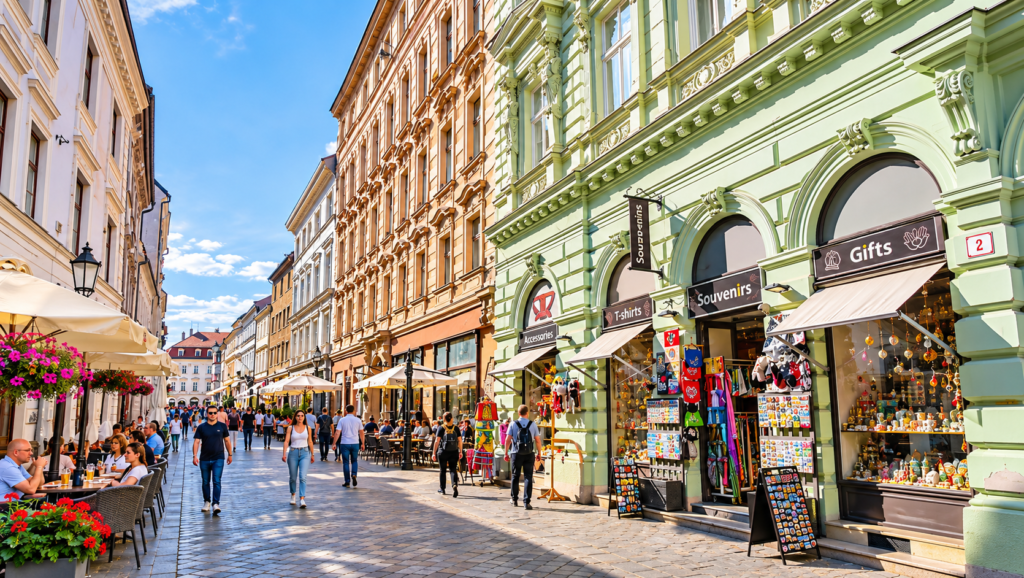
After visiting the Main Square and Čumil, spend some time exploring the surrounding streets.
This was one of the most enjoyable parts of my visit.
Bratislava has plenty of beautiful corners that don’t necessarily appear on every list of tourist attractions.
You’ll find quiet passageways, colourful façades, small souvenir shops and restaurants tucked away from the main streets.
I particularly enjoyed seeing the contrast between the busier tourist areas and the quieter streets just a short distance away.
You can also explore Hviezdoslav Square, a broad pedestrian area surrounded by impressive buildings and cafés.
The historic Slovak National Theatre building stands at one end of the square and is worth admiring from outside.
For me, discovering these streets was just as enjoyable as visiting the city’s famous landmarks.
Sometimes, the best travel experiences come from walking without a specific destination.
6. Visit St. Martin’s Cathedral
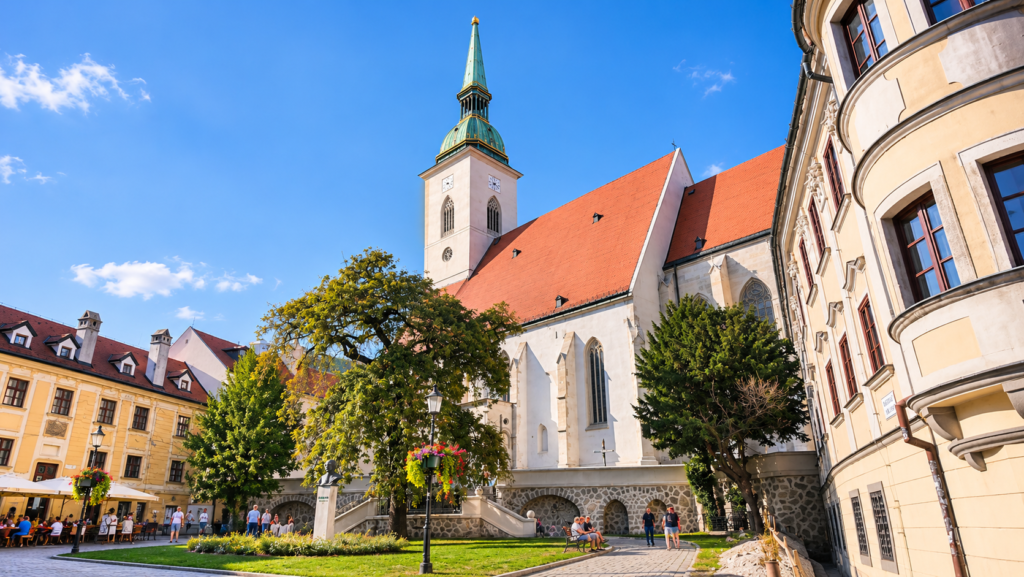
Another important landmark in Bratislava is St. Martin’s Cathedral.
Located near the historic centre and below Bratislava Castle, this Gothic cathedral has played an important role in Central European history.
Between 1563 and 1830, it served as the coronation church for Hungarian monarchs and royal consorts.
This is an interesting part of Bratislava’s history that many first-time visitors may not know.
Although Bratislava is now the capital of Slovakia, the city was once closely connected with the Kingdom of Hungary.
During my visit, I stopped to admire the cathedral and learn more about its historical significance.
The cathedral’s distinctive tower and Gothic architecture make it an important stop on any Bratislava walking itinerary.
If it’s open during your visit, you may also be able to explore the interior. Remember that it remains an active place of worship, so access may be restricted during religious services.
Travel tip: St. Martin’s Cathedral is conveniently located on the way towards Bratislava Castle, making it easy to include both attractions in the same part of your itinerary.
7. Climb Up to Bratislava Castle
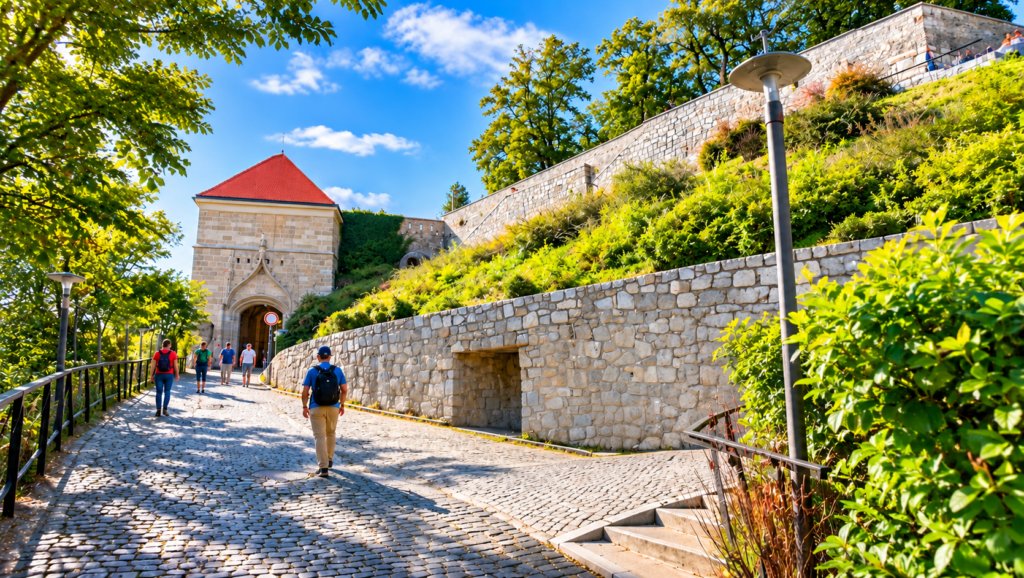
No visit to Bratislava would feel complete without seeing Bratislava Castle.
Perched on a hill overlooking the Danube River, this large white castle with four corner towers is one of the city’s most recognisable landmarks.
After exploring the historic centre, I decided to walk up to the castle.
And I have to admit, the climb was more demanding than I expected!
There were plenty of steps and uphill paths, and by the time I reached the top, I definitely felt like I’d had a proper workout.
However, the views made the effort worthwhile.
As you climb, you’ll begin to see more of the city, including the historic rooftops and surrounding neighbourhoods.
If you don’t enjoy climbing steps, look for an alternative uphill walking route. There are different approaches to the castle, although reaching it on foot still involves an incline.
Exploring Bratislava Castle
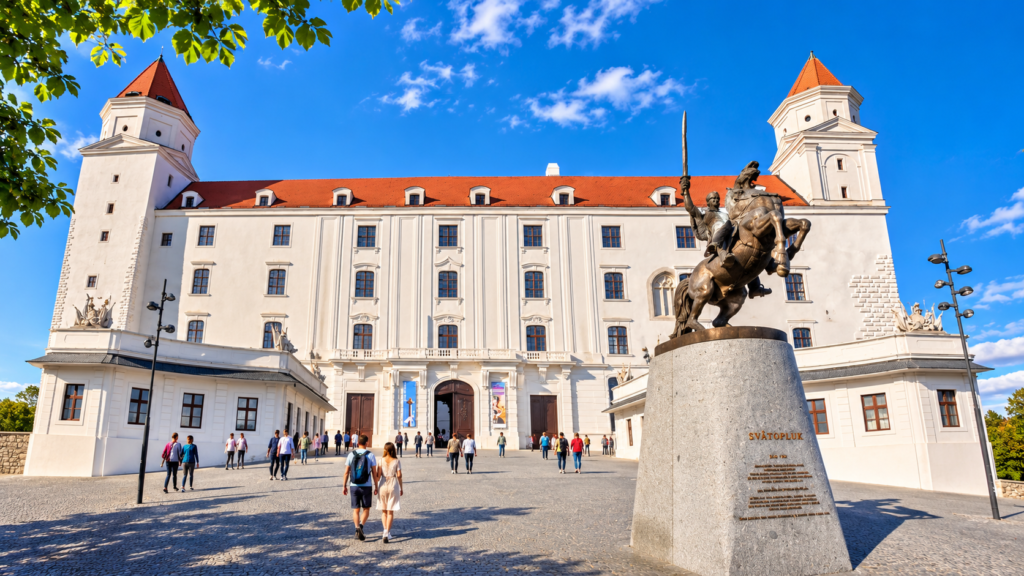
Once I reached the castle, I spent time exploring the outdoor areas and courtyard.
The castle has a long history and has been rebuilt several times over the centuries. Following a devastating fire in 1811, it remained in ruins for many years before being reconstructed in the twentieth century.
Today, the castle is home to the Slovak National Museum’s Museum of History.
One useful thing to know is that exploring the accessible outdoor grounds and visiting the museum are different experiences.
You can enjoy the castle’s exterior and many of its outdoor viewpoints without purchasing a museum ticket, while entry to the museum requires admission.
If you’re interested in Slovak history, the museum could be worth including. However, if you only have one day in Bratislava, exploring the grounds and enjoying the views may be enough.
Enjoy the Views Over the Danube
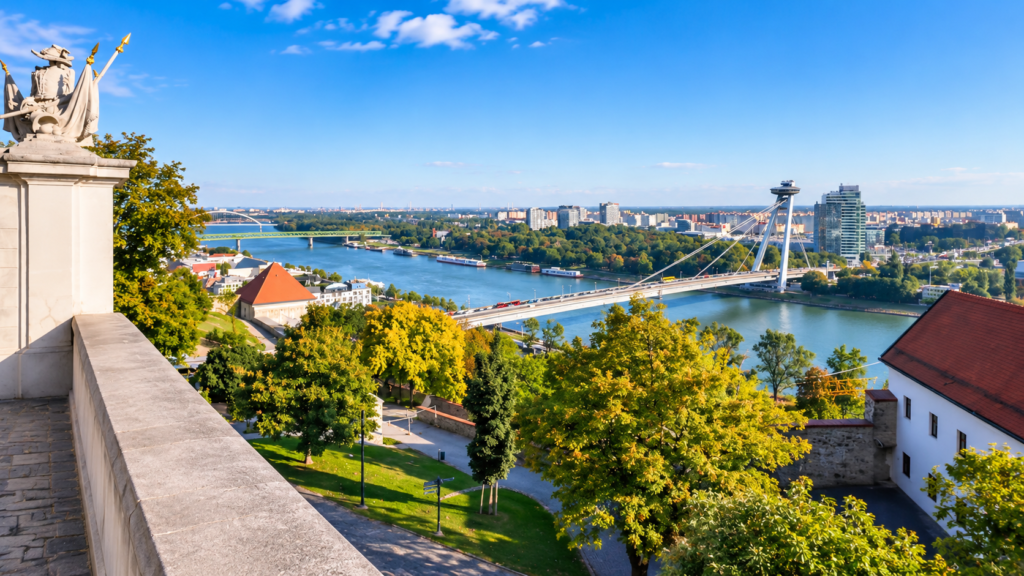
For me, one of the highlights of visiting Bratislava Castle was the panoramic view.
From the elevated grounds, I could see the Danube River, bridges, historic buildings and a large part of the city.
It was a completely different perspective from walking through the narrow streets below.
The view also helped me appreciate Bratislava’s location and the contrast between its historic centre and modern neighbourhoods.
Take your time here, especially if the weather is good.
It’s a lovely place to stop, enjoy the scenery and take photographs.
My tip: Allow approximately 60–90 minutes for the walk up, exploring the grounds and enjoying the viewpoints. Add more time if you plan to visit the museum.
8. Try Traditional Slovak Food: Bryndzové Halušky
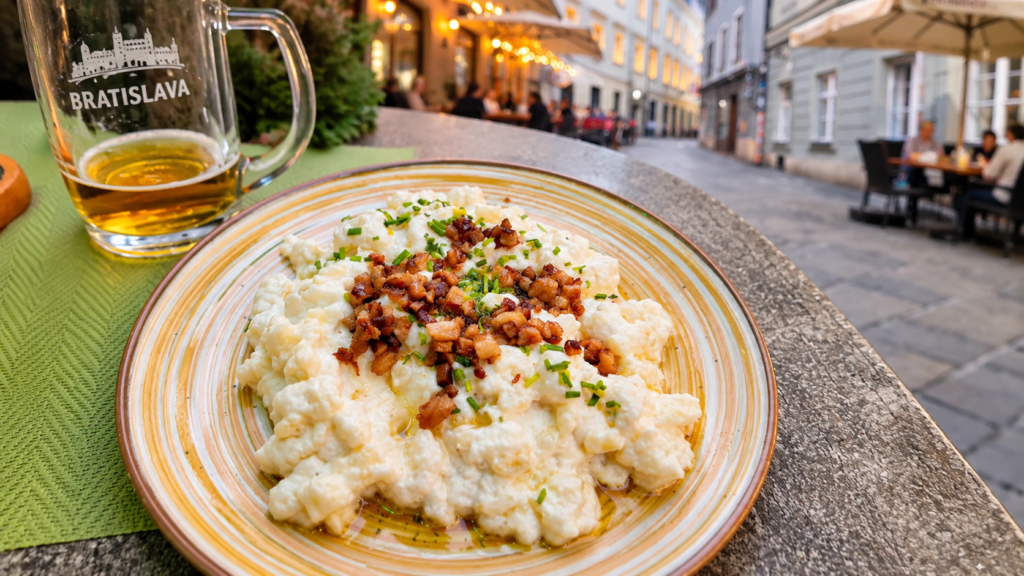
After spending several hours walking around Bratislava, I was ready to sit down and try some traditional Slovak food.
Whenever I visit a new country, I like to experience at least one local dish rather than eating something I could easily find back home.
While searching for Slovak specialities, I came across bryndzové halušky, one of the country’s best-known national dishes.
It’s made with small potato dumplings, typically served with bryndza sheep’s cheese and topped with bacon.
I found a traditional-style restaurant and decided to order it.
What Did Bryndzové Halušky Taste Like?
When the food arrived, the first thing I noticed was its appearance.
It reminded me of pasta, particularly because of the creamy cheese and small dumplings.
After tasting it, I still thought it had a flavour and texture somewhat similar to a rich pasta dish.
The cheese was noticeable, and the dish was quite filling.
Was it the most amazing food I’ve ever tried? Not necessarily.
But I enjoyed the experience, and I was glad I’d chosen something traditional.
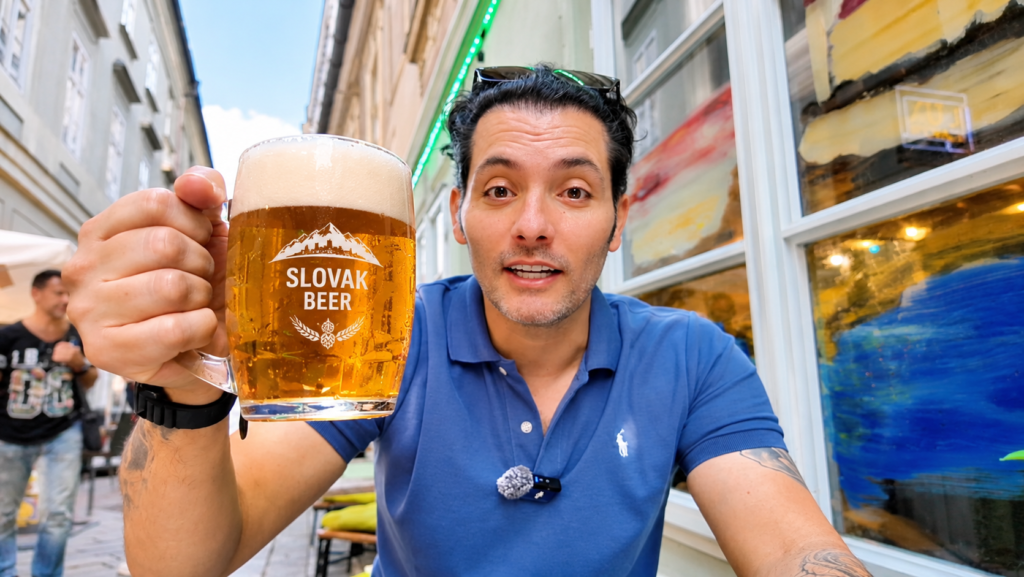
Alongside my meal, I also tried a local beer, and I have to say, it tasted really good! Trying traditional food and local drinks is always one of my favourite parts of travelling, and this was definitely a nice addition to my experience in Bratislava.
My meal, drink and additional charges came to approximately €18.80 during my visit. Prices will vary depending on the restaurant and when you travel.
My recommendation: If you enjoy cheese-based dishes and want to try something genuinely Slovak, bryndzové halušky is worth ordering at least once.
9. Enjoy a Walk Along the Danube River
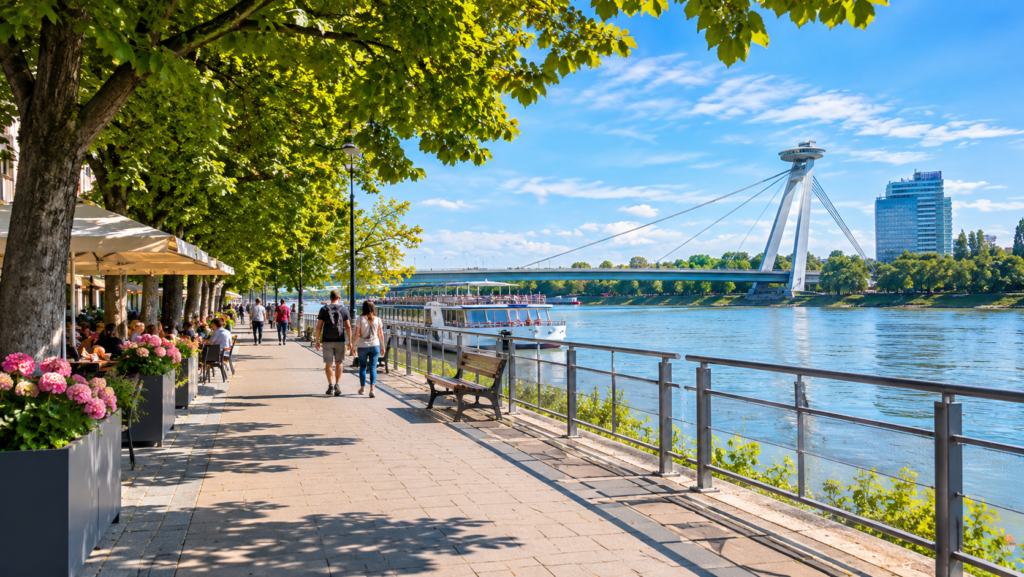
If you still have time and energy after exploring the castle and Old Town, consider ending your day with a walk along the Danube.
The Danube is one of Europe’s most famous rivers, flowing through several countries and major cities, including Vienna, Bratislava and Budapest.
In Bratislava, it creates a beautiful contrast between the historic castle on the hill and the modern bridges crossing the river.
One of the city’s best-known modern landmarks is the UFO observation deck on the Most SNP bridge.
The unusual structure sits above the bridge and offers elevated views of Bratislava.
You can admire it from the riverfront without paying for the observation deck.
A relaxed riverside walk is also a good way to finish your sightseeing after a busy day exploring the historic centre.
If you’re visiting during the warmer months, you may find outdoor seating areas where you can stop for a drink and enjoy the atmosphere.
Optional stop: If you prefer colourful architecture, consider visiting the Blue Church instead. It’s a little outside the main Old Town walking route but is famous for its distinctive blue Art Nouveau design.
Practical Travel Tips for Visiting Bratislava
How to Get to Bratislava
Bratislava is conveniently located in Central Europe, making it easy to combine with other destinations.
Many travellers visit from Vienna, while others include Bratislava as part of a longer journey through Prague, Vienna and Budapest.
You can reach the city by train, coach or, depending on your route and season, boat.
Bratislava also has its own international airport.
Public bus 61 connects Bratislava Airport with the main railway station, where you can continue towards the historic centre.
Getting Around Bratislava
One of the best things about Bratislava is how walkable the historic centre is.
I explored most of the main attractions on foot and didn’t need to rely on public transport for sightseeing.
However, Bratislava also has trams, buses and trolleybuses if you’re staying further from the centre or prefer not to walk long distances.
Public transport tickets are time-based, and it’s important to ensure you have a valid ticket for your journey.
What Currency Does Bratislava Use?
Slovakia uses the euro (€), which makes travelling convenient if you’re visiting other eurozone countries during the same trip.
Cards are widely accepted in many tourist-facing establishments, although carrying a small amount of cash can still be useful.
Is Bratislava Expensive?
Bratislava can be a convenient destination for budget-conscious travellers, particularly because many of its main attractions can be enjoyed on foot.
Walking through the Old Town, visiting historic squares, discovering outdoor statues and enjoying castle viewpoints doesn’t necessarily require expensive sightseeing tickets.
Your biggest expenses are likely to be accommodation, food, transport and any museums or paid attractions you choose to visit.
Restaurants in the main tourist areas may charge more than establishments on quieter streets, so it’s worth comparing menus before choosing somewhere to eat.
Best Time to Visit Bratislava
Spring and early autumn are particularly appealing times to visit Bratislava if you enjoy walking and sightseeing.
The weather is generally more comfortable than during the hottest summer days, although conditions can vary.
Summer brings longer daylight hours and outdoor dining, while winter offers a different atmosphere, particularly around the Christmas market season.
For a walking-focused itinerary, I would personally choose a day with mild weather and enough daylight to explore the castle and historic centre comfortably.
Is Bratislava Worth Visiting?
After spending a day exploring Bratislava, I would say yes, especially if you’re already travelling through Central Europe.
Before arriving, I knew relatively little about Slovakia’s capital. I was curious to see how it compared with cities such as Prague.
What I discovered was a smaller, quieter city with a charming historic centre, interesting architecture, unusual statues and beautiful views from its hilltop castle.
Bratislava doesn’t have the same scale of famous attractions as Prague or Budapest, but that’s not necessarily a disadvantage.
Its compact size makes it easier to explore without feeling rushed, and its calmer atmosphere can be refreshing after visiting busier European capitals.
I particularly enjoyed wandering through the Old Town, discovering the Čumil statue and enjoying the views from Bratislava Castle.
If you’re looking for a destination with huge numbers of attractions and several days of nonstop sightseeing, Bratislava may feel limited.
But if you appreciate historic streets, relaxed city walks, local food and discovering somewhere a little different, it’s certainly worth considering.
Frequently Asked Questions About Bratislava
Can you see Bratislava in one day?
Yes. One day is enough to explore many of Bratislava’s main attractions, including the Old Town, Michael’s Gate, Čumil statue, St. Martin’s Cathedral and Bratislava Castle.
Is Bratislava a walkable city?
Yes. The historic centre is compact and pedestrian-friendly. However, the walk to Bratislava Castle involves uphill sections and steps.
Is Bratislava worth a day trip from Vienna?
Absolutely. Bratislava and Vienna are close enough that visiting the Slovak capital for a day is a popular option. Just allow enough time for the journey and sightseeing.
Is Bratislava cheaper than Prague?
Costs depend on accommodation, restaurants and the season. Bratislava can be affordable for a short visit, especially if you focus on free attractions and explore on foot, but it isn’t guaranteed to be cheaper for every traveller.
What food should I try in Bratislava?
One of the most traditional Slovak dishes is bryndzové halušky, made with potato dumplings, sheep’s cheese and bacon. It’s filling, distinctive and worth considering if you want to experience local cuisine.
Final Thoughts: My One Day in Bratislava
Bratislava may not be the first European capital that comes to mind when planning a trip, but that was part of what made my visit interesting.
I arrived without many expectations and spent the day discovering the city on foot.
From its peaceful Old Town and historic landmarks to the unusual Čumil statue and the impressive views from Bratislava Castle, there was plenty to keep me exploring.
I also enjoyed trying traditional Slovak food and experiencing a different side of Central Europe.
Would I recommend spending one day in Bratislava? Definitely.
It’s an excellent destination for a short city break, a day trip from Vienna or a stop on a longer European itinerary.
And if you enjoy discovering cities through real experiences rather than rushing between tourist attractions, Bratislava might surprise you.
Want to see what Bratislava actually looks like? Watch my Bratislava travel vlog on my Time For Travel YouTube channel, where I explore the streets, visit the castle and try traditional Slovak food.
If you’re planning a longer Central European adventure, you can also read my 3 Days in Prague itinerary and My First Impressions of Prague for more travel inspiration.
For more information about attractions, events, and planning your visit, check the official Visit Bratislava tourism website.