
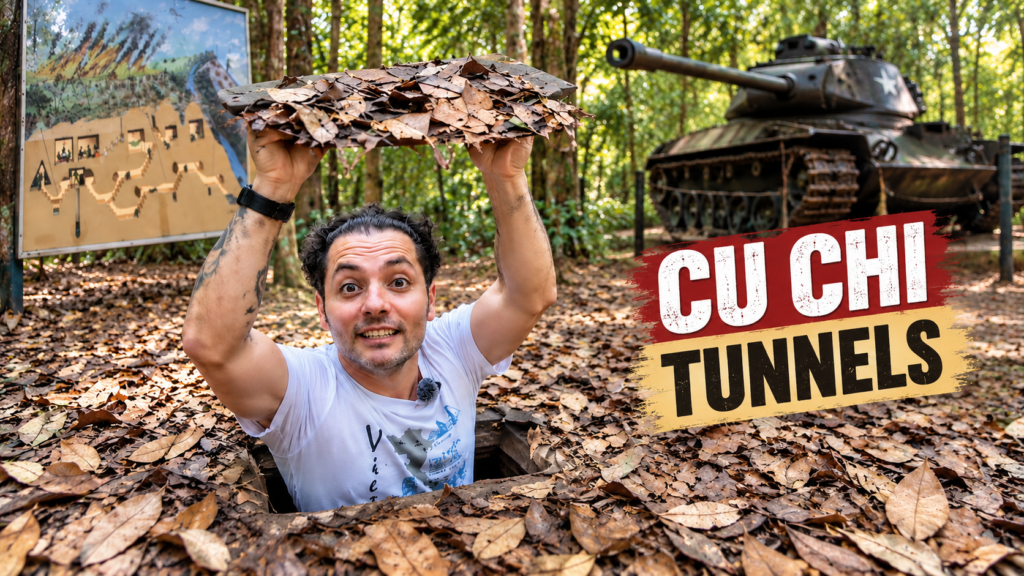
Taking a Cu Chi Tunnels tour is one of the most fascinating historical experiences you can have near Ho Chi Minh City, Vietnam. Hidden beneath the countryside, this extensive network of underground passages played an important role during the Vietnam War and offers visitors a unique opportunity to learn about the country’s history.
During my visit to Ho Chi Minh City, I booked an organised afternoon tour to the Cu Chi Tunnels through GetYourGuide. The experience included hotel pickup, a comfortable group size and an excellent local guide who explained the history of the tunnels and how people lived and survived during the war.
One of the most memorable parts of my visit was actually going underground and crawling through a section of the tunnel system. I also learned about wartime traps, visited a traditional handicraft workshop and tasted cassava, a food that played an important role in people’s survival during the conflict.
In this guide, I’ll share my personal experience visiting the Cu Chi Tunnels, what to expect during a tour, how to get there from Ho Chi Minh City, how much my excursion cost and practical tips to help you plan your own visit.
Cu Chi Tunnels: Quick Travel Guide
| Information | Details |
|---|---|
| Location | Cu Chi area, northwest of Ho Chi Minh City |
| Distance | Approximately 50–70 km from the city centre, depending on the site |
| Travel time | Around 1.5–2.5 hours each way, depending on traffic |
| Recommended duration | Half-day excursion or longer |
| Main attractions | Underground tunnels, hidden entrances, wartime exhibits and historical demonstrations |
| My tour | Organised afternoon tour through GetYourGuide |
| My tour price | £18 per person |
| Best for | History enthusiasts and travellers looking for a different experience near Ho Chi Minh City |
What Are the Cu Chi Tunnels?
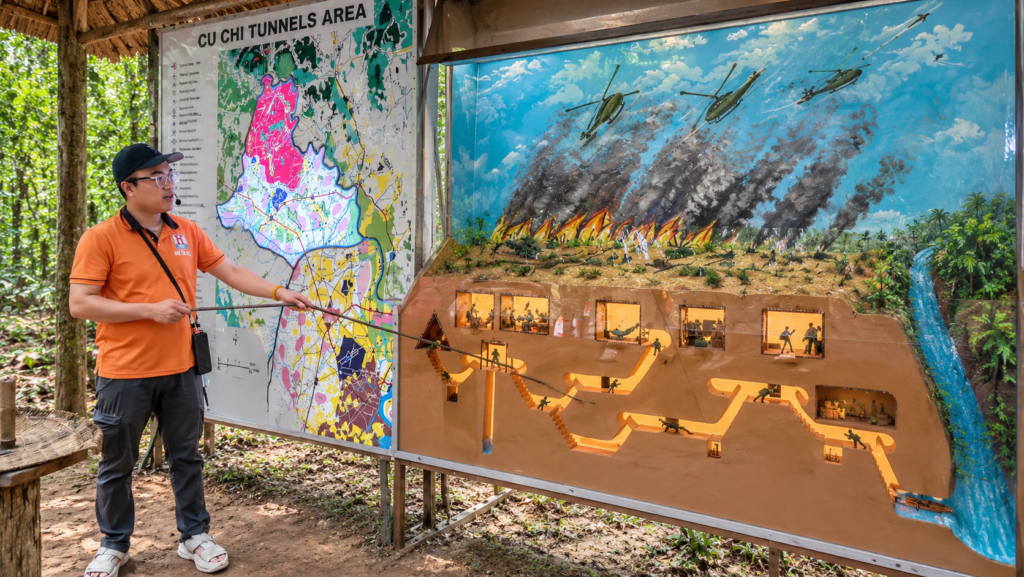
The Cu Chi Tunnels are an extensive underground network developed over several decades, beginning during Vietnam’s struggle against French colonial rule and expanding significantly during the Vietnam War.
The tunnels were used by Vietnamese resistance forces, particularly the Viet Cong, for shelter, communication, transportation, storage and military operations.
But these tunnels were much more than simple underground passageways.
The network included living areas, kitchens, storage spaces, medical facilities and meeting rooms. Some sections were constructed at different depths, with cleverly concealed entrances and ventilation systems.
At its greatest extent, the wider tunnel network stretched for more than 200 kilometres, although only selected sections can be explored by visitors today.
What makes the Cu Chi Tunnels particularly interesting is the amount of planning and effort involved in constructing such a complicated underground system.
Today, the tunnels are an important historical attraction where visitors can learn about the Vietnam War and gain a better understanding of the difficult conditions people experienced during the conflict.
My Cu Chi Tunnels Tour from Ho Chi Minh City
Booking My Afternoon Tour Through GetYourGuide
While staying in Ho Chi Minh City, I decided to visit the Cu Chi Tunnels on an organised tour rather than arrange the journey independently.
I booked my excursion through GetYourGuide, where I found different departure times and tour options.
There were morning and afternoon departures available, but I chose the afternoon tour because it suited my schedule better.
My hotel pickup was around 12:00–12:30 PM, so I had the morning free before heading out.
At the time of my visit, I paid £18 per person.
One of the biggest advantages was the convenience. The tour included hotel pickup and return transportation, meaning I didn’t have to worry about finding public transport or arranging a private driver.
The group size was comfortable, and our tour guide was excellent.
Throughout the excursion, the guide shared interesting information about the Vietnam War, explained how the tunnel network worked and demonstrated some of the techniques used during the conflict.
For me, having a knowledgeable local guide made the experience much more meaningful.
The Journey from Ho Chi Minh City

After being picked up from my hotel, we travelled by van away from the busy streets of Ho Chi Minh City towards the Cu Chi area.
The journey offered a different perspective on southern Vietnam.
As we left the city behind, the surroundings gradually changed, and we could see more of the countryside.
The journey to the Cu Chi Tunnels generally takes around one and a half to two and a half hours, depending on traffic, the pickup location and which tunnel site you’re visiting.
Travelling with an organised group meant I could relax and enjoy the journey while our guide introduced us to the history of the area.
Visiting a Traditional Handicraft Workshop

One of the stops on our way to the Cu Chi Tunnels was a traditional handicraft workshop.
Here, we watched artisans creating decorative artwork using different materials and traditional techniques.
It was interesting to see the amount of patience and attention to detail involved in making these pieces.
We also had an opportunity to look around the workshop and see the finished artwork.
Although the main purpose of the excursion was to visit the tunnels, I enjoyed this additional stop because it offered a glimpse into local craftsmanship.
Not every Cu Chi Tunnels tour includes a handicraft workshop, so it’s worth checking the itinerary before booking.
Exploring the Cu Chi Tunnels: What You Can Expect
After arriving at the Cu Chi Tunnels, we began exploring the historical site with our guide.
One thing that struck me was how peaceful the surroundings appeared.
Looking at the trees and greenery today, it’s difficult to imagine the intensity of the conflict that once took place in this area.
As we walked through the site, our guide explained the history of the tunnel system and showed us different features that helped people survive underground.
1. Learning About the History of the Tunnels
Before exploring the underground passages, we learned about the history of the Cu Chi area and its role during the Vietnam War.
Our guide explained how the tunnels were developed and used by Vietnamese guerrilla fighters.
The tour also included historical displays and film footage, which helped provide context for what we were about to see.
One of the most interesting things was learning how the underground network connected different areas and supported activities such as communication, shelter and food preparation.
Understanding this history before entering the tunnels made the rest of the experience much more interesting.
2. Discovering the Hidden Tunnel Entrances
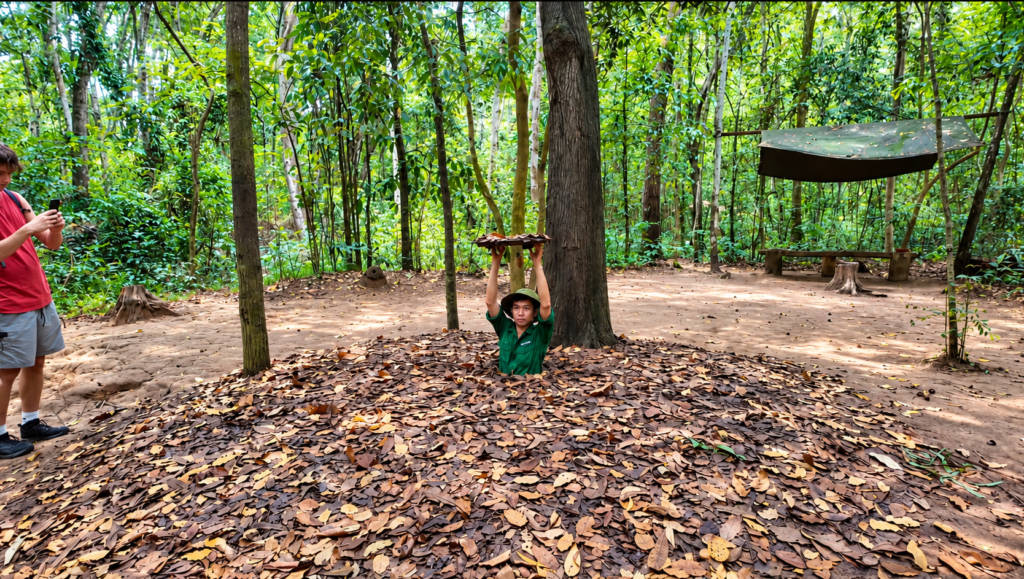
One of the first things that surprised me was how cleverly the tunnel entrances were concealed.
Some openings were extremely small and designed to blend into the surrounding ground.
Our guide demonstrated how entrances could be covered with wooden lids, soil and leaves, making them difficult to notice.
Seeing these entrances in person was fascinating.
From above ground, it was almost impossible to imagine the network of passages hidden underneath.
It helped me understand why concealment was such an important part of the tunnel system.
3. My Experience Going Inside the Cu Chi Tunnels
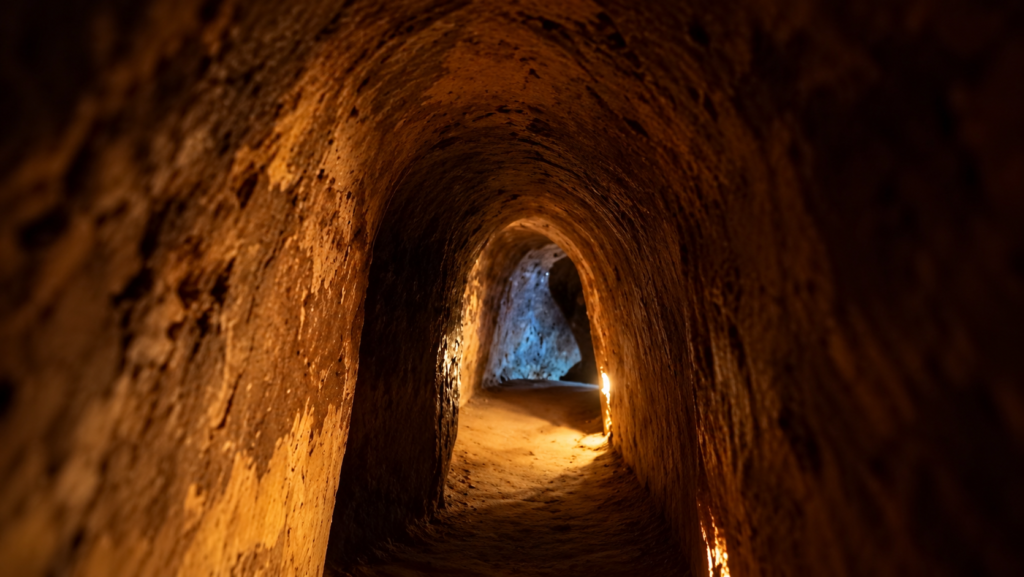
For me, one of the highlights of the entire excursion was actually going underground.
Rather than simply looking at the entrances and learning about the tunnels from above, I wanted to experience part of the underground network myself.
During the tour, I entered and crawled through a section of the tunnels.
Being inside was completely different from looking at photographs or watching documentaries.
The confined underground environment gave me a better understanding of how difficult it must have been for people who spent extended periods living and working beneath the ground.
I also remember the hot and humid conditions during my visit, which made me appreciate how physically demanding life in this environment could have been.
Of course, the sections open to tourists today are prepared for visitors, and some passages have been widened or modified to make them easier to explore.
A short tourist experience cannot fully recreate the conditions people faced during the war.
Nevertheless, going underground was one of the most memorable parts of my visit.
My tip: You don’t have to enter the tunnels if you feel uncomfortable in enclosed spaces. Visitors with claustrophobia, mobility difficulties or certain health conditions may prefer to explore the above-ground attractions instead.
4. Seeing the Wartime Traps and Defensive Systems
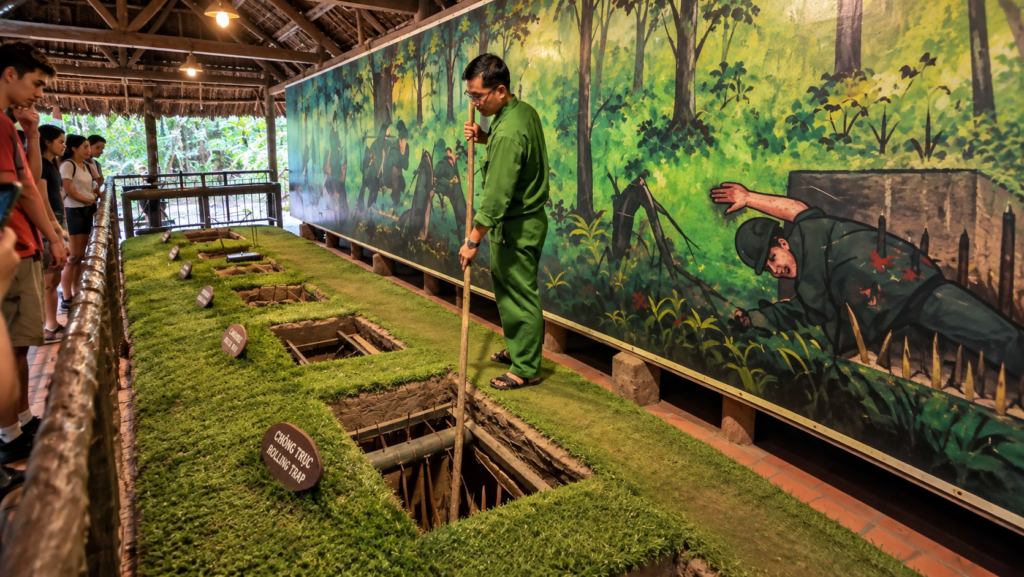
Another interesting part of the tour was learning about the defensive systems used during the Vietnam War.
Our guide showed us examples of concealed traps and explained how they worked.
Some of the designs were surprisingly simple but demonstrated how the surrounding environment was used during the conflict.
These displays also highlighted the dangerous conditions faced by soldiers and civilians.
Although the demonstrations were interesting from a historical perspective, it’s important to remember that the traps were designed to cause serious injuries.
For me, this part of the visit was another reminder of the harsh realities of war.
5. Exploring Military Equipment and Historical Exhibits
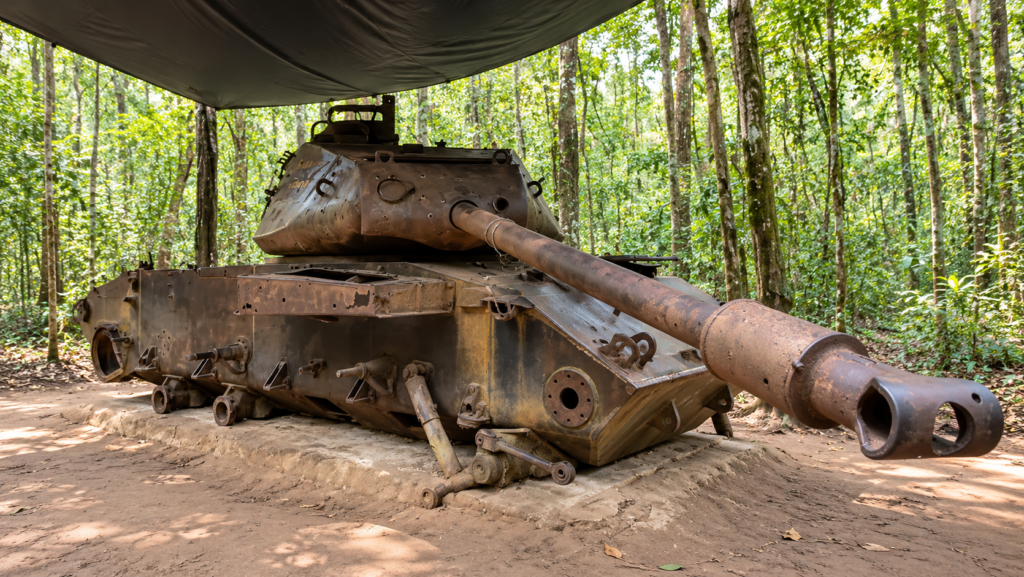
The Cu Chi Tunnels site also contains historical displays and military equipment associated with the conflict.
During my visit, I saw a tank displayed at the site, along with other exhibits illustrating aspects of the war.
These displays helped connect the underground tunnel network with the broader history of the conflict.
Our guide’s explanations were particularly valuable because they provided background information that wasn’t always obvious from simply looking at the exhibits.
If you’re interested in history, I recommend taking your time here rather than rushing through the displays.
6. Learning How People Lived Underground
One of the most thought-provoking parts of the excursion was learning about everyday life underground.
The tunnels weren’t used only for military movement.
They also provided shelter and contained areas for cooking, storing food, treating injured people and carrying out essential activities.
Our guide explained how people adapted to the difficult conditions and developed ways to survive while remaining concealed.
The underground kitchens were particularly interesting because cooking created smoke, which could reveal people’s locations.
Special ventilation and smoke-dispersal arrangements were used to reduce the risk of detection.
Learning about these details made me appreciate how much effort went into everyday survival.
7. Trying Cassava: A Traditional Wartime Food
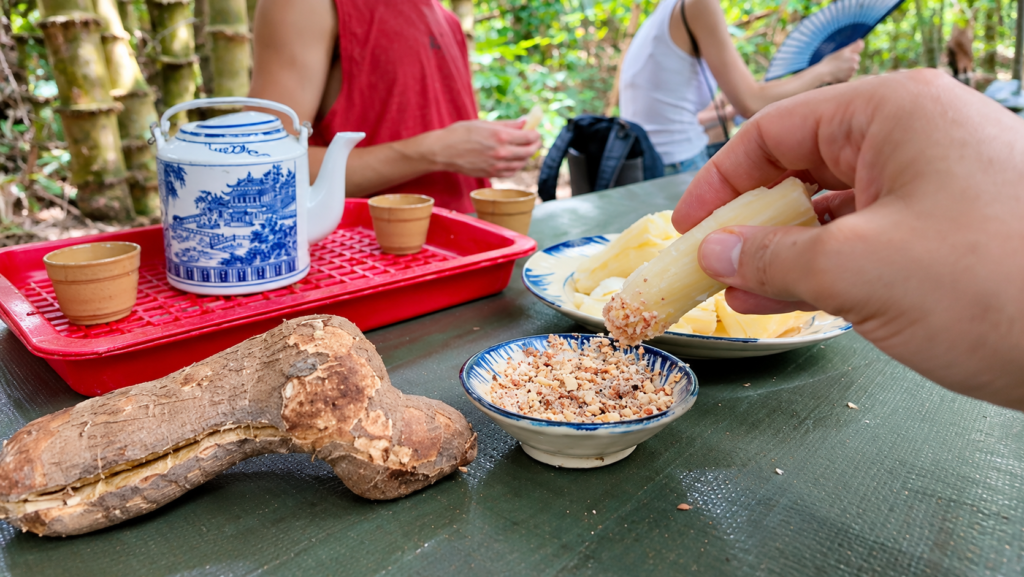
Another memorable part of my Cu Chi Tunnels tour was getting the opportunity to taste cassava.
Cassava is a starchy root vegetable that became an important food source for people living in the area during the war.
It was relatively easy to grow and provided much-needed energy during difficult times.
During our visit, I actually tried cassava myself.
It was a simple experience, but knowing its historical significance made it much more meaningful.
For me, tasting a food associated with everyday survival added another dimension to the excursion.
The visit wasn’t just about exploring tunnels and looking at military equipment. It was also about understanding how ordinary people managed to live through extremely difficult circumstances.
8. Optional Shooting Range
The Cu Chi Tunnels visitor experience also includes an optional shooting range where visitors can pay an additional fee to take part in supervised shooting activities.
This was listed as an optional activity on my GetYourGuide tour, rather than something included in the standard tour price.
You don’t need to participate in this activity to enjoy the historical site.
If you’re not interested, you can focus on the other attractions and follow your guide’s instructions about where to wait or continue exploring.
Ben Dinh vs Ben Duoc: Which Cu Chi Tunnels Should You Visit?
There are two main Cu Chi Tunnels visitor sites: Ben Dinh and Ben Duoc.
Both offer an introduction to the underground tunnel system, but the experiences are slightly different.
| Feature | Ben Dinh | Ben Duoc |
|---|---|---|
| Location | Closer to central Ho Chi Minh City | Farther from the city |
| Atmosphere | Often busier with tour groups | Often quieter |
| Tunnels | Some sections adapted for tourists | More preserved original sections |
| Best for | Convenient first-time visits | Visitors seeking a more extensive historical experience |
Ben Dinh Tunnels
Ben Dinh is a popular option for visitors booking organised excursions from Ho Chi Minh City.
Its location makes it convenient for shorter tours, and some tunnel sections have been adapted for tourists.
Ben Duoc Tunnels
Ben Duoc is generally considered a quieter alternative, with a larger historical area and more preserved tunnel sections.
It may appeal to visitors who want to spend additional time exploring the site.
My recommendation: Check which location your tour visits before booking. Both offer interesting experiences, but the travel time and atmosphere can differ.
How to Get to the Cu Chi Tunnels from Ho Chi Minh City
There are several ways to reach the Cu Chi Tunnels, depending on your budget and travel preferences.
Option 1: Book an Organised Guided Tour
This is the option I chose, and I found it very convenient.
An organised tour can include hotel pickup, return transportation, an English-speaking guide and a guided visit to the tunnels.
Some tours also include additional stops, such as handicraft workshops or food tasting.
For first-time visitors, I think this is one of the easiest ways to experience the Cu Chi Tunnels.
You don’t need to organise transportation yourself, and having a guide helps you understand the historical significance of the site.
Option 2: Hire a Private Driver
If you prefer more flexibility, you can arrange a private car or driver from Ho Chi Minh City.
This may be a good option for families, couples or small groups who want to travel at their own pace.
However, you’ll still need to arrange entrance tickets and consider whether you want a guide at the site.
Option 3: Travel by Public Transport
It is also possible to reach the Cu Chi area using public transport.
However, this usually requires more planning and may involve transfers or additional transportation to the visitor site.
If you have limited time in Ho Chi Minh City, an organised tour is generally the more convenient choice.
How Much Does a Cu Chi Tunnels Tour Cost?
When I visited the Cu Chi Tunnels, I booked my afternoon tour through GetYourGuide and paid £18 per person.
The tour included hotel pickup, return transportation, a local guide and the guided historical experience.
When I checked GetYourGuide again in October 2026, the tour was being advertised from approximately £12 per person.
However, prices can change depending on the travel date, departure time, group size and what is included in the booking.
Considering the transportation, historical explanations and time spent exploring the tunnels, I felt my tour offered good value for money.
Before booking, I recommend checking whether entrance fees, hotel pickup and other activities are included.
My tip: Don’t choose a tour based only on the lowest advertised price. A knowledgeable guide and convenient transportation can make a big difference to your experience.
Morning or Afternoon Cu Chi Tunnels Tour: Which Is Better?
When booking a Cu Chi Tunnels tour, you’ll often find both morning and afternoon departures.
I personally chose the afternoon option, with hotel pickup around 12:00–12:30 PM.
This worked well for my schedule because I didn’t need to wake up early or rush to get ready.
Morning Tours
Morning tours can be a good choice if you prefer to start sightseeing early and return to Ho Chi Minh City with some of the day remaining.
Depending on the season, an earlier visit may also help you avoid some of the afternoon heat.
Afternoon Tours
Afternoon tours are convenient if you want a more relaxed morning or have other activities planned earlier in the day.
This was the option I chose, and I was happy with my experience.
My recommendation: Both options can work well. Choose the departure time that best fits your itinerary, and remember to allow for traffic when planning other activities.
What to Wear and Bring to the Cu Chi Tunnels
The Cu Chi area can be hot and humid, and much of the experience involves walking outdoors.
Based on my visit, I recommend wearing comfortable, lightweight clothing and suitable walking shoes.
Here are a few things worth bringing:
- Comfortable trainers or walking shoes.
- Lightweight, breathable clothing.
- Drinking water.
- Sunscreen and a hat.
- Insect repellent.
- Some cash for optional activities or purchases.
- A camera or phone for photographs.
If you plan to go underground, avoid restrictive clothing or anything you wouldn’t want to get dusty.
My tip: Don’t underestimate the humidity. Even if you’re used to walking around Ho Chi Minh City, exploring an outdoor historical site and entering underground passages can feel quite different.
Is It Safe to Go Inside the Cu Chi Tunnels?
The sections of the Cu Chi Tunnels open to tourists are managed for visitors, and some passages have been modified to make access easier.
However, the underground experience can still be physically demanding.
The passages may be narrow and low, requiring visitors to crouch or crawl.
If you have claustrophobia, mobility difficulties, significant back or knee problems, or another condition that makes confined spaces difficult, you may prefer to skip the underground section.
You can still learn about the tunnels through the entrances, historical demonstrations and above-ground exhibits.
My recommendation: Don’t feel pressured to enter the tunnels. It’s an optional part of the experience, and there’s still plenty to see and learn above ground.
Is a Cu Chi Tunnels Tour Worth It?
In my opinion, absolutely.
Visiting the Cu Chi Tunnels was one of the most interesting historical experiences of my time in Vietnam.
Before visiting, I knew the tunnels were connected with the Vietnam War, but seeing the site in person gave me a much better understanding of their significance.
The concealed entrances, underground passages, defensive systems and historical exhibits were all fascinating.
Actually crawling through a section of the tunnels was particularly memorable.
I also appreciated the opportunity to learn about everyday life during the war, including the importance of food such as cassava.
The organised tour made everything straightforward, and our guide’s explanations added a lot to the experience.
Of course, the Cu Chi Tunnels are connected with a devastating period of history, and some of the displays can be confronting.
I think it’s important to approach the site with respect for the people who experienced the conflict.
For me, the visit was both educational and memorable.
Frequently Asked Questions About the Cu Chi Tunnels
How far are the Cu Chi Tunnels from Ho Chi Minh City?
The main visitor sites are approximately 50–70 kilometres from central Ho Chi Minh City, depending on which location you visit.
How long does a Cu Chi Tunnels tour take?
Many organised excursions take approximately five to seven hours, including transportation. Some tours may take longer depending on the itinerary and traffic conditions.
Can you go inside the Cu Chi Tunnels?
Yes. Visitors can enter selected underground passages, although this activity is optional and may not be suitable for everyone.
Are the Cu Chi Tunnels suitable for children?
Families can visit the historical site, but some exhibits may be disturbing for younger children. The underground passages may also be unsuitable for some children because of their confined dimensions.
Do you need a guide to visit the Cu Chi Tunnels?
You can arrange an independent visit, but I recommend having a knowledgeable guide. Understanding the historical background makes the experience much more meaningful.
Is a morning or afternoon tour better?
Both options can work well. Morning tours are useful if you want to return earlier in the day, while afternoon tours are convenient if you prefer a relaxed morning. I chose the afternoon tour and enjoyed the experience.
How much did I pay for my Cu Chi Tunnels tour?
I paid £18 per person for my organised afternoon tour through GetYourGuide. When I checked again in October 2026, the advertised starting price was around £12 per person, although prices and inclusions can change.
Can you visit the Cu Chi Tunnels in one day?
Yes. The Cu Chi Tunnels are a popular excursion from Ho Chi Minh City and can easily fit into a day of sightseeing.
Final Thoughts: Are the Cu Chi Tunnels Worth Visiting?
Visiting the Cu Chi Tunnels was one of the most memorable experiences of my time in Ho Chi Minh City.
What impressed me most wasn’t simply the size of the underground network, but the stories behind it and the extraordinary circumstances in which people used these tunnels.
From seeing the cleverly concealed entrances to exploring part of the underground passages myself, the visit gave me a perspective I couldn’t have gained from photographs or documentaries alone.
Trying cassava, learning about everyday survival and listening to our guide’s explanations made the experience even more meaningful.
Booking an organised afternoon tour through GetYourGuide also made the trip straightforward. The hotel pickup, comfortable group size and excellent guide allowed me to focus on enjoying and learning from the experience.
If you’re planning a trip to Ho Chi Minh City, I definitely recommend considering a visit to the Cu Chi Tunnels.
It’s an opportunity to discover an important part of Vietnam’s history while experiencing something very different from the busy streets of the city.
For more travel information and inspiration, visit the official Vietnam Tourism website before planning your trip.
Have you visited the Cu Chi Tunnels, or would you like to explore them on your next trip to Vietnam? Share your thoughts in the comments!