
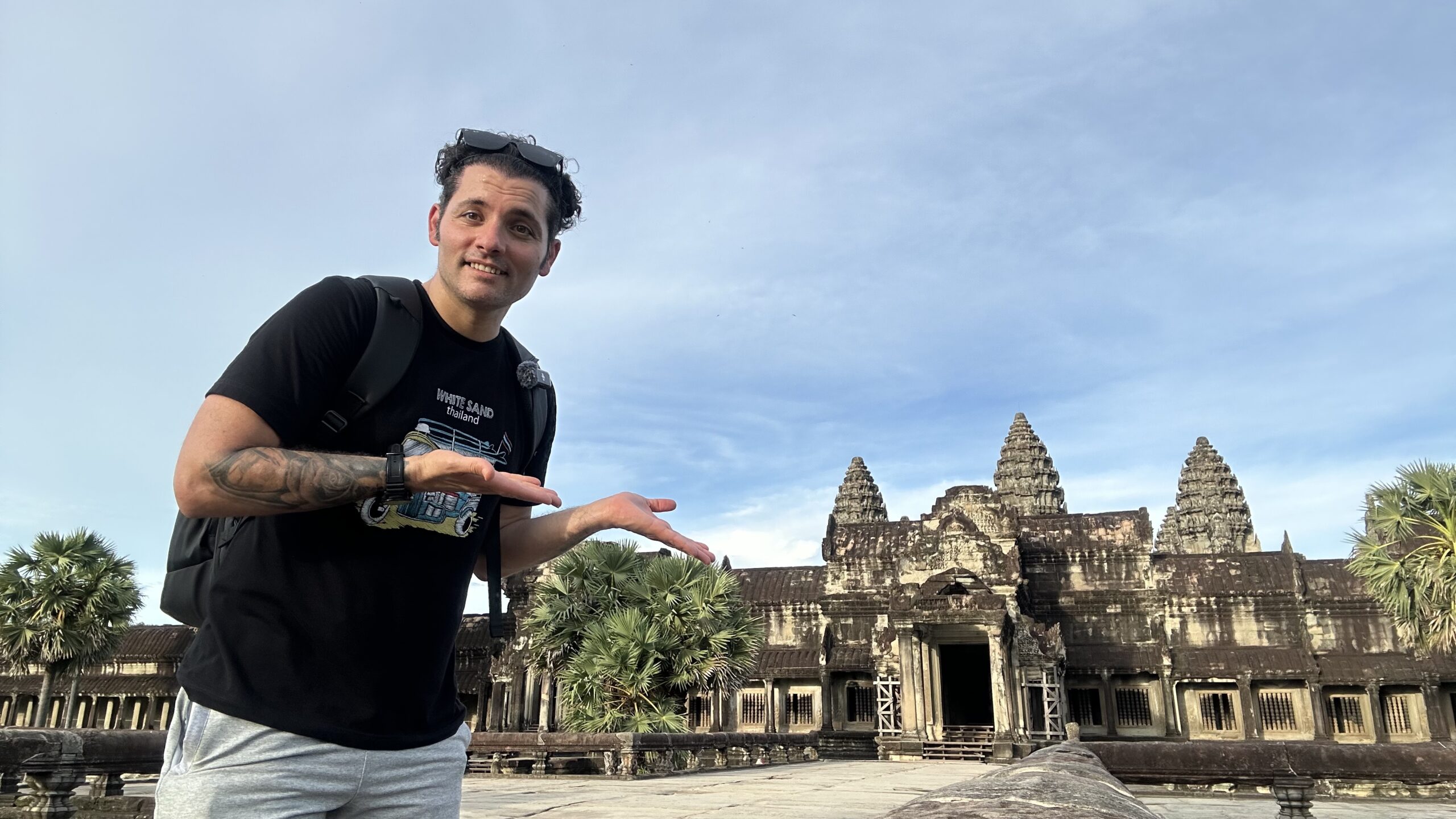
Angkor Wat Cambodia is one of the most incredible places I’ve visited in Southeast Asia. Located near Siem Reap, this enormous temple complex is famous for its ancient architecture, detailed stone carvings, and remarkable history. In this guide, I’ll share everything you need to know before visiting Angkor Wat, including how to get there, ticket prices, the best time to visit, what to see, how much time you need, and practical tips to help you plan your visit.
How to Get to Angkor Wat, Cambodia
Angkor Wat is located just outside Siem Reap, the main base for visiting the Angkor Archaeological Park. From central Siem Reap, the temple is around 6–7 km away. It usually takes about 15–20 minutes to reach. Tuk-tuks are one of the easiest and most popular options. You can hire a driver for a single trip, several hours, or the entire day if you want to explore several temples. If you rent a motorbike or scooter in Siem Reap, you can also ride to Angkor Wat yourself. This gives you more freedom to explore the temple complex at your own pace. Cars and organised tours are also available if you prefer a more comfortable or guided experience.
Angkor Wat Tickets & Entrance Fees
To visit Angkor Wat and the temples within Angkor Archaeological Park, you need an Angkor Pass. The current ticket prices are US$37 for a 1-day pass, US$62 for a 3-day pass, and US$72 for a 7-day pass. You can use the 3-day pass within a 7-day period. You can use the 7-day pass within 30 days. If Angkor Wat is your main priority, a 1-day pass can be enough. However, spending two or three days gives you more time to explore other incredible temples around the park, including Bayon and Ta Prohm.
You can buy your pass online through the official Angkor Enterprise website or use their mobile app. Alternatively, purchase it from an official ticket counter in Siem Reap. You can show your digital ticket on your phone, so there’s no need to print it. I recommend buying only through official Angkor Enterprise channels rather than unofficial ticket websites.
Best Time to Visit Angkor Wat Cambodia
The best time to visit Angkor Wat is during Cambodia’s dry season, from November to February. Temperatures are more comfortable, and there is less rainfall. This is also the busiest period, so expect more visitors, especially around sunrise. March to May can be extremely hot. The rainy season runs from June to October, bringing more frequent showers, greener landscapes, and often fewer crowds. If you’re visiting during a hotter month, try to explore early in the morning and take a break during the hottest part of the afternoon.
For photography and a memorable first visit, sunrise is one of the most popular times to see Angkor Wat. However, you’ll need to arrive very early. The area in front of the reflecting pools can become crowded. If sunrise isn’t important to you, visiting a little later can make the experience more relaxed.
Angkor Wat Cambodia Opening Hours & Sunrise
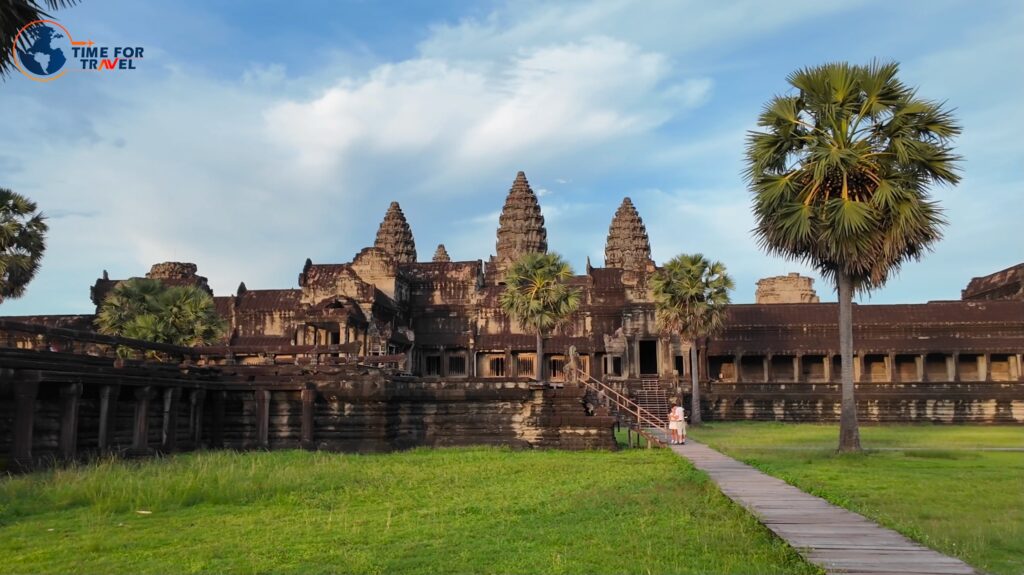
Angkor Wat is currently open daily from 5:00 AM to 5:30 PM. If you want to experience sunrise, plan to arrive close to opening time so you have enough time to enter the complex and find a good viewing spot before the sun comes up. The reflecting pools in front of the temple are among the most popular places to watch and photograph the sunrise, so this area can become crowded early in the morning. When I visited, staff started letting visitors know around 5:30 PM that it was time to leave the temple area.
Remember that opening hours can vary between temples within the wider Angkor Archaeological Park. If you’re planning to visit several temples on the same day, check the current opening times when planning your route.
What to See at Angkor Wat
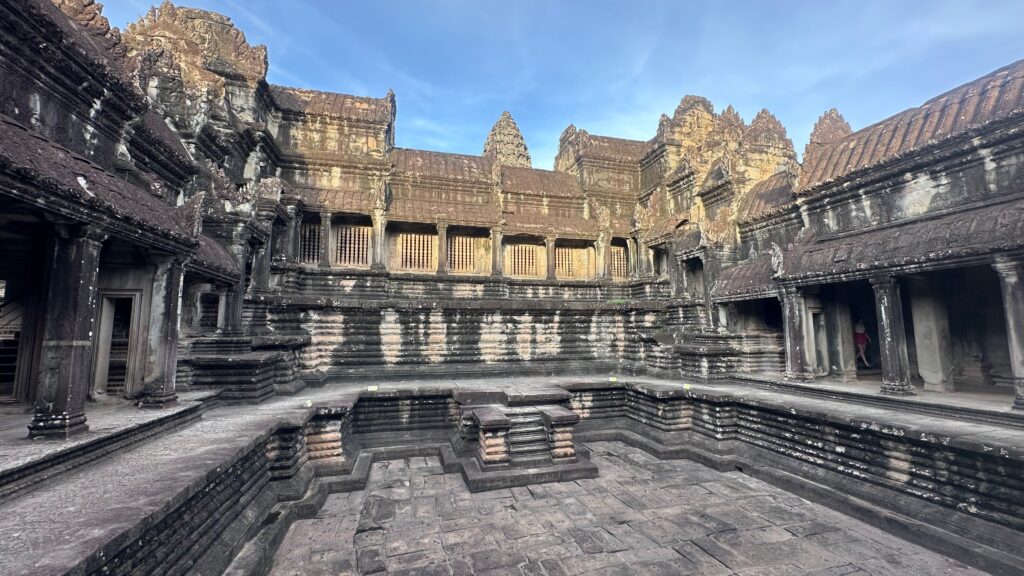
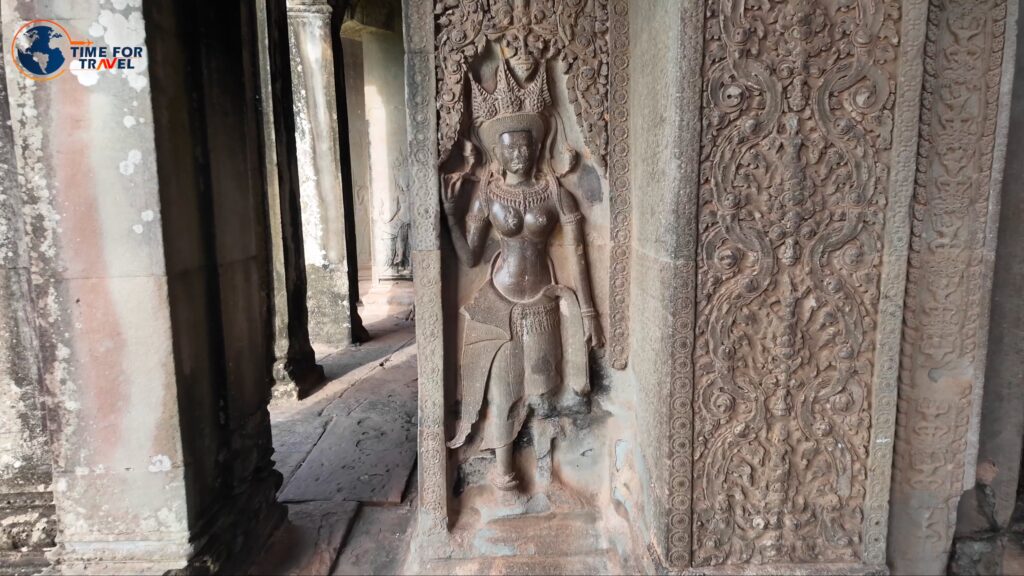
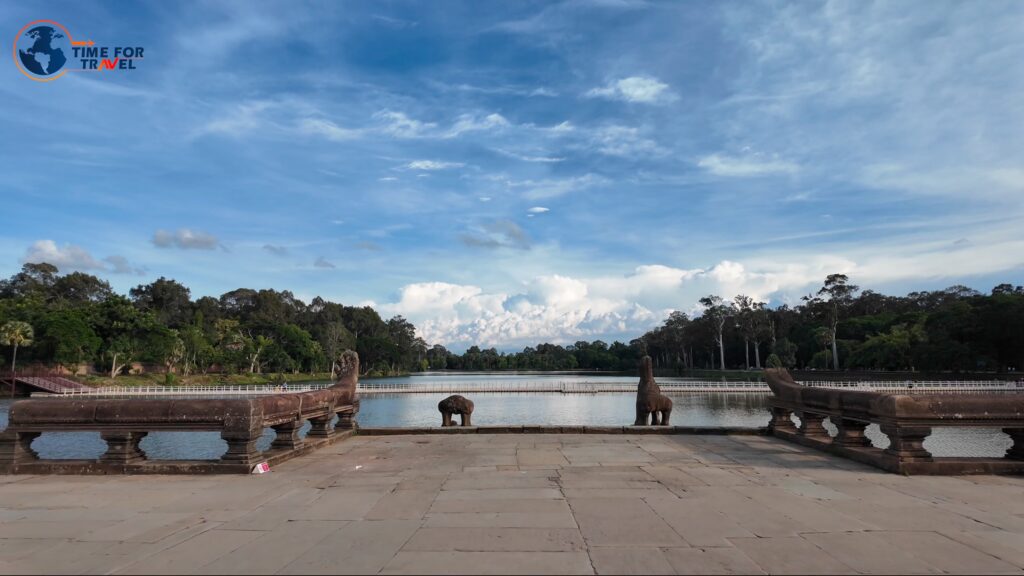
Once you enter Angkor Wat, take your time to explore beyond the famous view of the five towers. Walk across the long causeway toward the main temple. Explore the galleries, courtyards, corridors, and detailed stone carvings throughout the complex. Some of the most impressive features are the enormous bas-reliefs carved into the gallery walls. They depict scenes from Hindu mythology and historical battles.
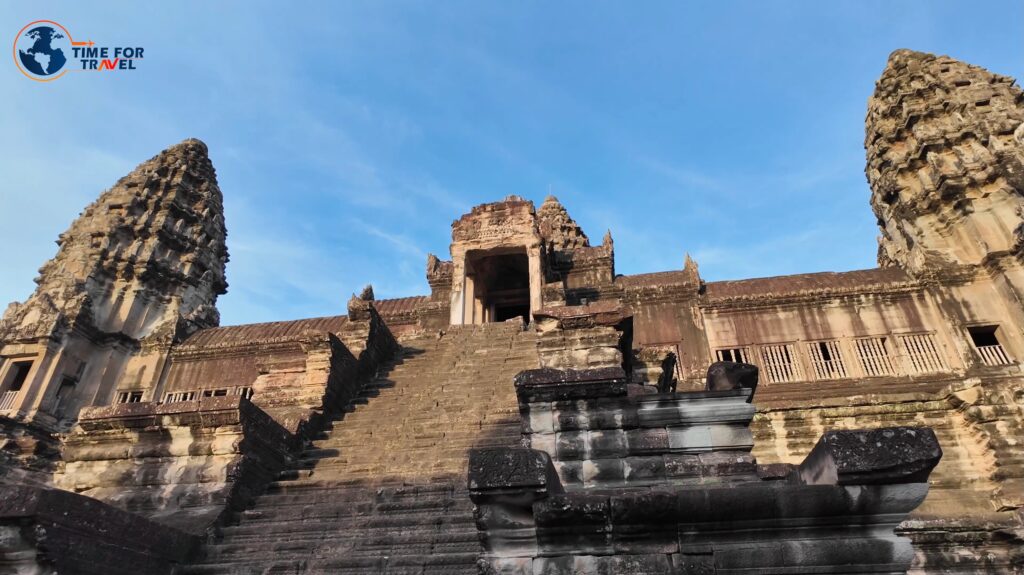
One of the highlights is the central sanctuary, where you can climb higher into the temple for impressive views across the complex. The steps are quite steep, and access can sometimes be restricted. During busy periods, you may need to wait before going up. Outside the main temple, spend some time around the reflecting pools. They offer one of the most iconic views of Angkor Wat, especially early in the morning.
Don’t rush through the site just to take a few photos. Take some time to walk around the quieter corners and look closely at the carvings. You’ll begin to appreciate the enormous scale and detail of the architecture. This is a big part of what makes Angkor Wat such an incredible place to visit.
A Brief History of Angkor Wat
Angkor Wat was built in the early 12th century during the reign of King Suryavarman II. At the time, the Khmer Empire was one of the most powerful civilisations in Southeast Asia. The temple was originally dedicated to the Hindu god Vishnu. Its enormous design represents Mount Meru, the sacred mountain at the centre of the universe in Hindu cosmology.
Over time, Angkor Wat gradually became a Buddhist temple, and Buddhist traditions continue there today. Unlike many other temples in the Angkor region, Angkor Wat was never completely abandoned. It continued to have religious significance for centuries.
Today, Angkor Wat is part of the Angkor UNESCO World Heritage Site and has become the national symbol of Cambodia. You can even see its distinctive towers on the Cambodian flag. Understanding a little of its history makes exploring the galleries, courtyards, and ancient carvings much more meaningful.
How Much Time Do You Need at Angkor Wat?
For Angkor Wat itself, I recommend allowing around 2–3 hours so you can explore the temple without rushing. This gives you enough time to walk across the causeway, explore the galleries and courtyards, see the detailed carvings, visit the central areas, and stop for photos around the reflecting pools.
If you’re planning to explore the wider Angkor Archaeological Park, I recommend giving yourself more than one day if possible because the site is enormous and there is much more to see than Angkor Wat itself. With a 3-day Angkor Pass, you can use your three visits within a 7-day period, so you don’t have to explore everything on consecutive days. One option is to spend your first day exploring independently and then return on another day with a local guide.
There are also many local tour guides available around Siem Reap and the Angkor area. You can arrange a guided visit and have someone explain the history, architecture, carvings, and stories behind the temples as you explore. I found that having a guide can help you notice historical details that are very easy to miss when walking around by yourself.
What to Wear at Angkor Wat
Angkor Wat is an active religious site, so visitors should dress respectfully. Your shoulders and knees should be covered, especially when entering temple areas and sacred spaces. Avoid very short shorts, short skirts, or clothing that exposes too much of the shoulders.
Cambodia can be extremely hot and humid, so I recommend wearing lightweight, breathable clothing while still respecting the dress code. Comfortable shoes are also important because you’ll be doing a lot of walking, climbing steps, and exploring uneven surfaces around the temple complex. A hat, sunglasses, and sunscreen are also useful, especially if you plan to spend most of the day exploring the Angkor Archaeological Park.
Other Temples to Visit Near Angkor Wat
Angkor Wat may be the most famous temple in the area, but it’s only one part of the enormous Angkor Archaeological Park. If you have enough time, I definitely recommend exploring some of the other temples nearby. Each one feels different and gives you a better idea of just how impressive the ancient Khmer Empire was.
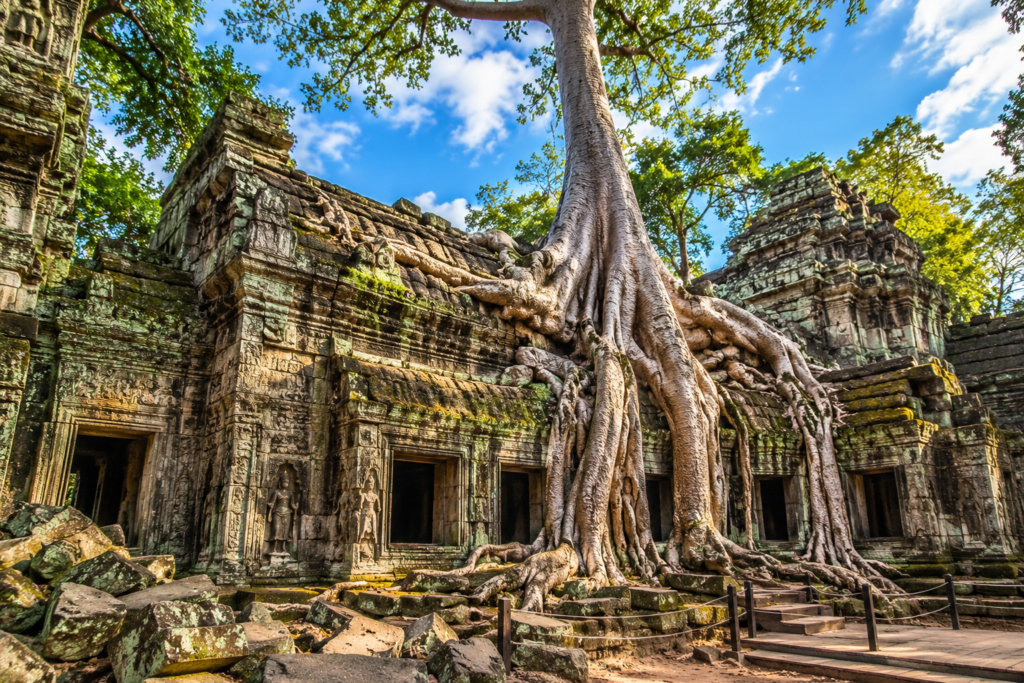
Bayon Temple, located inside Angkor Thom, is famous for its huge stone faces carved into its towers. Ta Prohm has a completely different atmosphere, with enormous tree roots growing over and around the ancient ruins. You can also explore Angkor Thom, the former royal city, including its impressive gates and other historic structures.
This is another reason why spending more than one day in the Angkor area can be worthwhile. Instead of rushing between temples, you can explore at a slower pace and spend more time at the places that interest you most.
Food, Water & Facilities at Angkor Wat
You can find small restaurants, cafés, food stalls, and drink vendors around the Angkor temple area, so it’s possible to buy meals, snacks, fresh fruit, coffee, and cold drinks during your visit. However, I recommend carrying your own bottle of water, especially because the heat and humidity can make a full day of exploring quite tiring.
Toilets are available at several locations around the Angkor Archaeological Park, and there are places where you can sit, eat, and take a break between temples. If you’re spending the whole day exploring, it’s a good idea to take regular breaks rather than trying to visit every temple without stopping.
I’d also recommend carrying some small US dollar notes or Cambodian riel for food, drinks, and other small purchases. Having water, sunscreen, and a few snacks with you can make a long day exploring the temples much more comfortable.
Practical Tips for Visiting Angkor Wat
Start your day as early as possible, especially if you want to see Angkor Wat at sunrise or avoid some of the midday heat. The temple complex is huge, so don’t try to rush through everything. Plan your route in advance and leave enough time to stop, rest, take photos, and properly explore the temples.
Bring plenty of water, sunscreen, a hat, and comfortable walking shoes. Keep your Angkor Pass accessible because you may need to show it at checkpoints when entering different areas of the archaeological park. It’s also a good idea to have some cash with you for drinks, food, tuk-tuks, and other small expenses.
If you’re exploring independently, consider hiring a local guide for at least part of your visit. Angkor is filled with carvings, symbols, stories, and architectural details that are easy to walk past without understanding their significance. And most importantly, remember that these temples are historic and religious sites — respect restricted areas, avoid touching or climbing on ancient structures where it isn’t permitted, and follow instructions from staff.
Is Angkor Wat Worth Visiting?
For me, Angkor Wat Cambodia is absolutely worth visiting and was one of the most memorable places I experienced in Southeast Asia. Seeing the enormous temple complex in person is completely different from seeing it in photos. The scale of the site, the ancient architecture, detailed carvings, and history behind it make the experience very special.
What impressed me most was that there is so much more to discover beyond the famous view of Angkor Wat. Once you start exploring the wider archaeological park, you realise just how enormous the ancient city and temple area really is. If you have enough time, I recommend spending more than one day here rather than trying to see everything quickly.
Whether you’re interested in history, architecture, photography, culture, or simply experiencing one of the world’s most famous landmarks, Angkor Wat is a place I would definitely recommend including in a trip to Cambodia. I would happily visit Angkor Wat again myself, because there is so much to explore that even after visiting, I feel there is still more to discover.
Final Tips for Visiting Angkor Wat
Visiting Angkor Wat Cambodia is much easier with a little planning before your trip. Buy your Angkor Pass through the official channels, start early, dress respectfully, bring plenty of water, and give yourself enough time to explore without rushing. If possible, spend more than one day in the Angkor Archaeological Park so you can experience both Angkor Wat and some of the other incredible temples nearby.
Most importantly, take your time and enjoy the experience. Angkor Wat isn’t just somewhere to take a few photos and move on — its history, architecture, atmosphere, and enormous scale are what make it such a remarkable place. It remains one of my favourite experiences in Cambodia, and it’s somewhere I would happily visit again.