
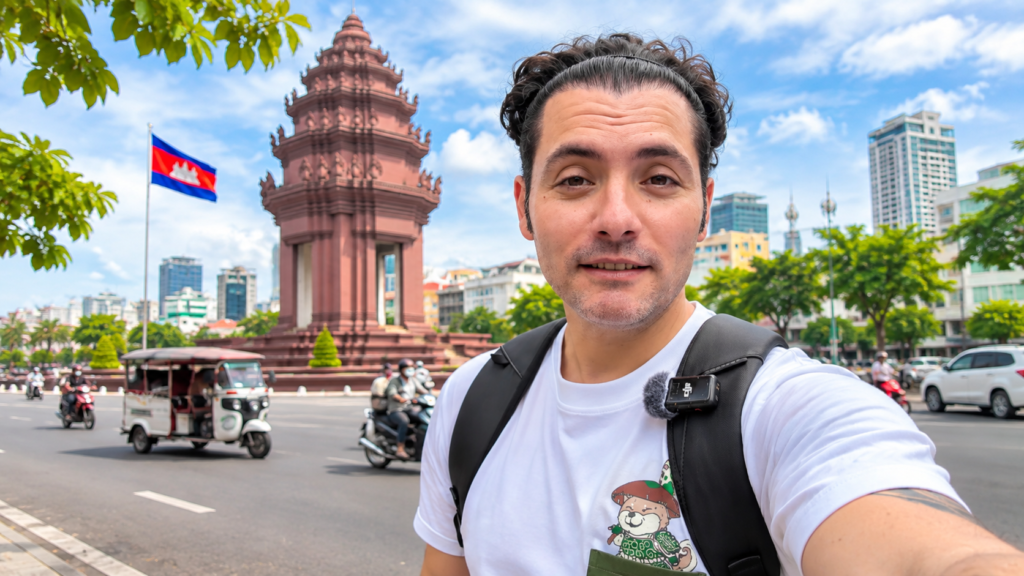
When I decided to visit Cambodia, I was particularly excited about seeing the famous temples of Angkor Wat. But before heading to Siem Reap, I wanted to spend some time exploring Phnom Penh, the country’s capital.
To be honest, I wasn’t entirely sure what to expect.
I had heard about Cambodia’s difficult history, its busy streets, and its growing tourism industry, but I knew very little about what everyday life in Phnom Penh actually looked like.
After spending two days walking through the city, visiting local markets, trying different foods, and discovering some of its most important historical places, I realised Phnom Penh was more interesting than I had expected.
What surprised me most wasn’t a particular attraction. It was the contrast between different parts of the city: modern buildings and older neighbourhoods, expensive cars and traditional tuk-tuks, lively streets and places that reveal Cambodia’s painful past.
This is my personal experience of discovering Phnom Penh for the first time.
My First Morning in Phnom Penh
I arrived in Phnom Penh the previous evening and had booked a hotel for three nights.
The following morning, I stepped outside, ready to explore the city on foot.
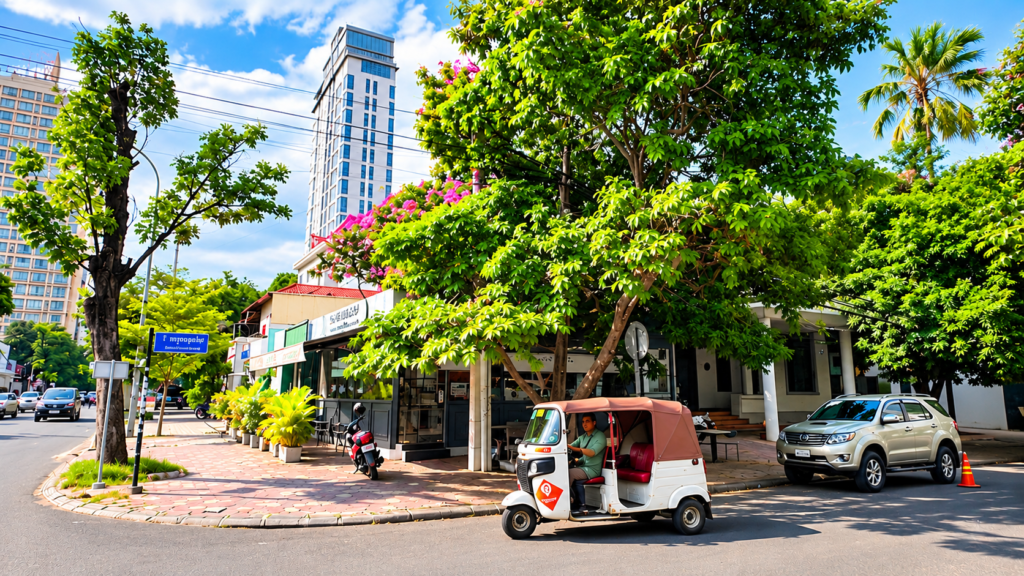
My hotel was in a convenient location, not too far from the riverside, and I was pleasantly surprised by the surrounding area. The streets looked relatively clean and well maintained, with trees, restaurants, cafés, and a mixture of modern and older buildings.
One of the first things I noticed was the number of tuk-tuks.
They were everywhere!
Outside hotels, along busy streets, and waiting at junctions, tuk-tuk drivers seemed ready to take passengers almost anywhere.
I even came across a driver who recognised me from the previous evening. He greeted me and offered to help if I needed transport.
It was a friendly start to my first full day in Cambodia.
Before properly exploring, though, I had a small mission: finding a local SIM card.
It sounds simple, but finding somewhere to buy one turned into an unexpected walk through several streets and shops.
And that’s one of the things I enjoy about independent travel. Sometimes, the most ordinary tasks lead you to places you wouldn’t otherwise discover.
A City of Contrasts: My First Impressions
As I continued walking, I began noticing something interesting about Phnom Penh.
The atmosphere could change dramatically within just a few streets.
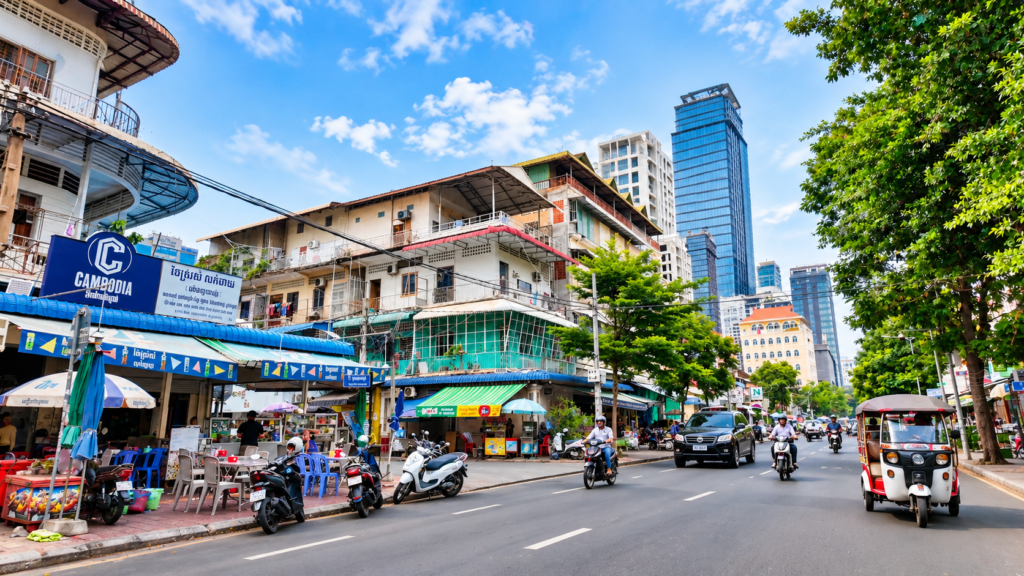
In some neighbourhoods, I saw modern buildings, attractive cafés, expensive vehicles, and businesses that wouldn’t look out of place in other major Asian cities.
But a short walk away, the surroundings could be completely different.
There were older buildings, small family-run shops, street vendors, and people selling everyday products along the pavements.
The traffic was another experience altogether.
Motorbikes moved between cars, tuk-tuks travelled in every direction, and crossing some roads required a little patience.
I also noticed the contrast between expensive cars and much more modest vehicles.
Seeing luxury cars alongside older motorbikes and tuk-tuks made me curious about the economic differences within the city.
Of course, spending two days somewhere doesn’t make you an expert on local life, but these small observations are part of what makes travelling so interesting to me.
Rather than visiting only famous attractions, I enjoy walking through ordinary neighbourhoods and seeing how people live.
Phnom Penh offered plenty of opportunities to do exactly that.
Exploring the Riverside and Royal Palace Area
One of the places I particularly wanted to explore was Phnom Penh’s riverside.
I have always enjoyed walking beside rivers when visiting new cities. There’s something about the open space, passing boats, and the mixture of local people and visitors that makes these areas interesting.
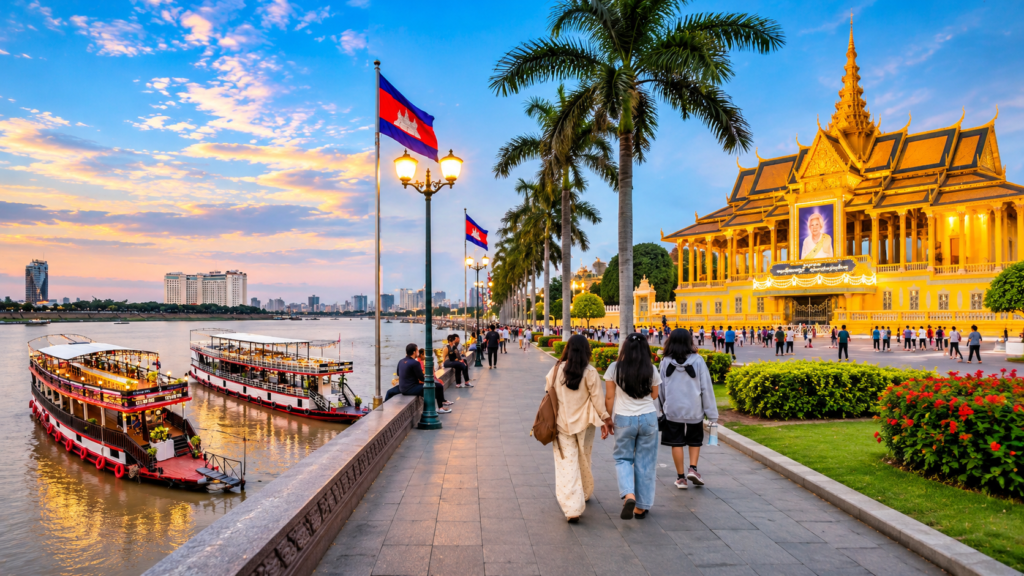
Phnom Penh’s riverside had a lively atmosphere.
I came across restaurants, cafés, bars, hotels, and budget accommodation catering to different types of travellers.
There were also quieter areas where people could simply enjoy the surroundings.
As I continued exploring, I reached the Royal Palace area.
One of the buildings that caught my attention was the Moonlight Pavilion, an elegant structure with traditional Khmer architecture.
The Royal Palace complex is one of the city’s most recognisable landmarks, and even seeing parts of it from outside gave me a glimpse of Cambodia’s royal heritage.
Unfortunately, the weather had other plans for my walk.
Dark clouds began gathering, and before long, the rain arrived.
The streets quickly changed. People looked for shelter, and some of the open areas became noticeably quieter.
That’s something I’ve experienced many times while travelling around Southeast Asia.
You can start your day under bright sunshine and suddenly find yourself caught in a tropical downpour.
But that’s all part of the experience!
Everyday Life, Street Food and Local Flavours
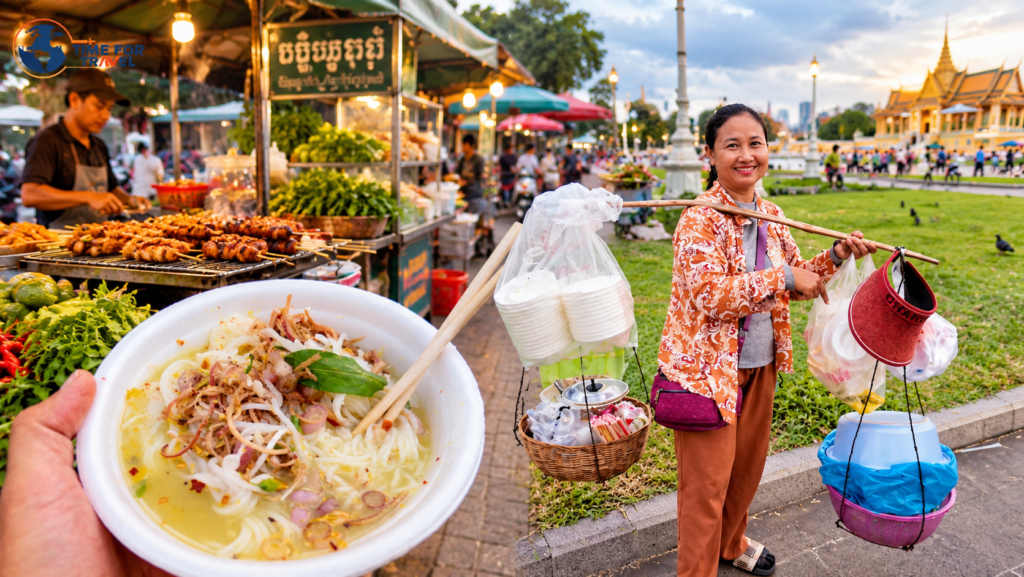
One of my favourite things about travelling is discovering local food.
I don’t necessarily look for expensive restaurants or famous dining spots. Sometimes, I’m more interested in the small places where local people stop for a quick meal.
Phnom Penh had plenty of those.
As I walked through the streets, I noticed food vendors preparing different dishes, including noodles, grilled meats, fish, and other local specialities.
The smells, sounds, and activity around these small businesses added another dimension to the city.
During my exploration, I tried a noodle dish with fresh ingredients and a flavourful sauce.
It was an enjoyable meal, although eating noodles with chopsticks was another little challenge!
I also stopped for a cold passion fruit drink during my second day.
With the warm and humid weather, it was particularly refreshing.
Something else I noticed was the use of US dollars alongside Cambodia’s local currency, the riel.
In shops and markets, prices were sometimes quoted in dollars, which initially felt unusual for a country in Southeast Asia.
It was another small detail that made Cambodia different from some of the other destinations I had visited.
For me, these everyday experiences are just as important as sightseeing.
They help me understand the atmosphere of a place beyond its famous landmarks.
Visiting Tuol Sleng: Cambodia’s Painful History
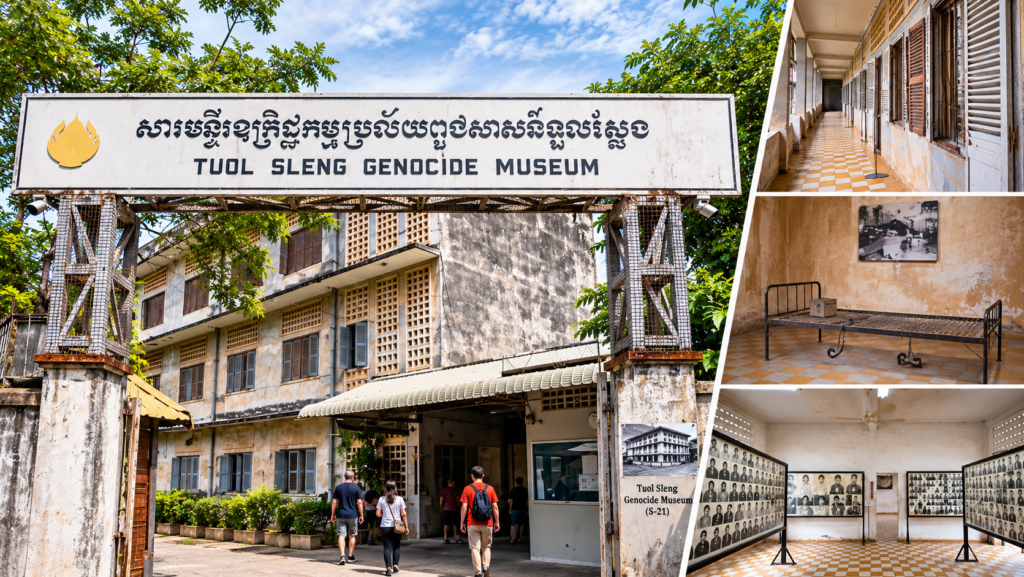
My second day in Phnom Penh took a more serious turn when I visited the Tuol Sleng Genocide Museum.
This was one of the most important places I wanted to see during my time in the capital.
From the outside, parts of the complex still resemble an ordinary school.
And that’s exactly what the buildings once were.
Before the Khmer Rouge took power in 1975, the site was a secondary school. It was later transformed into Security Prison 21, commonly known as S-21.
During the Khmer Rouge regime, thousands of people were imprisoned, interrogated, and tortured here.
Walking through the former classrooms and detention areas was a completely different experience from exploring Phnom Penh’s lively streets.
The buildings themselves tell part of the story, but understanding what happened inside them makes the visit much more disturbing.
Between 1975 and 1979, Cambodia suffered enormously under the Khmer Rouge. An estimated 1.5 to 2 million people died through executions, starvation, disease, and forced labour.
It’s difficult to imagine the scale of that suffering.
What struck me was how a place originally built for education had been transformed into somewhere associated with fear and violence.
Visiting Tuol Sleng was a reminder that travelling isn’t always about beautiful scenery, exciting activities, or trying new food.
Sometimes, it’s also about confronting difficult history.
I believe places like this are important because they help visitors understand what a country and its people have experienced.
After leaving the museum, I continued exploring Phnom Penh, but the visit had added a different perspective to everything I was seeing.
Behind the busy streets and everyday routines lies a history that is still relatively recent.
If you’re planning to visit, you can learn more about the museum and its history on the official Tuol Sleng Genocide Museum website.
A Rainy Tuk-Tuk Ride Through Phnom Penh
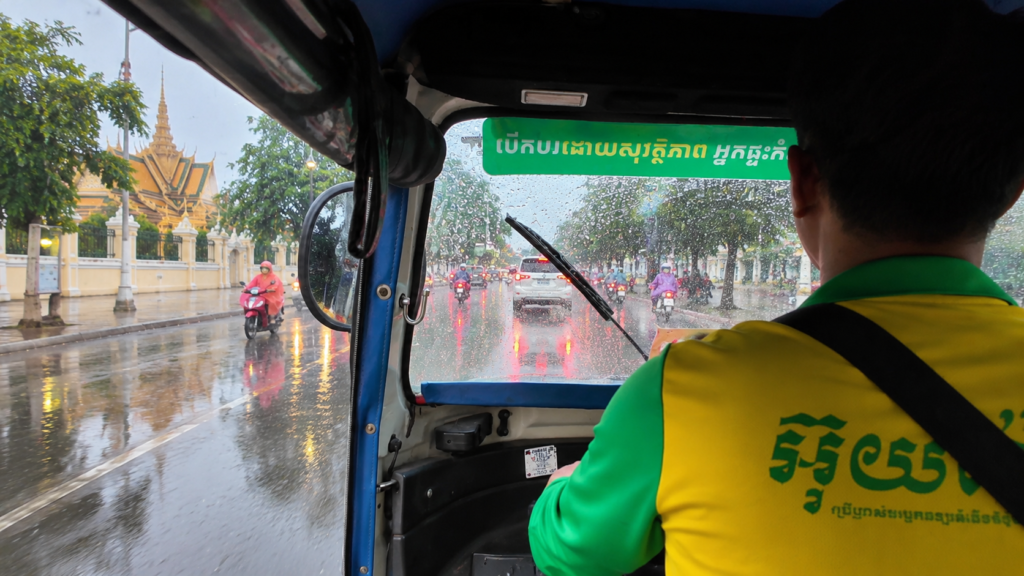
After visiting Tuol Sleng, I decided to continue towards one of Phnom Penh’s main markets.
Rather than walking the entire distance, I took a tuk-tuk.
Travelling by tuk-tuk is one of the most familiar experiences in Cambodia, and it’s a convenient way to move around the city.
You get to see the streets, traffic, shops, and everyday activity as you travel.
During my journey, it started raining again.
Fortunately, the tuk-tuk provided some shelter, although the rain made the journey feel quite different.
Watching the busy streets through the rain was another memorable part of my time in Phnom Penh.
It wasn’t anything extraordinary, but these small, unexpected moments often become part of the memories I take home from a trip.
Discovering Central Market
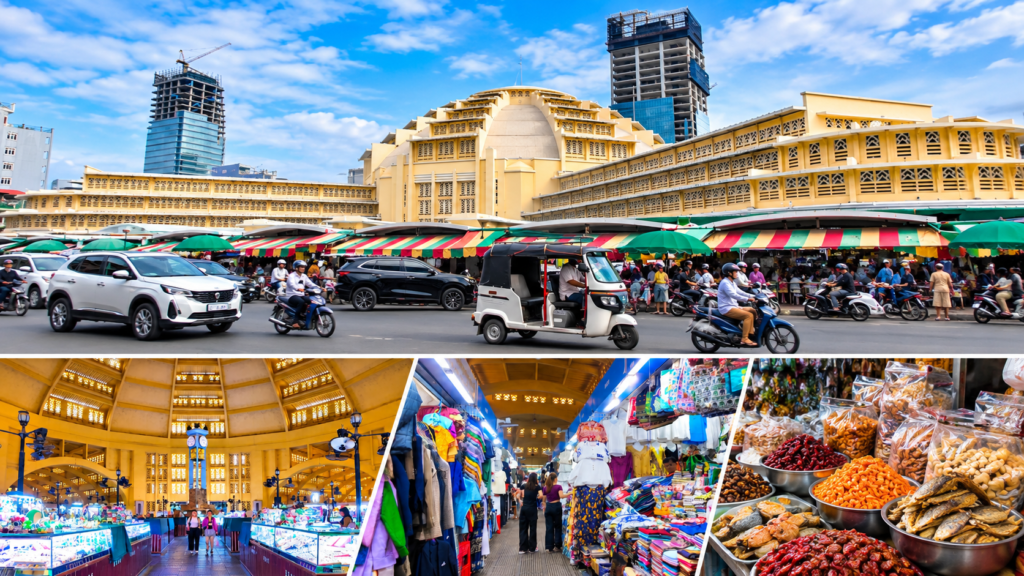
My next stop was Central Market, one of Phnom Penh’s best-known shopping destinations.
The market is housed in a distinctive Art Deco building with a large central dome, making it interesting even before you start shopping.
Inside and around the market, I found a wide variety of products.
There were clothes, shoes, bags, accessories, souvenirs, and many other items.
I spent time wandering between the stalls, looking at different products, asking prices, and speaking with sellers.
One thing that became clear was that bargaining was part of the shopping experience.
Some prices were initially higher than I expected, but there was often room for negotiation.
I enjoy these interactions because shopping in a local market is about more than simply buying something.
You get to see how businesses operate, how people communicate, and what kinds of products are popular.
Of course, not every item is necessarily a bargain, so it’s worth comparing prices before making a purchase.
Even if you don’t plan to buy anything, Central Market is an interesting place to explore.
For me, it was another opportunity to experience a different side of Phnom Penh.
Did I Feel Safe Exploring Phnom Penh Alone?
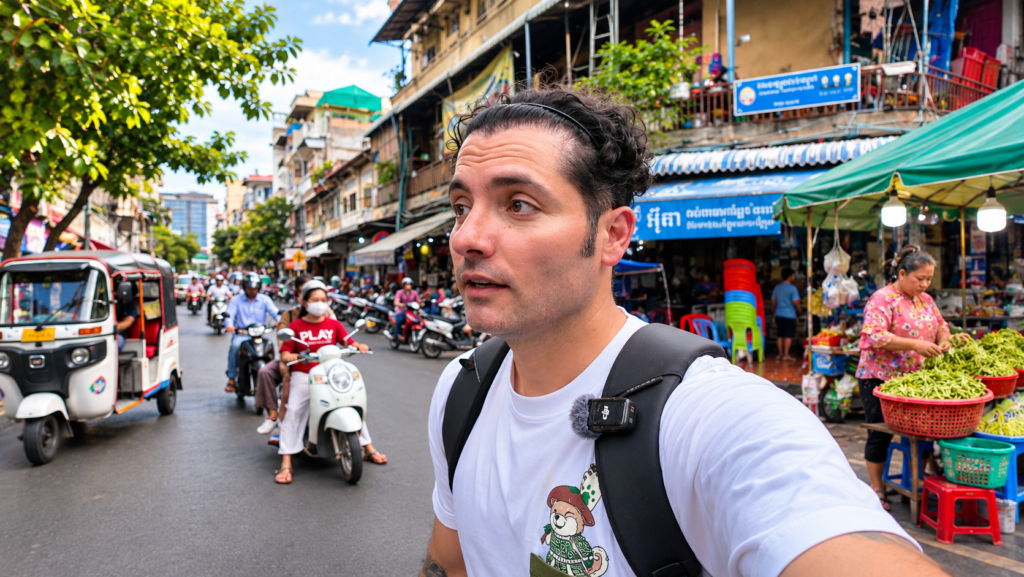
As someone who often travels alone, safety is always something I consider when visiting a new destination.
Before arriving in Cambodia, I had heard about petty theft, particularly phone snatching in busy areas.
Naturally, I kept that in mind while exploring.
However, during my two days walking through Phnom Penh, I generally felt comfortable.
I visited different neighbourhoods, explored markets, used tuk-tuks, and walked around the riverside without experiencing any major problems.
Many of the people I encountered were friendly, and I enjoyed the interactions I had along the way.
That doesn’t mean visitors should ignore basic precautions.
In busy areas, it’s sensible to keep valuables secure, avoid holding your phone too close to passing traffic, and remain aware of your surroundings.
I would also recommend checking transport prices before starting a journey or using a ride-hailing app where available.
My experience was positive, but everyone’s experience can be different.
For anyone considering a solo trip to Phnom Penh, I wouldn’t let the city’s busy atmosphere put you off exploring.
Just use the same common sense you would in any unfamiliar city.
Five Things I Learned During My First Visit
After two days exploring Phnom Penh, there were a few things I felt were worth sharing with anyone planning their first visit.
1. Walking is a great way to discover the city, but not always the easiest.
I enjoyed exploring on foot, although the heat, humidity, traffic, and uneven pavements sometimes made walking more challenging.
2. Tuk-tuks are extremely convenient.
They’re widely available and useful when travelling between attractions or escaping the rain.
3. Carry some smaller notes.
Because US dollars and Cambodian riel are both used, having smaller denominations can make everyday purchases easier. US dollar notes should be in good condition, as damaged notes may be refused.
4. Don’t visit only the famous attractions.
Some of my most interesting observations came from walking through ordinary streets, exploring markets, and seeing everyday life.
5. Make time to understand Cambodia’s history.
Visiting Tuol Sleng gave me a much deeper appreciation of the country’s past and the experiences of its people.
These are simple lessons, but they’re exactly the kinds of things I find useful when visiting somewhere for the first time.
What Surprised Me Most About Phnom Penh?
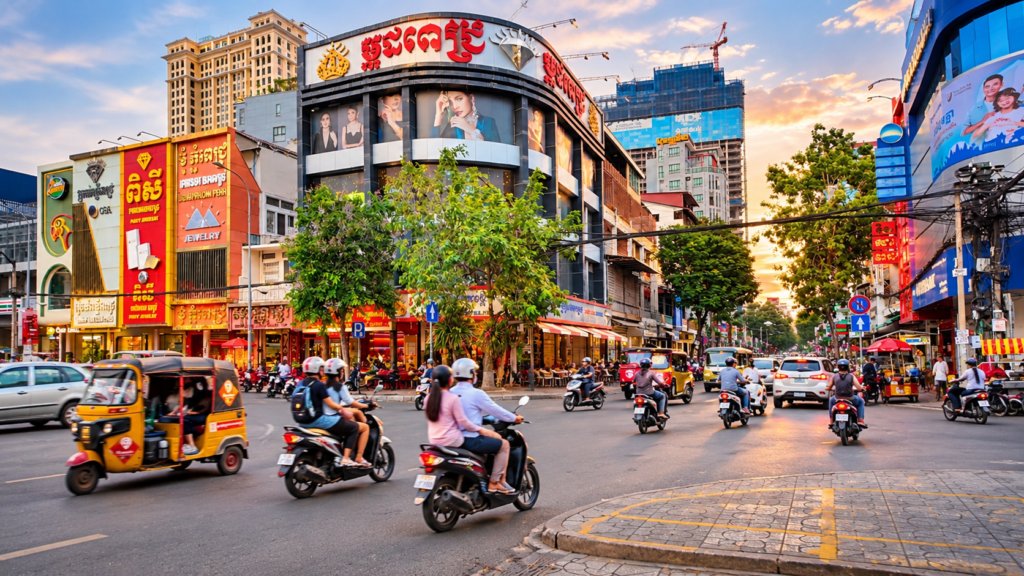
Looking back, I think the biggest surprise was how many different sides of Phnom Penh I discovered in such a short time.
Before arriving, I had imagined a busy Southeast Asian capital with markets, tuk-tuks, and plenty of street food.
And I certainly found those things.
But I also discovered modern neighbourhoods, expensive cars, attractive riverside areas, historical buildings, and places that revealed a much more difficult side of Cambodia’s past.
The contrast between these experiences made Phnom Penh particularly interesting.
It isn’t a city where everything feels polished or designed for tourists.
Some streets are busy and chaotic, while others are quieter and more comfortable to explore.
Some neighbourhoods feel modern, while others reflect a more traditional way of life.
For me, that variety is part of what makes travelling worthwhile.
I don’t visit new countries expecting everything to be perfect.
I want to see places as they are, experience the atmosphere, meet people, and understand a little more about everyday life.
Phnom Penh gave me the opportunity to do that.
Leaving Phnom Penh for Siem Reap
After two full days of exploring, my time in Phnom Penh was coming to an end.
My next destination was Siem Reap, where I was looking forward to visiting the magnificent temples of Angkor Wat.
I had been excited about Angkor Wat long before arriving in Cambodia, but Phnom Penh turned out to be an important part of the journey in its own right.
It introduced me to Cambodia through its streets, people, food, markets, and history.
And although two days were certainly not enough to discover everything the capital has to offer, I felt I had experienced several different sides of the city.
I was ready to continue my journey, but I was glad I hadn’t skipped Phnom Penh.
Final Thoughts: Is Phnom Penh Worth Visiting?
Absolutely.
Phnom Penh might not have the same international reputation as Bangkok, Kuala Lumpur, or some other Southeast Asian capitals, but I think it deserves a place on a Cambodia itinerary.
It’s a city of contrasts, with a mixture of modern development, traditional neighbourhoods, busy markets, and important historical landmarks.
I particularly enjoyed walking through the streets, discovering local life, exploring the riverside, and visiting Central Market.
The visit to Tuol Sleng was a very different experience, but an important one that helped me understand more about Cambodia’s history.
Would I visit Phnom Penh again?
Yes. There are still parts of the city I haven’t explored, and I’d be interested to see how it changes in the future.
For first-time visitors, I think two or three days can provide a good introduction, especially if you’re also planning to visit Siem Reap.
And if you’re someone who enjoys independent travel, local experiences, and discovering cities beyond their tourist attractions, Phnom Penh is certainly worth considering.
Have you visited Phnom Penh, or is Cambodia somewhere you’d like to explore? I’d love to hear your thoughts and experiences in the comments.
Continue Exploring Cambodia
My journey didn’t end in Phnom Penh. After exploring the capital, I travelled to Siem Reap to discover the incredible temples of Angkor.
If you’re planning a similar trip, you can read my Angkor Wat, Cambodia: Complete Travel Guide, where I share useful information about visiting the temples, transport, tickets, and what to expect.
You can also watch my Phnom Penh travel videos on my Time For Travel YouTube channel, where I share the streets, local atmosphere, markets, and experiences from my journey.